When I first started as a high voltage disconnector supplier over a decade ago, I used to get calls from field technicians asking the same question: “How do I know if my disconnector is actually working when I test it?” Back then, I’d walk them through the basics, but I quickly realized most on-site testing skipped the critical checks that prevent catastrophic failures. A high voltage disconnector isn’t just a switch that opens or closes—it’s a safety barrier for the entire substation. If it fails, you’re looking at unplanned outages, equipment damage, even personnel harm. That’s why I’ve spent years refining our in-house testing protocols and working alongside clients to implement practical, field-friendly test procedures. Today, I’m pulling back the curtain on how we test our disconnectors, and what every operator should know to validate their own equipment. High Voltage Disconnector
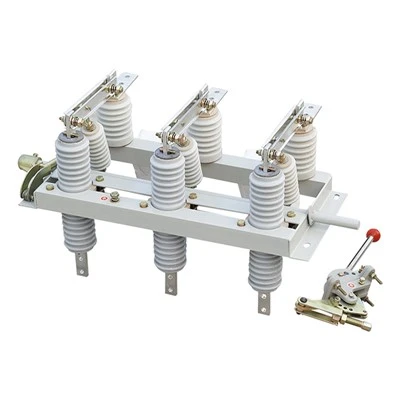
First, let’s ground this in what a disconnector does. Unlike circuit breakers, which handle fault currents, disconnectors are designed to isolate parts of a substation for maintenance. They must be able to break and carry rated current without arcing, seal out moisture and dust, and maintain electrical integrity even under extreme weather. So any test has to target these core functions—not just whether the lever moves. Our testing process starts with two phases: factory acceptance testing (FAT) before the unit leaves our warehouse, and site commissioning testing after installation. Both are non-negotiable, but they serve different purposes. FAT catches manufacturing defects early, while site tests confirm the unit works in its actual operating environment.
Let’s start with FAT, because this is where we set the baseline for every disconnector we ship. The first step here is mechanical operation testing. A disconnector’s mechanism is its heart—if it sticks or doesn’t travel the full distance, electrical performance will suffer. We use a calibrated torque wrench to measure the force required to operate the switch manually. For a 132kV disconnector, for example, the operating torque should fall between 80 and 120 Nm. If it’s too low, the linkage is misaligned; too high, there’s rust or wear in the bearings. We also run 500 consecutive open-close cycles, tracking each cycle’s time to ensure consistency. A good disconnector should open in 2 to 3 seconds and close in 1.5 to 2 seconds—any deviation can mean the mechanism is wearing unevenly. We check for play in the pivot points too: more than 2mm of lateral play in the moving contact will cause misalignment under load, so we reject any unit that doesn’t meet our specs here.
Next up, electrical insulation testing at FAT. This is where high voltage comes in. We use a hipot tester to apply a test voltage of two times the rated voltage plus 1000 volts for one minute. For a 245kV disconnector, that’s 490kV + 1000V = 491kV. No breakdown, no flashover, no leakage current over 1mA—those are our non-negotiable pass criteria. We also do a dielectric absorption ratio (DAR) test, measuring the insulation resistance at 1 minute vs. 10 minutes. A DAR above 1.3 means the insulation (usually epoxy or porcelain) is free of moisture and contaminants. Last year, we had a batch of 72kV disconnectors that failed this test early—turns out the porcelain insulators had a microcrack from the firing process. Catching that at FAT saved our client from a costly failure six months after installation. We also test the contact resistance, a small but critical detail. Using a micro-ohmmeter, we measure the resistance across the closed contacts. For most disconnectors, that should be less than 50 microhms. Higher resistance means poor contact, which generates heat under load—enough to melt the contacts over time.
Once FAT is done and the disconnector is shipped to site, the commissioning tests are equally important. Site conditions—temperature, humidity, even the substation’s structural vibrations—can affect performance right out of the crate. First, we do a visual inspection. Check for shipping damage: dents on the contact arms, loose bolts, cracked insulators. We always ask clients to check the operational linkage alignment too—sometimes a truck jostles the unit, shifting the connection between the operating mechanism and the moving contacts. Misalignment here will cause the switch to not fully open, which defeats the purpose of isolation.
Then, site mechanical testing. We use the same torque wrench as at FAT, but this time we test the unit in its installed position. Outdoor units, for example, have to operate against wind loads, so we adjust the torque slightly to account for local wind speeds. If a disconnector is installed in a coastal area, we add 15% to the operating torque to overcome salt deposits on the linkage. We also test the auxiliary switches—these are the switches that send status signals to the substation control room. If the auxiliary switch isn’t triggering correctly, the control room won’t know if the disconnector is open or closed, which is a safety hazard. We simulate open and close commands, checking that the auxiliary switches switch within 0.2 seconds of the main contact moving.
The big one for site testing is the partial discharge (PD) test. This is something we include in FAT now, but it’s even more critical on site. Partial discharges are tiny electrical arcs that form in insulation defects—they’re invisible, but over time they eat away at the insulation, leading to breakdown. We use a PD detector that can pick up discharges as small as 1 picocoulomb. For a disconnector, PD levels below 50 pC at rated voltage mean the unit is safe. Last year, a client of ours had a new 400kV disconnector fail PD testing on site—turns out the manufacturer had used a lower-grade insulating epoxy that had tiny air bubbles. That unit never would have failed FAT, but the site’s higher humidity made the bubbles expand, increasing PD. We now recommend that all our clients do a PD test within 30 days of installation, before energizing the unit.
Once the disconnector is in operation, regular testing is key to keeping it reliable. We advise clients to do annual thermal imaging scans. Hot spots on the contacts or linkage are a early sign of high resistance—usually from oxidation or loose bolts. We use a thermal camera that can detect temperature differences as small as 1 degree Celsius. If a contact is running 10 degrees hotter than the rest, that’s a red flag to clean or replace the contact before it fails. We also recommend every three years, a maintenance test: open the disconnector, clean the contacts with isopropyl alcohol, lubricate the linkage with a high-temperature, non-conductive grease, and retest the contact resistance. A little routine maintenance goes a long way—we’ve seen disconnectors still running smoothly after 30 years with just annual thermal scans and triennial servicing.
Wait, let’s address a common misconception: some technicians think you just need to test the closed position, but the open position is just as important. When a disconnector is open, there should be no electrical connection between the two sides, so the insulation between the open contacts must hold. We always test the open gap insulation at least once a year. For a 132kV disconnector, the open gap is usually 1.5 meters, and we test it with a 310kV hipot test, making sure no flashover occurs. We once had a case where a bird’s nest had built up on the open gap of a 220kV disconnector. The bird’s nest, made of conductive twigs, created a path for flashover when the unit was open—we caught that during an open gap insulation test and had the client remove it before a storm hit. That’s the kind of test that prevents unexpected outages.
Another point for site testing: don’t skip the grounding test. Disconnectors have grounding switches to ensure the isolated part of the substation is safe during maintenance. We test that the grounding switch’s contact resistance is below 100 microhms. If it’s higher, a technician could get shocked when working on the isolated line. We also check that the grounding switch locks in the closed position—no accidental opening when someone is working. Lockout-tagout (LOTO) procedures go hand-in-hand with testing, of course, but verifying the grounding switch works is non-negotiable.
Let’s talk about safety when testing. High voltage equipment is dangerous, so all testing must be done by trained personnel with the right PPE: arc flash suits, insulated gloves, face shields. Never perform a test alone, and always lock out the circuit before starting. We’ve had clients try to cut corners on safety, and it never ends well. Last year, a client’s technician attempted a hipot test without proper training, and the tester’s insulation failed, leading to a severe burn. That’s why we offer on-site training for all our clients’ maintenance teams—we walk them through every test, step by step, and emphasize safety protocols.
What about different types of disconnectors? We supply both single-pole and three-pole disconnectors. For three-pole units, we test all three poles separately. Sometimes, one pole will have a slightly higher contact resistance than the others, which can cause an imbalance in the substation’s load. We adjust the linkage to make sure all three poles close at the same time—within 0.1 seconds of each other. That balance is critical for the substation’s performance.
I should also mention that we don’t just sell disconnectors—we stand by them, which is why our technical team is available 24/7 to help with testing questions. If you’re a substation operator and you’re not sure how to run a test on your current disconnector, or you’re looking for a reliable unit that passes all our factory and site tests, don’t hesitate to reach out. We’ve worked with utilities across the country, from small rural substations to large transmission grids, and we tailor our testing support to each client’s needs.
Wait, let’s make this personal. When I started in this industry, I worked as a field technician before starting my own supply company. I saw first-hand how a poorly tested disconnector can ruin a week’s work for a maintenance team, or even cause a safety incident. That’s why every test we do, we approach it like it’s our own substation. We don’t cut corners on torque specs, we don’t skip PD tests, and we don’t let a unit leave our warehouse unless it meets our strict standards. Our clients trust us because they know every disconnector we ship has been tested thoroughly, not just checked off a list.
So to sum up, testing a high voltage disconnector isn’t a one-time task—it’s a process that starts at the factory, continues through installation, and never really stops. Mechanical operation checks ensure the switch moves when it needs to, insulation tests ensure it doesn’t shock anyone, contact resistance tests prevent overheating, PD tests catch hidden defects before they fail, and routine thermal scans keep it running for decades.

If you’re a substation operator looking to improve your disconnector testing protocol, or you’re in the market for new disconnectors that have been rigorously tested at every stage, connect with our team. We’re here to help you keep your substation safe and reliable.
High Voltage Disconnector References
- IEEE Standard for High-Voltage Disconnectors and Earthing Switches, IEEE C37.30-2018
- International Electrotechnical Commission (IEC) 62271-102: High-Voltage Switchgear and Controlgear – Part 102: Alternating-Current Disconnectors and Earthing Switches
- Substation Maintenance and Testing Guidelines, National Electrical Contractors Association (NECA) 2021
- Partial Discharge Testing of High Voltage Insulation, Electric Power Research Institute (EPRI) Report 1028045
Zhongtai Electric Power Technology Co., Ltd.
With abundant experience, we are one of the most professional high voltage disconnector manufacturers and suppliers in China. We warmly welcome you to wholesale bulk customized high voltage disconnector from our factory. If you have any enquiry about quotation, please feel free to email us.
Address: High-tech Industrial Park, Chongren County, Fuzhou City, Jiangxi Province (No. 261 Yingbin Avenue)
E-mail: info@zhongtaielectric.com
WebSite: https://www.zhongtaipower.com/
