Hey there, if you’ve ever stared at a wacky-looking bolt with weird grooves or a custom nut that doesn’t look like anything off the shelf, you’re already looking at a special fastener. I’m the guy running a small special fastener supply shop, and for years, folks have hit me up asking how we turn a random sketch, a part number from a beat-up old print, or a “I need it to hold 10,000 lbs at 500°F” request into something that actually works. Spoiler: it’s not just grabbing a bolt from a bin and tweaking it. Let’s break down how we do it, straight from the shop floor, no boring corporate jargon. Special Fasteners
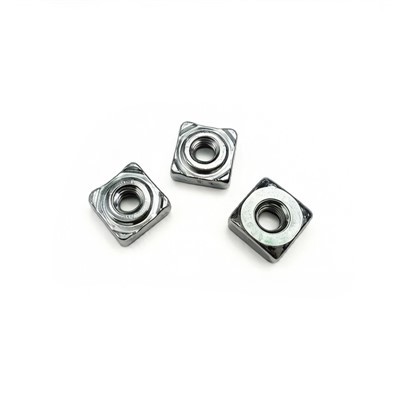
First off, let’s get one thing straight: special fasteners aren’t your average M6 or 1/2”-20 bolt that you pick up at Home Depot. These are the ones for niche stuff—think aerospace jet engine mounts, oil rig pipelines that handle super hot, corrosive gunk, electric vehicle battery packs that need extra torque, or even old farm tractors where the original part’s been out of production since 1987. No two jobs are exactly the same, which is why our process is less assembly line and more problem-solving with tools we’ve tweaked over 15 years.
The first step, and the make-or-break one, is the inquiry and engineering review. When someone reaches out, they don’t just say “send a bolt.” They usually send a sketch, a photo of the broken part, a material spec (or a guess if they don’t know), and the non-negotiables: load they need it to hold, temperature it’s gonna sit in, if it needs to be rust-proof, or if it has to fit in a tiny tight spot that regular bolts won’t go into. Sometimes they’ll come to us with a terrible CAD file they downloaded from the internet that has a typo in the thread pitch—we’ve fixed so many of those. Last month, a wind energy client sent a design for a blade fastener that had the thread direction wrong; if we’d machined that, it’d come loose mid-spin. We don’t just quote the price—we flag stuff like that before anyone wastes time. Also, we confirm volume: 10 pieces for a prototype? That’s way different than 10,000 for a new assembly line. Prototypes mean we don’t cut corners on testing, while high volume means we can streamline some steps to keep costs down without ruining quality.
Next up, material selection—this is where most people mess up, and it’s where we earn our keep. You can’t use regular steel for an oil rig fastener that’s sitting in saltwater, and you can’t use super tough titanium for a cheap lawnmower part (it’d be overkill and way more expensive). We stock all the usual suspects, but also some weird stuff: Inconel for high-heat environments, Monel for corrosive chemical plants, 316 stainless for saltwater, even some high-strength alloy steels that heat-treat to way more than regular bolts. The client might not know what they need, so we ask questions: is it going outside? Inside a factory’s furnace? Does it need to be light, like for drones? We’ll suggest the right material, and if they want something custom, we can source small lots to avoid making them buy 500 lbs of a metal they only need 10 lbs of.
Once the design and material are locked in, it’s time for the actual manufacturing. Most special fasteners start with a solid bar of material, not a coil (coil is for standard fasteners made on big automatic headers—we don’t have those, and honestly, we don’t need ‘em for the small, custom jobs we do). The first step here is turning, which is where a CNC latchespins the metal bar and cuts it to the exact length, diameter, and shape we need. If it’s a bolt with a weird head—like a Torx security head that can’t be opened with a regular Allen key, or a round head with a hole for a safety pin—this is where we mill that shape. CNC is key here; it’s repeatable, so even if we make 1,000 of the same part, they’re all identical, no sloppy cuts. Last year, we had a client who needed fasteners for a medical device that had a head with a tiny slot less than 1mm wide—if we’d done it by hand, half of ’d be too wide or too narrow. The CNC got it right every time.
After turning, we get to threading. This is another big one—regular bolts use rolled threads, which are fast and strong, but for special fasteners, sometimes we need cut threads, especially if the thread pitch is weird (like a 1/4”-28 thread that’s way finer than standard, or a custom metric pitch that doesn’t exist off the shelf). We use thread mills for custom work; they cut the exact thread profile into the part, so it fits perfectly with the nut or mating part. For really specialized threads, like buttress threads that are super strong in one direction, we can make custom thread mills if we don’t have the right one. No standard tap here—standard taps only work for regular sizes, and 90% of our jobs have non-standard threads.
Then comes heat treatment, which is all about strength. Most bolts come from the factory hardened, but special fasteners often need a little extra. If a part needs to hold a huge load without stretching or breaking, we’ll do quenching and tempering: heat the steel to 1500°F, quench it in oil or water to make it hard, then temper it at a lower temp to take the brittleness out. For parts that need to be strong but still a little flexible, we adjust the temp. For non-ferrous metals like Inconel, we do a solution treatment to boost corrosion resistance—super important when it’s sitting next to saltwater or acid. We test hardness after heat treatment with a portable tester; no guessing here. If it’s supposed to be a Grade 8 equivalent, we make sure it hits that 30-35 HRC sweet spot, not too soft that it strips, not too hard that it snaps.
Finishing is next, and it’s not just about making it look pretty. The finish protects the part from rust, corrosion, or wear. For outdoor parts, we do zinc plating with a chromate topcoat to prevent white rust; for oil rig parts, we do hot-dip galvanizing, which is thicker and stands up to harsh environments. For aerospace parts, we do anodizing for aluminum, which adds a hard, corrosion-resistant layer without messing with dimensions. Some clients want a black oxide finish, which is low-cost and works for general industrial parts, no extra cost for them. We also do inspection here—we check for any scratches, burrs, or thread imperfections before moving on. Burrs are a big deal; a tiny sharp edge from machining can scratch a mating part or cause stress cracks, so we deburr every part, either with a sanding wheel or a vibratory tumbler for batches.
Wait, and then there’s coating or plating, but also we do special stuff like dry film lubricant for fasteners that need to be torqued consistently, or chemical conversion coatings for parts that need to bond with paint or other materials. We don’t skip this step because it’s “extra”—it’s what makes the fastener last in the field. Last year, we had a client whose fasteners were rusting in their factory’s humid storage; switching from regular zinc plating to a more durable electro-galvanized finish fixed the problem, and they haven’t had a failure since.
Then, finally, inspection and testing. This is non-negotiable for us, especially for critical jobs. We do dimensional checks with calipers, micrometers, and go/no-go thread gauges to make sure every thread is the right size. For high-load parts, we do tension testing—hook the bolt up to a machine that pulls it until it breaks, to make sure it hits the required minimum load. For parts going into aerospace or medical, we do non-destructive testing like magnetic particle inspection to check for tiny cracks that you can’t see with the naked eye. Prototypes get 100% testing, and even production runs get random samples tested to make sure quality stays consistent. We don’t ship anything that hasn’t passed our checks—we’ve had clients come back to us after a competitor sent them a batch of “custom” fasteners that snapped on installation, and we make sure that never happens to our customers.
Now, a quick side note: sometimes people ask why custom fasteners cost more than off-the-shelf. It’s because every step is tailored, not mass-produced. Standard fasteners are made in millions, so the per-part cost is low, but our jobs are small runs, custom designs, specialized materials, and extra testing. It’s not markup—it’s the work we put in to make sure the part does exactly what the client needs, no shortcuts. That’s why we’re not a big box store; we’re the go-to for when off-the-shelf just won’t cut it.
If you’ve got a job where standard fasteners aren’t working—whether it’s a prototype, a replacement for an old out-of-production part, a part for a tough environment, or something with a weird design—hit us up. We can send a free quote, talk through your needs, and make sure the fastener we make for you fits exactly what you need, no surprises. We’ve worked with small shops, big manufacturers, and even hobbyists building custom equipment, so no job is too big or too small.
Washers References:
- Machinery’s Handbook, 31st Edition, Industrial Press Inc., 2020, pp. 1892-1915 (special fastener manufacturing processes)
- ASME B18.2.6-2018, Specification for Wrenching and Driving Features for Fasteners, American Society of Mechanical Engineers, 2018
- Kalpakjian, S., Schmid, S.R., Manufacturing Processes for Engineering Materials, 7th Edition, Pearson, 2019, pp. 721-750 (heat treatment and finishing of fasteners)
Shanghai Megood Metal Products Co., Ltd.
As one of the most experienced special fasteners manufacturers and suppliers in China, we have world-leading production equipment and strong manufacturing capabilities. Please rest assured to wholesale bulk special fasteners made in China here and get quotation from our factory. Customized orders are welcome.
Address: Building 8, No. 1500 Huiren Road, Waigang Town, Jiading District, Shanghai
E-mail: liujingshco@163.com
WebSite: https://www.mgx-hardware.com/
