Hey there, if you’ve ever held a smartphone, switched on a laptop, or even charged an electric car, you’ve got ceramics to thank for that. I’m the guy who runs a ceramic materials supply shop, and honestly? Most folks don’t realize how much electronics rely on weird, tough, heat-resistant clay-based stuff. Today I’m breaking down the key ceramic materials we supply for electronics—no overly fancy jargon, just what actually works and why it matters. Ceramic Materials
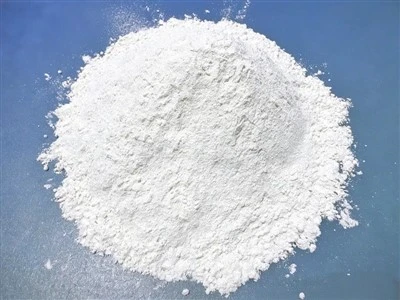
First up, alumina, or Al2O3 for short. This is basically the workhorse of electronic ceramics, right? We sell tons of this stuff. Why? It’s cheap, super tough, and handles heat like a champ—way better than plastic, which melts if you get near a hot processor or power resistor. Most circuit boards use alumina as a substrate, that flat base where all the tiny wires and components sit. It’s also used for insulators in spark plugs, but for electronics, its main gig is keeping electricity where it needs to be. I’ve had a few clients come to us complaining that their old ceramic substrates were cracking when they cranked up production on their chips—turns out, they were using low-purity alumina (90% Al2O3) instead of our high-purity 96% or 99.5% grades. Higher purity means better thermal conductivity, less electrical leakage, and way more consistent results. Trust me, if you’re making semiconductors or power electronics, you’re gonna want high-purity alumina.
Next, alumina’s fancy cousin: aluminum nitride, or AlN. This one’s a game-changer for high-power electronics, like the stuff in EVs or gaming GPUs that get stupid hot. Here’s the thing: alumina’s thermal conductivity is around 20-30 W/m·K, but AlN hits like 180-220 W/m·K—almost as good as copper, but it’s still an insulator, not a conductor. That’s huge. You can mount a super powerful processor on an AlN substrate, run it at full tilt, and it won’t overheat or short out like it would with metal. The catch? AlN is way trickier to make, so it costs more. But when you’re dealing with a $10,000 GPU or an EV motor controller, you don’t mind paying for something that won’t catch fire. We’ve been working with a startup that makes compact power inverters for solar panels—they switched from alumina to our custom-mixed AlN blends, and their overheating failure rate dropped from 8% to less than 1%. No joke, that’s the kind of impact this stuff has.
Then there’s zirconia, ZrO2. You might know it from dental crowns, but it’s all over electronics too. Why? It’s tough—like, way tougher than alumina. It also has this thing called “transformational toughening,” which means if a crack starts in it, it closes back up instead of spreading. That’s perfect for parts that get a lot of stress, like the ceramic bumps (called solder bumps) in chip packages. You know how when your phone gets dropped, sometimes the screen cracks but the chip inside still works? A lot of that is because the chip’s packaging uses zirconia components to absorb impact. We also supply zirconia for sensors—like the ones that measure oxygen in car exhaust, or pressure sensors in medical devices. It’s chemically stable too, so it won’t react with the metals or gases it’s exposed to, which is key for sensor accuracy. I once had a client making aerospace pressure sensors that were failing because their old ceramic was corroding at high altitudes—switched to our stabilized zirconia, and they haven’t had a failure since. Win-win.
Wait, I can’t forget about silicon carbide, SiC. This is the new kid on the block, and everyone’s hyped about it. SiC is a semiconductor itself, not just an insulator—so it’s used to make actual chips, not just the substrates. It’s way better than silicon for high-voltage, high-temperature, and high-frequency applications. EVs use SiC chips in their power electronics to make the battery last longer and charge faster. 5G towers rely on SiC too, because they need to transmit signals at super high frequencies that silicon can’t handle. The downside? SiC is really hard to grow into large, high-quality crystals, so it’s more expensive than silicon. But as production gets better (and we’ve been investing in getting consistent SiC powders and wafers for our clients), the price is dropping. We supply SiC for both substrate material and semiconductor chips—smaller clients might not make their own SiC wafers, but they can use our SiC parts for their modules. A lot of our solar inverter clients switched to SiC modules last year, and their efficiency went up by like 5%. That’s massive for a $1M annual production line.
Oh, and there’s also barium titanate, BaTiO3. This is the ceramic for capacitors—those tiny little components that store charge in every electronic device, from your remote to your TV. Barium titanate has this thing called high dielectric constant, which means you can pack a lot of capacitance into a small space. That’s why your phone has so many capacitors in such a tiny body. We make barium titanate powders in different particle sizes for different capacitor types—some for MLCCs (multi-layer ceramic capacitors) that are super small, some for power capacitors in appliances. If you look at any circuit board, most of the tiny colored dots are MLCCs made with our barium titanate. A client of ours makes MLCCs for wearable tech—they were using cheap barium titanate that had inconsistent particle sizes, leading to capacitors that didn’t hold charge consistently. Switched to our precision-sized powders, and their product reliability went through the roof. No more dead smartwatches because a capacitor failed.
Let me also talk about something that’s a bit more niche, but super important for certain apps: steatite and forsterite. Steatite (magnesium silicate) is cheap and good for low-frequency insulators, like in old TV parts or power line insulators. Forsterite (magnesium orthosilicate) has low dielectric loss, so it’s used in RF (radio frequency) components, like antennas for routers or GPS devices. They’re not as fancy as AlN or SiC, but they fill a price gap for applications that don’t need the high performance of the more expensive ceramics. We keep a steady stock of both, because a lot of small electronics manufacturers can’t justify paying for AlN for their basic parts, and steatite does the job perfectly.
Now, I get it—when you’re sourcing ceramic materials for electronics, it’s not just about picking a “good” ceramic. You have to match the material to the application. If you use alumina for a high-power GPU substrate, it’ll overheat and fail. If you use zirconia for a basic circuit board, you’re wasting money. That’s where we come in. We don’t just sell you a bucket of powder or a sheet of substrate—we ask you what you’re making, what the operating conditions are (temperature, voltage, stress, frequency), and then we recommend the right material. We also do custom blending if you need something specific—like a mix of alumina and zirconia for a part that needs both heat resistance and toughness. I’ve been in this game for 12 years, so I’ve seen just about every ceramic fail, and I know what works for what.
A lot of new clients come to us from overseas, or from startup companies that don’t have a lot of experience sourcing ceramics for electronics. They think all ceramics are the same, but trust me—they’re not. The purity, particle size, sintering process (that’s how we fuse the ceramic powder into a solid part), and even the trace impurities can make a huge difference in how the final product performs. For example, even a tiny bit of iron in alumina can make it conductive, which is bad for insulators. We test every batch of our ceramics to make sure they meet specs—we don’t cut corners. That’s why our clients come back, and why referrals are our biggest source of new business.
If you’re an engineer, a procurement manager, or someone who works with electronics and needs ceramic materials, this isn’t just random stuff—this is the stuff that makes your product work. Whether you’re making a smartphone, an EV, a solar panel, or a medical device, the ceramic parts you use matter. If you’re tired of dealing with ceramic suppliers that sell you generic stuff that doesn’t meet your needs, or that have lead times that take months, hit us up. We keep most of our core ceramics in stock, can ship within a week, and we’ll work with you to get the right material for your project—no pushy sales pitches, just honest advice based on years of experience.

At the end of the day, ceramics for electronics are a lot more important than most people realize. They’re the unsung heroes that keep our devices running, safe, and reliable. We’re proud to supply those materials, and we want to help you with whatever ceramic needs you have for your electronics projects.
Zirconia References
- Ceramics for Electronics, The American Ceramic Society
- Aluminum Nitride: Properties and Applications, Journal of the European Ceramic Society
- Barium Titanate-Based Ceramics for Multi-Layer Capacitors, Annual Review of Materials Research
- Silicon Carbide for Power Electronics, IEEE Transactions on Power Electronics
- Zirconia in Electronic Packaging, International Journal of Applied Ceramic Technology
Hebei Cihong Technology Co., Ltd.
We’re well-known as one of the leading ceramic materials manufacturers and suppliers in China, featured by quality products and good price. Please rest assured to buy customized ceramic materials made in China here from our factory. If you have any enquiry about pricelist, please feel free to email us.
Address: Commercial Building, North Side of Jingha Road, Xiliuhetun Village, Yanjiao Development Zone, Sanhe City, Langfang City, Hebei Province, China
E-mail: lihongqigood@163.com
WebSite: https://www.cihongzr.com/
