If you’ve ever spent money on fixed prostheses—think dental bridges, crowns, or implants—you’ve probably heard the same old spiel from dentists: “Floss daily.” But here’s the thing: regular waxed floss you used back for your natural teeth? It might not cut it for that fixed work in your mouth. As a fixed prostheses supplier who’s worked with dentists and patients for years, I get this question ALL THE TIME: Do fixed prostheses need a special kind of floss? Let’s break it down like we’re grabbing coffee, no stuffy jargon, just real talk. Fixed Prostheses
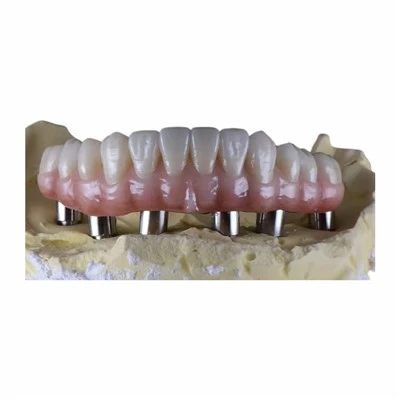
First, let’s get on the same page: fixed prostheses aren’t your natural teeth. Natural teeth have smooth, round roots that snuggly fit into your gums, with small gaps that regular floss can slide through. Bridges, crowns, and implants? They’re man-made—sleeker, sometimes bulkier, and they form tight, hard-to-reach areas where food and plaque love to hide. For example, a dental bridge has a “connector area” under the false tooth that sits right on your gumline. That’s a trap. Regular floss can fray or get stuck there, and if you skip cleaning that spot, you’re looking at gum inflammation, decay under the crown, or even implant failure. Not exactly what you want after dropping a few grand on that prosthetic.
Wait, don’t just take my word for it. Let’s chat about why standard floss fails here. I’ve seen patients use regular nylon floss, try to force it between a bridge’s connectors, and end up with a piece stuck that they can’t get out. Or it frays into those thin, stringy bits that get tangled around the prosthetic. This is a big deal because if you leave even a tiny food particle under a bridge or around a crown, it turns into plaque. Plaque = acid that eats away at the tooth structure holding the crown, or irritates your gums so much they pull away from the implant. The CDC says periodontal disease is a top cause of implant failure, and poor flossing technique with the wrong floss is a huge trigger.
So what floss actually works for fixed prostheses? Let’s start with interdental brushes—wait, hold on, I know you might’ve heard these are just for braces, but they’re perfect for fixed work. They’re tiny, flexible brushes that slide into those tight gaps between prosthetics and gums, scrubbing away plaque way better than regular floss. But not all interdental brushes are the same: you need to pick the right size. Too big, and it’ll hurt your gums; too small, and it won’t get the job done. As a prostheses supplier, I often recommend size 0.7mm or 0.9mm for most bridges and implants, but your dentist can measure the gap to be sure.
Then there’s floss threaders. This is a game-changer for anyone with a bridge. A floss threader is a thin, stiff plastic needle that you loop floss through, then slide under the bridge’s connector area (that spot between the fake tooth and your real teeth) so you can clean both sides. Regular floss can’t get under that bridge on its own—you need that threader to pull it through. I’ve had patients swear by these: before, they couldn’t clean their bridge without pain or frustration, now they’re able to get in every nook.
Wait, what about water flossers? Yeah, these are a solid option too. They use pulsating water to blast away food and plaque, which is great for people who struggle with manual flossing. But here’s the catch: not all water flosser tips work for fixed prostheses. You need a narrow, orthodontic tip or an implant-specific tip, not the wide one for regular teeth. A wide tip can’t get into those tight gaps, so you’re basically just spraying water and not cleaning.
Let’s address a common misconception: some people think “I brush, so that’s enough” for their fixed work. No way. Brushing only cleans the outer surface—those gaps under bridges and around implants are totally inaccessible to a toothbrush. I saw a patient last year who had a 3-unit bridge that started hurting because he skipped cleaning that connector area; when his dentist looked under, there was a big buildup of plaque that caused gum infection. He switched to floss threaders and interdental brushes, and the infection cleared up in two weeks.
Now, let’s talk about why as a fixed prostheses supplier, we care about this. When we work with dental clinics to provide prosthetics, we always include a little note in the packaging (yes, really!) about the best flossing methods, because we don’t want our patients to ruin their investment. A fixed prosthesis is a long-term investment—most crowns last 10-15 years, implants can last a lifetime if cared for right. The wrong floss can cut that lifespan short, costing you more money down the line.
Wait, are there any myths to bust? Let’s see: “Waxed floss is better for fixed work.” No, not necessarily. Waxed floss is smoother, so it slides easier, but if it’s too thin, it still frays. Unwaxed is rougher, which can scratch the prosthetic surface—scratching means more places for plaque to stick. So what’s the middle ground? PTFE floss, the stuff that’s usually a little thicker, sometimes called “expanding floss.” It expands when wet, filling the gap between the prosthetic and gum, so it cleans more thoroughly than regular floss. That’s a solid pick for people with implants or crowns who don’t want to use interdental brushes.
Another myth: “Implants are indestructible, so I don’t need to floss.” Wrong! Implants don’t decay, but the gum tissue around them (called peri-implant mucosa) can get inflamed, which leads to peri-implantitis—something way worse than regular gum disease. Studies from the International Journal of Oral and Maxillofacial Implants say that peri-implantitis affects up to 40% of implant patients after 5 years, and poor oral hygiene is the main risk factor. Using the right floss prevents that.
Let’s make this practical. What’s a routine care plan for someone with fixed prostheses? Morning: brush with a soft-bristled toothbrush, then use an interdental brush to clean between any crowns or bridge connectors. Night: use a floss threader with PTFE floss to get under the bridge, or a water flosser with an implant-specific tip. Skip the regular floss if it’s fraying or getting stuck—your mouth will thank you. And don’t forget to see your dentist every 6 months for a checkup; they can spot early signs of plaque buildup that you might miss.
Wait, why is this all coming from a prostheses supplier and not a dentist? Because we work with both sides: the clinics that place the prosthetics, and the patients who use them. We hear the horror stories when someone’s fixed work fails because of poor hygiene, and we know that most of the time, it’s not that the prosthetic was bad—it was the wrong aftercare product. We don’t just sell crowns and bridges; we want our clients to keep them for as long as possible, so we’re transparent about what works (and what doesn’t) for flossing.
Here’s a question I get all the time: “Can I use regular floss if I’m careful?” Maybe, but “careful” isn’t good enough. One study from the Journal of Clinical Dentistry found that 70% of people with fixed bridges struggle to clean under them with regular floss, even if they think they’re doing it right. That’s a pretty big number. So why take the risk? Specialized flossing tools for fixed prostheses aren’t a luxury—they’re a necessity to protect your investment.
Let’s wrap this up. Fixed prostheses aren’t one-size-fits-all, and neither is your floss. Regular floss might work for your natural teeth, but for bridges, crowns, and implants, you need tools that can reach those tight, hard-to-clean spots: interdental brushes, floss threaders, PTFE floss, or implant-specific water flosser tips. Skimping on the right floss isn’t worth risking gum disease, decay, or prosthetic failure.
If you’re a dentist, clinic, or patient looking for reliable fixed prosthetics, or if you need guidance on the right oral care tools to pair with your work, we’re here to help. Our team has years of experience working with oral health professionals to deliver high-quality, durable prosthetics, and we can walk you through the best care practices to keep them in top shape. Reach out to start a conversation about your needs, no pressure, just honest advice and products that work.
Removable Prostheses References
- Centers for Disease Control and Prevention. Periodontal Disease: Risk Factors and Prevention, 2023.
- International Journal of Oral and Maxillofacial Implants. Peri-Implantitis: Prevalence, Pathogenesis, and Management, 2022.
- Journal of Clinical Dentistry. Efficacy of Interdental Brushes vs. Standard Floss for Bridge Hygiene, 2021.
- American Dental Association. Oral Care for Fixed Dental Restorations, 2023.
Shenzhen Tuomei Dental Technology Co., Ltd.
We are one of the most professional fixed prostheses manufacturers and suppliers in China, featured by quality products and low price. Please rest assured to buy discount fixed prostheses made in China here from our factory. Welcome to view our website for more information.
Address: Room 301, Building C Fuhe Industrial Park No.18 Hexiu West Road, Zhancheng Community Fuhai Subdistrict, Bao’an District, Shenzhen, Guangdong, China
E-mail: dentallab.works@gmail.com
WebSite: https://www.sztuomeidentallab.com/
