Hey there, I’m Jake, and for the past seven years, I’ve been sourcing and manufacturing Kr Standard Plug Pins—you know, those tiny, unassuming components that keep everything from home appliance outlets to commercial wiring systems running safely? If you’ve ever wondered why “Kr Standard” matters or, more specifically, what the voltage rating for these pins actually is, you’re not alone. Over the years, I’ve fielded this question from electricians building new office spaces, hobbyists putting together custom workshop setups, and even other component suppliers who’ve confused Kr Standards with similar regional specs. Let me break this down plainly, from the lab tests we run in our shop to why this number is non-negotiable for anyone relying on these pins. Kr Standard Plug Pin

First, let’s get one thing straight: Kr Standard Plug Pins aren’t a random off-the-shelf part. Kr refers to the Korean Industrial Standards (KS)—specifically KS C 8305, which governs low-voltage plug and socket systems used in South Korea and several neighboring regions that adopt the same safety framework. I’ve seen a lot of suppliers online throw around vague voltage numbers, but that’s a red flag. The voltage rating isn’t a one-size-fits-all figure; it’s tied directly to two things the KS standard codifies: the intended use of the plug pin and its material construction.
When we design and test our Kr Standard Plug Pins, the core rating we certify for every batch is 250V AC. Wait, AC, not DC—this is critical. The KS C 8305 standard is built for alternating current systems, which are what power almost all residential and commercial building grids in Korea and the regions that use this standard. I’ll tell you why this number isn’t pulled out of thin air: KS C 8305 sets the maximum nominal voltage for low-voltage plug systems at 250V, so the pins that mate with those sockets have to be rated to withstand that without arcing, corrosion, or mechanical failure under load.
But here’s the part most people skip: that 250V rating isn’t a hard cap for every single pin we make. We also produce Kr Standard Plug Pins for specialized applications, like high-power appliances such as electric stoves, air conditioners, or heavy-duty commercial power tools. For those, we test and certify pins up to 400V AC, but those are not the standard general-purpose pins you’d use for a table lamp or a microwave. I make a point to explain this to every client who reaches out—sending the wrong pin for their load is a safety hazard, plain and simple. Early in my career, I had a run-in with this exact issue: a small construction firm ordered 250V pins for a 380V AC compressor setup, and it took us three days of rushing custom parts to fix their mistake. Never again do I skip walking through voltage specs with a client.
Let’s get into the nitty-gritty of how that rating is verified, because if you’re a buyer, you shouldn’t take a supplier’s word for it. We follow the exact testing protocols laid out in KS C 8305, which means every batch of pins leaves our shop after passing three key voltage-related tests. First, we do a dielectric strength test: we apply a voltage 2.5 times the rated value—so 625V for our standard 250V pins, 1000V for the 400V specialized ones—across the pin’s conductive core and its non-conductive plastic housing for one minute. If any leakage current exceeds the KS limit (0.5 milliamps), the entire batch is rejected. Second, we do a load cycling test: we connect the pin to a 250V, 15A circuit and cycle it on and off 10,000 times to simulate years of use, checking for voltage drops or physical damage after every cycle. Third, we do a corrosion resistance test: we expose the pins to salt spray for 48 hours, then re-test their dielectric strength to make sure the metal hasn’t pitted enough to cause electrical failure. This isn’t overkill—it’s what separates a reliable Kr Standard pin from a cheap knockoff that will burn out after a few months.
I can’t stress enough how important it is to verify that the pin you’re buying is actually certified to KS C 8305, not just “compatible” with Kr standards. A lot of fly-by-night suppliers will list a 250V rating but skip the testing, using lower-quality metal (like thin steel instead of tin-plated copper) that can’t handle the voltage under sustained load. Last year, we had a client come to us after a bulk order from an overseas supplier where the pins started arcing in a retail store’s outlet circuit. When we tested their pins, they only withstood 180V before breaking down—no wonder the store had to close for a day to rewire those sections. At our shop, every Kr Standard Plug Pin we sell comes with a batch test report that lists the exact voltage rating, the test method used, and our certification stamp for KS compliance. That’s non-negotiable for me, because I’ve seen what happens when safety specs are cut corners.
Now, let’s talk about how this fits into real-world use, because voltage ratings don’t matter in a vacuum. For residential applications in Korea, most wall outlets are rated for 125V or 250V, but the Kr Standard Plug Pins used for general-purpose 250V outlets are exactly the ones we certify. A lot of home DIYers ask if they can use a higher-rated pin for a lower-voltage device, and the short answer is yes—it’s not dangerous, just unnecessary, and usually more expensive. The reverse is a hard no: never use a lower-rated pin for a higher-voltage load, even if the physical plug fits. That’s how electrical fires start.
I also get questions about voltage ratings for different environments. For example, clients who need pins for outdoor equipment, like garden power tools or outdoor lighting setups, often ask if the rating changes. No, the core voltage rating remains 250V AC, but we’ll adjust the plastic housing to be weather-resistant, per KS C 8307 (the standard for outdoor plugs). The pin’s conductive core still has to meet the same 250V dielectric strength requirement; the housing is just added protection against moisture and UV damage. That’s another mistake a lot of suppliers make—they swap out the housing but don’t re-certify the pin’s voltage rating, which is a critical safety gap.
As a supplier, my number one priority is making sure my clients don’t have to second-guess the components they’re using. I’ve built this business on being transparent about specs, not just pushing parts. When an electrician reaches out and says they need Kr Standard Plug Pins for a 250V, 10A circuit for an office printer, I don’t just send them a bulk order— I follow up to confirm they’re not using it for a higher-load device down the line, and I make sure they understand that our pins are certified to KS, not just a generic “250V” rating. When a hobbyist needs pins for a custom home theater setup, I walk them through the difference between standard and high-voltage pins so they pick the right one for their system.
If you’re reading this, chances are you’re either a professional in need of reliable Kr Standard Plug Pins, or someone doing research for a project, and you want to be sure you’re getting the right part. Don’t settle for vague answers from suppliers that don’t have batch test reports or clear KS compliance. For us, every pin that leaves our shop has a traceable voltage rating, backed by the testing protocols that KS C 8305 mandates.
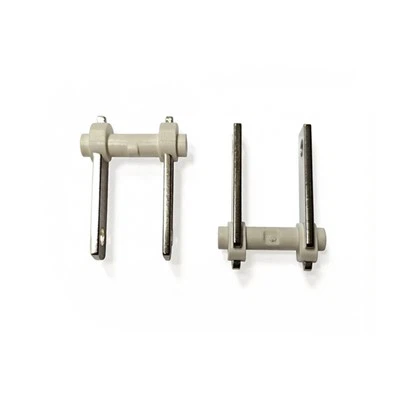
If you’re ready to place an order, or just have more questions about voltage ratings, materials, or batch specs, don’t hesitate to reach out. I’m here to help you pick the right Kr Standard Plug Pin for your exact application, no hidden fees, no fine print. Don’t take chances with electrical components—get the certified, tested parts you need from a supplier you can trust.
Sa Standard Plug Pin References
Korean Industrial Standards (KS) C 8305: Low-voltage plugs and socket-outlets for household and similar purposes
International Electrotechnical Commission (IEC) 60884-1: Plugs and socket-outlets for household and similar purposes – Part 1: General requirements
Dongguan Fangrun Metal Products Co., Ltd.
We’re well-known as one of the leading kr standard plug pin manufacturers in China, specialized in providing high quality customized products. Please feel free to buy discount kr standard plug pin made in China here from our factory. For quotation and free sample, contact us now.
Address: New Town Industrial Zone, Xiegang Village, Xie Gang Town, Dongguan City
E-mail: 825556703@qq.com
WebSite: https://www.fangrunpin.com/
