If you’ve ever driven past a liquid natural gas (LNG) terminal at 2 a.m., when the site is silent except for the low thrum of massive pipes and distant compressors, you might have glimpsed a cryogenic control valve tucked between two flanges, its metal casing frosted thin by temperatures that would make regular valves shatter. As a control valve supplier who’s spent 12 years troubleshooting and fitting these valves into industrial and commercial sites, I can tell you most people don’t think about these components—until a cryogenic line freezes shut, a seal fails, or an LNG shipment risks a dangerous pressure spike. That’s when the humble cryogenic control valve stops being a “fancy part” and becomes the difference between a smooth operation and a costly,甚至 hazardous breakdown. Let’s break down what a cryogenic control valve actually is, how it’s different from the valves you’d find at a standard water treatment plant, and where you can’t run an industrial process without one. Control Valve

First, let’s set the baseline: what makes a valve “cryogenic”? The definition isn’t arbitrary. Cryogenic systems operate at temperatures lower than -150°C (-238°F), a range where standard carbon steel, rubber seals, and even plastic gaskets behave completely unlike they do at room temperature. A regular gate valve or globe valve, built for water or low-pressure oil, would fail catastrophically in these conditions. Regular metal becomes brittle at cryogenic temperatures; rubber cracks like dried clay; and trapped moisture in a valve’s body turns to ice, jamming moving parts shut. A cryogenic control valve is purpose-built to solve all these problems. It uses materials that retain ductility and strength at extreme cold—usually 304 or 316 stainless steel, or specialized alloys like aluminum-bronze for lower-pressure applications—and it’s designed with extended bonnets, hollow spacers, or insulation jackets to keep cold away from the actuator, seals, and operator interfaces. Unlike a standard valve, which only needs to hold back flow, a cryogenic control valve has to do that and modulate flow precisely, because even a tiny miscalculation in temperature or pressure can cause a liquid to flash to gas (a phenomenon called cavitation, but on a far more dangerous scale at cryo temps) or create a pressure surge that ruptures pipes.
I learned this the hard way early in my career. A customer running a small liquid nitrogen storage facility tried to use a standard globe valve to regulate flow to a research lab’s cooling system. Within three days, the valve’s rubber O-rings cracked, leaked liquid nitrogen into the actuator, and froze the valve’s stem solid. We showed up at 6 a.m. to a site with 1,000 gallons of liquid nitrogen on the floor, a ruined actuator, and a lab that lost $20,000 worth of frozen biological samples while we swapped in a cryogenic control valve. That incident taught me that cryogenic valves aren’t just “cold-resistant versions of regular valves”—they’re engineered for a unique set of conditions that most off-the-shelf components can’t handle.
Now, where are these valves actually used? You’ll find them in three main industries, each with its own set of demands that test every part of a cryogenic valve’s design.
First, and the most high-profile, is LNG production and transportation. LNG is natural gas cooled to -162°C, turning it from a gas into a liquid that’s 600 times smaller in volume, making it cheap to ship across oceans. The entire LNG supply chain—from liquefaction plants on the coast to storage tanks at import terminals to the truck pumps that transfer LNG into tanker trucks and even fuel cells for heavy-duty trucks—depends on cryogenic control valves. At the liquefaction plant, for example, we fit our cryogenic control valves on the lines that feed into the main cooling loops. These lines carry natural gas mixed with refrigerants, and even a tiny imbalance in flow can cause the cooling loop to overheat or freeze solid. At import terminals, cryogenic control valves regulate the pressure when LNG is unloaded from a tanker ship into on-site storage. If pressure gets too high, LNG can flash back to gas, creating a flammable, explosive atmosphere—something no operator can afford. Last year, we supplied 12 6-inch cryogenic control valves to an LNG import terminal on the Gulf Coast, specifically calibrated to handle the unique pressure fluctuations of unloaded LNG, and we’ve had zero leaks or performance issues in the 18 months since installation.
The second big sector is healthcare and life sciences, though this is less well-known to the general public. Hospitals use liquid oxygen (LOX) to power their respiratory equipment, cryotherapy clinics use liquid nitrogen to freeze skin lesions, and research labs use cryogenics to preserve cell lines, vaccines, and biological samples at -80°C or lower. In these settings, precision isn’t just a convenience—it’s a matter of patient or sample safety. For example, a hospital’s LOX tank can’t have pressure spikes large enough to rupture the tank, and it can’t have flow drops that leave a patient on a ventilator without oxygen. A cryogenic control valve for a healthcare setting has to meet strict ISO and FDA standards for material biocompatibility, too. We often supply small, compact cryogenic control valves to hospital oxygen systems, sized to fit into tight spaces in the mechanical rooms that regular valves can’t. Last quarter, we worked with a network of rural hospitals to upgrade their old, failing cryogenic valves; the old valves had a 1.2% failure rate per year, and the new ones cut that to 0.1%, all while staying within the tight temperature tolerances their patient care systems require.
The third industry, which is growing fast, is semiconductor manufacturing. Semiconductors are made in ultra-clean, ultra-precise environments that use liquid argon, liquid helium, and other cryogens to cool processing chambers, flush away contaminants, and etch tiny circuits. A single semiconductor fabrication plant (or “fab”) can use 100,000 gallons of liquid helium per month, and even a 0.5% flow inaccuracy in a control valve can ruin millions of dollars worth of wafers. Semiconductor fabs also operate in Class 1 cleanrooms, meaning no dust or debris can get into the process—and standard cryogenic valves, with their exposed moving parts, can shed tiny metal particles that ruin wafers. Our cryogenic control valves for fabs are sealed with all-metal gaskets (no rubber) and polished internal surfaces to eliminate particulate contamination, and we calibrate them to within 0.1% of required flow. A few years back, we supplied 18-inch cryogenic control valves to a new fab in Taiwan, and the plant’s engineers told us the valves were so reliable, they’ve only needed two minor calibrations in three years—something unheard of with older valve models.
Wait, what about other uses? You might see cryogenic valves in aerospace, too. Space launch companies use liquid hydrogen and liquid oxygen as rocket fuel, both stored at -253°C and -183°C respectively. The valves that regulate fuel flow to rocket engines have to be even more precise than industrial valves, because a single misstep during launch can cause a rocket to explode. We’ve done work with a few small launch firms on cryogenic valve prototypes, designed to handle the vibration and extreme temperature swings of space, though that’s a smaller segment than LNG or semiconductors.
Now, let’s talk about what matters when choosing a cryogenic control valve, because not all valves are created equal. As a supplier, I get dozens of calls a week from plant managers who bought a cheap, off-brand cryogenic valve online, only to have it fail within a month. The key things to look for are: material compatibility (stainless steel is standard, but check for nickel content, which affects brittleness at cryo temps), extended bonnets (to keep cold away from the actuator, which would freeze up), and valve trim design. The trim—the internal parts that regulate flow—should be designed to prevent cavitation, which is a big risk at cryo temps. Cavitation happens when pressure drops in a liquid, causing it to form bubbles; when those bubbles collapse, they create tiny shock waves that erode the valve’s interior, leading to leaks and failure. A good cryogenic control valve has trim with multiple stages to reduce pressure gradually, preventing cavitation even at extreme cold.
Another common mistake we see is people trying to retrofit a cryogenic valve onto a line that doesn’t have the right insulation. Even the best valve will fail if it’s exposed to ambient humidity, which turns into ice on the valve’s stem, or if cold leaks into the actuator. We always work with our customers to design custom insulation jackets or vacuum insulation for the line, to complement the valve’s design.
At the end of the day, cryogenic control valves are a perfect example of how the most critical industrial components are often the most invisible. You won’t see them in commercials or news reports, but without them, LNG can’t get to power grids, hospitals can’t keep patients breathing, and semiconductors can’t get made for the phones and laptops we use every day. If you’re working on a project that involves cryogenic temperatures, whether it’s a new LNG terminal, a hospital’s oxygen system, or a semiconductor fab, the last thing you want to worry about is your control valve failing. We’ve been designing, supplying, and servicing cryogenic control valves for over a decade, and we work closely with every customer to understand their specific needs, from small lab setups to large industrial plants. If you’re looking to upgrade your existing valves or source new components for a cryogenic project, feel free to reach out to our team to discuss your requirements.
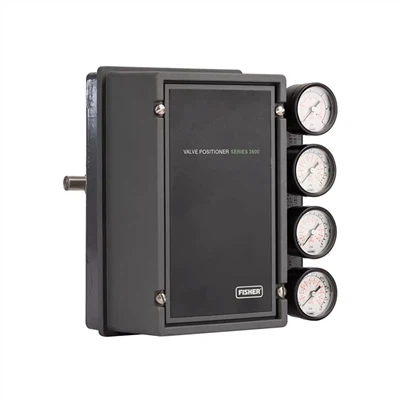
Fisher Valve Positioner References
- American Petroleum Institute (API Standard 600, 2020): Steel Valves for General Refinery Service, relevant for cryogenic valve material and design requirements.
- International Organization for Standardization (ISO 12205, 2018): Valves for Cryogenic Service, specifying performance and testing criteria for cryogenic control components.
- Cryogenic Society of America (CSA Technical Paper 10, 2021): Materials and Design for Cryogenic Flow Control, detailing material brittleness and insulation requirements for low-temperature valves.
Century Weiye (Dalian) Control Equipment Co., Ltd.
As one of the leading control valve manufacturers and suppliers in China, we warmly welcome you to buy discount control valve in stock here from our factory. If you have any enquiry about quotation, please feel free to email us. Quality products and reasonable price are available.
Address: 2205, Building 8, Red Star International, Ganjingzi District, Dalian City, Liaoning Province
E-mail: serena@valve-sjwy.com
WebSite: https://www.valve-sjwy.com/
