Hey there! If you’re a homeowner, small business owner, or even a handyman who’s stared at an old, rusty secondary distribution box (that’s the side box, not your main circuit breaker panel, right?) and thought, “Ugh, this thing looks like it’s one spark away from a mess,” you’re in the right spot. I’ve been selling these boxes for over 7 years now, and let me tell you—most people don’t realize replacing one isn’t just about swapping a metal container. It’s safe, it’s doable with the right steps, and if your current one is acting up, it’s probably worth the time. Secondary Distribution Box
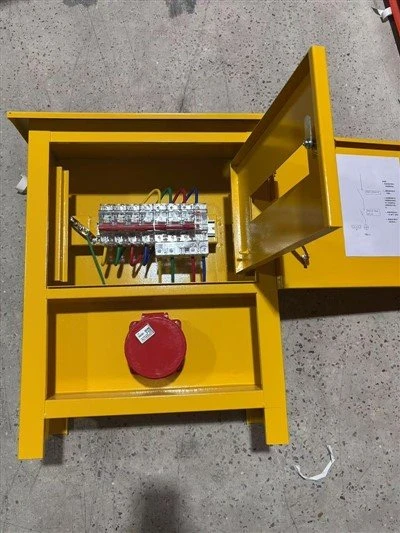
First, let’s cut the confusion: a secondary distribution box (we’ll call it an SDB from now on, sounds way less clunky) is the smaller box that takes power from your main panel and splits it to circuits for areas like a garage, workshop, outdoor lights, or even a second floor. Mine’s at my shop—we sell these to electricians, contractors, and even folks who do their own small projects, but I always emphasize: if you’re not comfortable with electricity, call a pro. No exceptions. But if you’ve worked with basic wiring before and know how to shut off power safely, you can tackle this step by step.
I get why folks put this off. The last thing you want is to knock out power to your whole house, or worse, get shocked. But here’s the thing: most SDB issues stem from age—rust eating through the box, loose connections, or it being too small for all the stuff you’re plugging in now. I had a customer last month who had his old SDB in the backyard; it was only a 15-amp box, and he was running a sprinkler system, a small fridge for his outdoor cooler, and string lights. No wonder it was overheating. Replacing it with a 30-amp SDB fixed that right up.
Now, let’s walk through this like I’m showing a buddy how to do it. First, prep day. You’re gonna need a few tools: a voltage tester (super important—don’t skip this), a screwdriver set, wire strippers, a drill with screws (for mounting), a new SDB (obviously—make sure it’s the right size for your needs, matches the voltage your old one uses, and is rated for indoor or outdoor if that’s where you’re putting it), and electrical tape. Also, turn off the main power to your entire house at the breaker. I can’t stress this enough—double-check with your voltage tester on the main panel first to make sure there’s no juice running.
Next, remove the old SDB. This part’s straightforward, but take it slow. Unscrew the old box from the wall or post, then pull it out a little. You’ll see the wires coming from the main panel (that’s the feed wire, usually two hot wires and a neutral, plus a ground wire) going into the old box, and the wires going out to your circuits. Don’t yank them—label each wire with a piece of tape before you disconnect it. Write “garage lights” or “outdoor outlet” on each tape so you don’t mix them up later. Once all wires are labeled, disconnect them one by one, and set the old box aside.
Now, mount the new SDB. Hold it up where you want it—make sure it’s level, and if it’s outdoor, pick a spot that’s not sitting in standing water (rust’s the enemy here, and we don’t want water seeping in). Drill the screws through the mounting holes and secure it tight. Pro tip: if you’re mounting it on a wooden post or wall, make sure the screws go into a stud, not just drywall, so it doesn’t fall off later.
Then comes the wiring part, which is the make-or-break. First, attach the ground wire to the ground bar in the new SDB. That’s the green screw, usually. Then the neutral wire—connect that to the neutral bar, which is the white ones, usually a big strip. Now the feed wires from the main panel: those are the two hot wires (usually black or red) that power the SDB. Connect each to a circuit breaker that matches the amp rating of the feed wire (if your wire is 15-amp, get a 15-amp breaker; 20-amp, 20-amp). Tighten the screws on the breaker down firmly, but don’t over-tighten—you can strip the wire. Now, take your circuit wires (the ones you labeled earlier) and connect each to its own breaker in the new SDB. Same rule: match the amp, tighten just enough, and cover each connection with electrical tape if you’re worried about it.
Once all wires are connected, tuck them neatly into the box—don’t leave them loose hanging, that’s a fire hazard. Snap the cover onto the new SDB, screw it on tight. Now, go back to the main panel, turn the power back on. Wait 10 seconds, then go test each circuit in the new SDB. Flip each breaker on one by one, check that the lights and outlets work. If something doesn’t, turn the power back off, check your connections—9 times out of 10, a loose wire is the issue.
Here’s a question I get all the time: “When do I actually need to replace my SDB?” Not just because it looks old. Signs to watch for: if it’s rusted all over (even inside the box), if you notice it’s hot to the touch when you touch it, if breakers keep tripping for no reason, or if it’s way too small for your current power needs. Those are the big ones. A lot of people wait until their old SDB starts smoking—don’t do that. That’s a fire risk, plain and simple.
I’ve seen so many folks try to cut corners here. Using a bigger box than they need, not labeling wires, skipping the voltage test. Don’t be that person. My team and I talk to customers every week who have had issues because they skipped a step. For example, a guy last year who tried to use a 15-amp SDB for his shop tools—he ran a saw and a compressor, and it overheated, melted the wires, and knocked out power to his whole basement. A new SDB would’ve cost him $150, but he had to pay $800 to an electrician to fix the mess. That’s the kind of thing we want to help you avoid.
Another thing: when you’re picking a new SDB, make sure it’s UL-listed. That’s the safety certification, and it’s non-negotiable. All the boxes we sell are UL-listed, so you know they’re built to last. Don’t go for the super cheap no-name boxes—they’re not made to handle the heat or the humidity, and they’ll rust out in a couple years. Invest a little more now, and you won’t have to replace it again in 3 years.
Wait, what about if you’re running new circuits when you replace the SDB? Let’s say you’re adding a new outdoor outlet, or a workshop circuit. That’s totally fine, just make sure you calculate the total amp draw of all your circuits. The SDB’s main breaker (the big one at the top) should be equal to or a little higher than the total. For example, if you have four 15-amp circuits, that’s 60 total, so a 60-amp main breaker would work. Don’t go over the SDB’s rating— that’s how you get tripping or overheating.
I know this can feel overwhelming, but at the end of the day, replacing an SDB is a pretty straightforward job when you break it down. It’s way better than putting up with a faulty one that could cause a bigger problem. If you’re not sure about anything, or you need help picking the right size SDB, don’t hesitate to reach out to us. We’re here to answer questions, give advice, and make sure you get the right product for your project. We sell direct to contractors and DIYers, so we can hook you up with exactly what you need without the hassle of middlemen.
Before I wrap up, let’s recap the quick steps to make sure you didn’t miss anything: 1. Turn off main power and test with a voltage tester. 2. Label all old wires before disconnecting. 3. Mount the new SDB securely, level. 4. Wire ground, neutral, hot, and circuit wires correctly. 5. Test each circuit after turning power back on. 6. Fix any loose connections before sealing the box.

It’s not brain surgery, but it’s also not something to rush. Take your time, be safe, and you’ll have a new SDB that works for years. If you’re ready to get a new one, or just have questions about sizing, installation, or anything else related to secondary distribution boxes, get in touch with our team to talk through your needs. We’re happy to help you get the job done right.
Distribution Cabinet References:
- Electrical Safety Foundation International. "Home Electrical Repair Tips". 2023.
- National Electrical Code (NEC). Article 382: Secondary Distribution Boxes. 2021 Edition.
- Underwriters Laboratories (UL). "Standard for Safety for Electrical Equipment". UL 67. 2022 Edition.
- U.S. Consumer Product Safety Commission. "Electrical Fire Prevention for Homes". 2022.
Anhui Nanxian Electric Co., Ltd.
With abundant experience, we are one of the most professional secondary distribution box manufacturers and suppliers in China. We warmly welcome you to buy advanced secondary distribution box for sale here and get quotation from our factory. All customized products are with high quality and low price.
Address: Factory Unit 03-2, Building 21, Feidong Yinfeng Industrial Park Co., Ltd., Northeast Corner of Manquan Road and Changle Road, Hefei Circular Economy Demonstration Park, Feidong County, Hefei City, Anhui Province.
E-mail: 541580567@qq.com
WebSite: https://www.nxelepower.com/
