Hey, let’s cut to the chase – if you’re running a small workshop, you’ve probably spent way too many late nights staring at a list of new tooling and equipment, asking yourself: “Is this gonna pay for itself, or am I just wasting money on something too big/complex for us?” That’s exactly the conversation I’ve had a hundred times with small shop owners, and lately, the question that keeps popping up is: Are auto boring machines actually worth it for guys with 2 or 3 bays, a handful of full-time techs, and a goal to grow without breaking the bank? Auto Boring Machine
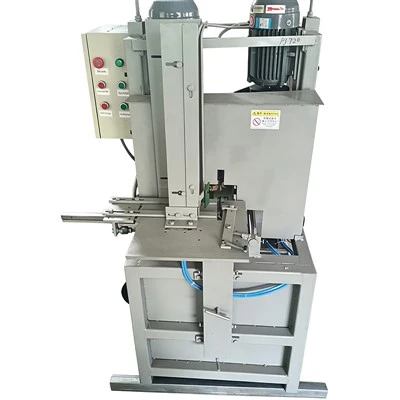
First, let’s get real about what auto boring machines actually do – no corporate sales jargon, promise. If you don’t know, auto boring is the process of precisely reboring engine cylinders (and other wear parts like brake calipers, crank shafts, axle housings) to a perfectly round, sized spec after they’ve worn out or damaged. Back in the day, small shops either sent this work out to a big machine shop (which meant waiting days, eating into profit margins, and risking quality issues from someone else not caring as much about your customer’s car) or handled it with clunky, old manual boring machines that required a tech with 10+ years of experience to nail every cut. That’s where auto boring machines come in. They’re semi-automated (some are fully, but most for small shops are semi) tools that hold the boring bar steady, control the depth and diameter of the cut, and cut out a ton of the guesswork.
Now, the big question: For a small workshop, is this suitable? Let’s break this down like I would over a cup of coffee at a trade show – no fancy spreadsheets, just real numbers and real pain points small shop owners face.
First off, let’s talk about capacity. I’ve seen so many small shops hold back on boring because they think they need a $20,000 industrial unit that takes up half their bay floor. But that’s not true anymore. The auto boring machines we sell (and I say “we” because I actually run a small auto boring machine supply business – I started this 8 years ago after working in a 3-bay shop that sent out all boring work and lost a $1,500 engine rebuild because a third-party botched the bore) – anyway, the auto boring machines for small shops? They’re compact. Like, fits in a 4×6 foot footprint compact. You don’t need to rearrange your entire bay to set one up. And they’re designed for the kind of work small shops actually do. Let’s be honest: Most small shops aren’t rebuilding 10 big diesel engines a month. They’re doing 2-4 4-cylinder gas engine overhauls, maybe a few V6s, some brake caliper work, maybe an occasional axle housing. That’s exactly the sweet spot for the entry-level to mid-range auto boring machines for small shops. The big industrial units are built for shops doing 20+ engine overhauls a month, running 24/7. You don’t need that – it’s overkill, and it would just sit half the time, wasting money on electricity and maintenance.
Next up, skill gap. This is the biggest one I hear. A lot of old-school techs will tell you manual boring is the only way, that you need someone who’s been doing it since they were 18 to get a perfect bore. That’s… kinda true, but only if you’re using a manual machine. Auto boring machines? They’re idiot-proof. The machine does the heavy lifting of holding the bar straight, controlling the feed rate, and most have built-in digital measurement tools that tell you exactly how big the bore is mid-cut. I remember a shop owner I worked with last year – he had a tech who’d been in the game for 5 years, but hated boring because he’d had a few bad cuts that cost him parts and money. He picked up our entry-level semi-auto machine, and he was doing perfect bores on his third job. No more struggling to hold the boring bar level (that’s the #1 mistake newbies make with manual machines – if the bar’s even slightly off, you get an oval bore, which ruins an engine). The auto machine locks that bar in place, so as long as you prep the cylinder deck right (which is basic stuff, anyone can learn), the machine does the rest. That means you don’t need a 20-year boring specialist on staff. You can train your current techs in a day or two, not months. That’s a game-changer for small shops, where staff turnover is high and you can’t afford to hire a specialist just for boring.
Then there’s the profit angle. Let’s run a quick real-world example, no made-up numbers. Say you send out a boring job – for a 4-cylinder engine, that’s usually $150-$200 per cylinder, plus shipping, plus a $50 fee for turnaround time. That’s $600-$800 for a 4-cylinder, and it takes 3-5 days to get back. Now, with an auto boring machine for small shops? Let’s say the machine costs $8,000 (we have models that fit that range, not $20k). Each bore costs you maybe $15 in tooling and electricity. So you charge your customer $250 per cylinder (which is way more competitive than sending it out – customers love local shops that can turn work around fast), that’s $1,000 for a 4-cylinder, and you get it done in 2 hours, not 5 days. Let’s do the math: If you do 20 engine bores a month (that’s only 1 every 1.5 days, totally doable for a small shop), that’s an extra $8,000 a month in revenue, minus tooling and material costs (maybe $300 a month). So you pay off the machine in one month. Wait, that’s not even right? Wait, no – wait, the machine lasts 10+ years, so after that, that $8,000 is pure profit. Also, you don’t have to deal with unhappy customers because a third-party messed up their bore, or wait a week for a part to come back. That’s a huge part of it too – customer satisfaction is everything for small shops, word of mouth is your only marketing. If you can turn a boring job in 2 hours instead of 5 days, and do it right, people will tell their friends.
But wait, let’s not sugarcoat this – there are downsides, and it’s not for every small shop. First, if your shop does less than 5 engine overhauls a month, and almost no brake or axle boring work, is it worth it? Maybe not. You’d pay more for the machine than you’d make in extra revenue in a year. Also, auto boring machines aren’t set it and forget it – you still need to maintain them, replace tooling, and make sure you’re following the right specs for each engine. I’ve had a few customers who bought a machine and didn’t bother to get training on the specs, and they messed up a couple bores, but that’s not the machine’s fault – that’s their fault for not doing their homework. Also, some small shops have limited space – but like I said earlier, the small auto boring machines for small shops are compact, so that’s rarely a dealbreaker unless you’re already working out of a tiny 1-bay shop with no extra floor space.
Another thing a lot of people don’t talk about: consistency. For a small shop, building a reputation for quality is everything. With a manual machine, even the best tech will have a bad day, make a tiny error in the feed rate, and you get a bad bore. Auto boring machines have built-in repeatability – every cut is exactly the same, every time. That means less rework, less wasted parts, less money lost on mistakes. I had a customer last year who was reworking 1 out of every 10 manual boring jobs because of human error. After he got our auto machine, that number dropped to 1 out of 50. That’s a massive saving – parts cost $500-$1,000 per engine, so that’s $500-$1,000 saved every time he does 10 jobs.
Wait, also – what about other types of boring work, not just engine cylinders? A lot of small shops do brake caliper boring, brake rotor turning, axle housing boring, even small transmission parts. Most auto boring machines for small shops can handle all of that, not just engine cylinders. So if you’re already doing that work, you can bring that in-house too, instead of sending it out. That’s even more revenue. I had a shop owner who added brake caliper boring to his in-house work, and that added $300 a month in extra revenue just from that small line of work.
Let’s also compare to other options, because that’s what small shop owners do – weigh all the alternatives. Option 1: Keep sending boring work out. Downsides: Slow turnaround, higher costs, risk of quality issues, lost revenue. Option 2: Buy a used auto boring machine. Wait, that’s a thing! We sell certified pre-owned auto boring machines for small shops for half the price of new ones, and they come with a 1-year warranty. That’s perfect for a shop on a tighter budget. A lot of people don’t think about used equipment, but for a tool like this, most auto boring machines only see 5-10 years of heavy use before they’re replaced, and a well-maintained one will last another 10 years. So that’s a great middle ground for small shops that don’t want to drop $8k on a new machine.
But here’s the thing – I always tell small shop owners to ask themselves three questions before buying an auto boring machine: 1) Do I do at least 3-5 engine or component boring jobs a month? 2) Do I struggle with sending work out, or do I worry about quality when I do send it out? 3) Can I carve out a small amount of floor space (even a 4×6 foot spot) for it? If the answer is yes to all three, then it’s almost certainly worth it. If the answer is no to one or two, then maybe wait until your shop grows a bit more.
I also want to address a common myth: “Auto boring machines are too complex for small shops.” No, not the ones made for small shops. The entry-level models have a digital control panel that walks you through every step – you input the engine make and model, it tells you the exact diameter you need, sets the feed rate, and all you have to do is clamp the cylinder in place and press start. It’s like a fancy microwave, not a rocket ship. I’ve had 20-year-old techs who thought tech was only for new guys pick these up in a day. They were shocked at how easy it was, and how much time it saved them.
Wait, let’s throw in a real customer story – not a made-up one. A guy named Jake runs a 2-bay shop in rural Ohio, been in business for 6 years. He was sending all boring work out to the nearest big shop 45 minutes away. That meant customers had to drop their cars off 2 days early, and he lost about $400 a month in repeat customers because of the wait. He bought our entry-level semi-auto machine 18 months ago, used, for $4,000. Now he does all his boring in-house, turns jobs around in the same day, and his revenue from engine overhauls is up 35%. He told me last month that the machine paid for itself in 2 months, and he’s been turning a profit on boring work ever since. That’s exactly the kind of success story we see all the time with small shops.
Of course, there are exceptions. If you’re a mobile mechanic working out of a van, no, you’re not gonna haul a 100lb boring machine around. If you only do oil changes and brake jobs, no, boring work isn’t your main thing. But if you’re doing engine overhauls, transmission work, brake work, or axle work, this is a no-brainer.
At the end of the day, small workshops can’t afford to waste money on tools that don’t pull their weight, but they also can’t afford to miss out on revenue and quality improvements that auto boring machines bring. They’re not the overpriced, clunky tools you see in big factories – they’re built specifically for the needs of small, independent shops that want to grow without losing their personal touch.
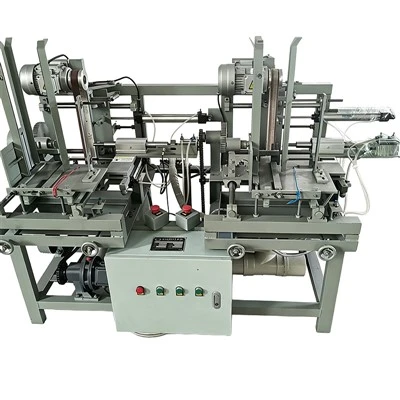
If you’re a small workshop owner sitting here thinking, “Maybe this is right for me,” the best thing to do is reach out. There’s no pressure, no hard sell – we can walk you through what models fit your workload, help you figure out if it makes sense for your shop, and even set up a training session for your techs if you decide to move forward. Don’t let the fear of “it’s too complicated” or “too expensive” hold you back – the numbers don’t lie, and the small shops that make the jump to in-house auto boring are the ones growing year after year.
Woodworking Machinery References:
- Automotive Service Association. (2022). Independent Small Workshop Equipment Needs and ROI Analysis.
- National Institute for Automotive Service Excellence (ASE). (2021). Skill Gaps in Small Engine Repair and Mitigation Strategies.
- Machinery Trade Association. (2023). Compact Shop Equipment Market Report: Auto Boring Machines for Small Workshops.
- Automotive Aftermarket Suppliers Association. (2022). Profitability of In-House Machining for Independent Repair Facilities.
Tongcheng Shengfeng Machinery Factory
As one of the most professional auto boring machine manufacturers and suppliers in China, we’re featured by quality products and good service. Please rest assured to buy durable auto boring machine for sale here from our factory. Contact us for more details.
Address: Shapu Village, Qingcao Town, Tongcheng City, Anhui Province
E-mail: 15955686317@163.com
WebSite: https://www.shengfengmachine.com/
