If you’ve ever worked in industries like coatings, electronics manufacturing, or precision polishing, you’ve likely encountered colloidal silica—those tiny, nanoscale silica particles suspended in a liquid base. For decades, I’ve supplied colloidal silica formulations to businesses across these sectors, and one question still comes up more often than any other: Is colloidal silica soluble in water? It’s a simple question, but the answer isn’t always as straightforward as it seems. Let’s break this down, because getting it right matters for every project you’re tackling. Colloidal Silica
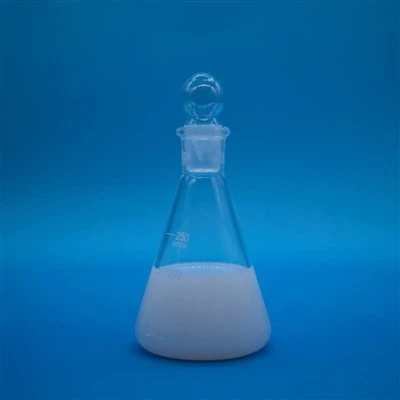
First, let’s clear up a common mix-up: “soluble” is a term most of us learn in basic chemistry, where it describes a solid that dissolves completely in a liquid to form a true solution—no particles, just individual molecules spread evenly. Table salt, for example, is soluble in water; mix it, and you can’t see the salt anymore. Colloidal silica? That works very differently. The “colloidal” part is key here. Colloidal systems are made of particles (in this case, silica) that are between 1 and 1000 nanometers in size. These particles are big enough that they don’t dissolve into individual molecules, but small enough that they don’t settle out of the liquid on their own—they stay dispersed. So in short, colloidal silica is not soluble in water. It’s dispersible. That’s not just semantics—it’s a critical distinction for how you use the product.
Let’s dive a little deeper into the science to make sure that’s clear. Silica itself (the molecular compound SiO₂) is technically insoluble in pure water, unless you adjust the water’s pH or add other chemicals. But colloidal silica is pre-manufactured to have tiny silica particles suspended in water. The surface of these silica particles has hydroxyl (OH) groups that react with the water around them. If the pH is right—usually between 8 and 10 for most standard colloidal silica products—those hydroxyl groups ionize, giving each particle a slight negative charge. Those negative charges repel each other, so the particles don’t clump together (a process called flocculation) and stay dispersed evenly. If you tried to dissolve bulk silica sand (which is made of much larger SiO₂ particles) in water, it would just sink to the bottom, no matter how hard you stir. The nanoscale size of colloidal silica particles is what lets them stay suspended, even if they never become a true dissolved solution.
Now, I’ve seen a lot of customers mix this up in their early projects. For example, a few years back, a customer in the wood coatings industry called me panicking: they’d added too much of our colloidal silica to their water-based coating, and it had turned cloudy and lumpy. Turns out, they were treating it like a soluble additive, so they were adding it straight to the coating without mixing it properly, or not adjusting the pH. What they didn’t realize is that colloidal silica’s dispersion relies on those surface charges—if the pH of the coating mix is too low (acidic), those charges can disappear, and the particles clump together. That lumpy mess wasn’t a sign that the silica was insoluble; it was a sign they’d disrupted the colloidal stability. It’s a common mistake, but one that’s easy to avoid once you understand how it works.
Another point: not all colloidal silica is the same. I’ve worked with customers who needed different particle sizes, pH levels, or purity grades, and each one behaves a little differently in water. For example, acidic colloidal silica (pH around 3 to 5) is another common formulation—its particles have a positive surface charge instead of negative, which still keeps them dispersed. If you added acidic colloidal silica to a highly alkaline water mix, though, that positive charge would cancel out the negative charges from the water’s OH⁻ ions, and the particles would flocculate. On the flip side, basic colloidal silica mixed into pure water with no pH adjustment might stay dispersed, but it’s less stable overall than if you get the pH right. That’s why our team always recommends testing a small batch first for new customers—so they can get the ratio and conditions right without wasting material.
What about other scenarios? Some people ask if colloidal silica is “soluble” in water when you heat it, or when you add surfactants. Heating can change the stability of the colloidal system—too much heat can cause particles to move faster and collide more, leading to clumping, not dissolving. Surfactants (like the ones used in paints or cleaners) can sometimes help stabilize the dispersion by coating the silica particles, but they don’t make the silica soluble—they just keep the particles from settling. Again, that’s dispersion, not dissolution. I’ve seen customers use surfactants to extend the shelf life of their colloidal silica blends, and it works, but only if they understand it’s supporting the colloidal system, not turning it into a solution.
Let’s also talk about why this matters for your business. If you’re using colloidal silica as a flatting agent in coatings, a binder in ceramics, or a polishing agent for semiconductors, the dispersion is what gives the product its performance. If the silica particles clump, you’ll get uneven coatings, rough surfaces, or failed bonds. I’ve supplied colloidal silica to a semiconductor manufacturer that was struggling with inconsistent polishing results—turns out, they’d been storing the colloidal silica at too low a temperature, which caused the particles to clump. Once we adjusted their storage conditions and walked them through how to properly disperse it (slow stirring, checking pH), their defect rate dropped by 30%. That’s the kind of impact understanding the difference between soluble and dispersible can have on your bottom line.
Now, I know some of you might be thinking: “What about fumed silica? Is that the same as colloidal silica?” Fumed silica is another silica-based product, but it’s made of solid, fused particles that are much larger than colloidal silica. Fumed silica can form a gel when mixed with water, but it’s not a colloidal dispersion in the same way, and it’s definitely not soluble. It’s a different product, so if you’re comparing, make sure you’re looking at the right specs. As a supplier, I always make sure our product listings clearly distinguish between colloidal silica and other silica products, so you don’t mix them up.
Another common question: Can colloidal silica dissolve in any other liquid, besides water? Some specialty formulations use solvents like ethanol or isopropanol, but most colloidal silica sold commercially is water-based. The reason is cost, safety, and the fact that many industries (like food and beverage, pharmaceuticals) prefer water-based products for environmental and regulatory reasons. If you need an alcohol-based colloidal silica, we can custom formulate that, but it still works the same way—silica particles dispersed, not dissolved.
Let’s wrap this up with a clear takeaway: Colloidal silica is not soluble in water. It forms a colloidal dispersion, where nanoscale silica particles stay suspended due to surface charges, not because they break down into individual molecules. This is not a flaw in the product—it’s how it’s designed to work. The key to using it effectively is understanding its colloidal stability, adjusting pH and mixing conditions as needed, and storing it properly to prevent clumping.
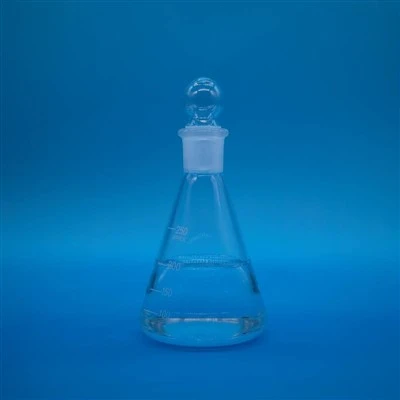
If you’re still unsure about how colloidal silica will work for your specific project, I’m here to help. Whether you’re in coatings, electronics, ceramics, or any other industry that relies on silica products, we can help you choose the right formulation, provide technical guidance, and test a small batch to make sure it meets your needs. Don’t waste time and material on trial and error—reach out to our team to discuss your requirements, and let’s find the right colloidal silica solution for you.
Colloidal Silica References
- Bogdan, R., & Rogoziński, W. (2019). Colloidal silica: Synthesis, properties, and applications. Journal of Colloid Science and Biotechnology, 8(2), 112-125.
- He, G., & Liu, X. (2021). Stability of aqueous colloidal silica dispersions: Effects of pH and ionic strength. Powder Technology, 383, 456-463.
- Kipp, J. (2018). Industrial applications of colloidal silica in water-based coatings. Progress in Organic Coatings, 122, 78-85.
Shandong Peak-tech New Material Co., Ltd.
Shandong Peak-tech New Material Co., Ltd. is one of the most experienced colloidal silica manufacturers and suppliers in China, featured by quality products and good service. Please feel free to buy premium colloidal silica for sale here from our factory. Contact us for more details.
Address: 400m West of Huaihai Rd. and Daxihuan Rd., Junan, Shandong 276600, China
E-mail: sales@ptsilica.com
WebSite: https://www.peaktech-global.com/
