If you’ve ever worked in a manufacturing plant, metal fabrication shop, grain processing facility, or even a woodworking mill, you’ve probably stood in an area where a large, drum-shaped metal unit hums in the background, pulling dirty, particulate-laden air through its walls. Chances are, that’s a cyclone separator – a workhorse of industrial dust collection that I’ve watched solve problems for clients for over a decade as part of my job selling industrial dust collectors. Too often, people in these spaces write off cyclones as “old tech” next to more modern baghouses or cartridge collectors, but I can tell you: they’re still the first line of defense for thousands of operations, and understanding how they work, their pros, and their ideal use cases can save you thousands in equipment costs, compliance fines, and maintenance headaches. Industrial Dust Collectors
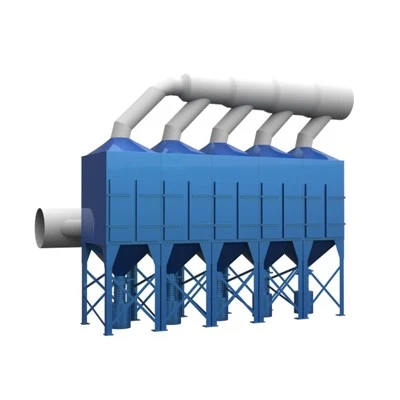
Let’s start with the basics: what exactly is a cyclone separator, and why do industrial facilities rely on it instead of just venting dusty air out a stack? At its core, a cyclone is a mechanical device that separates solid particles (dust, chips, shavings, grit) from a gas stream – usually air – without using any moving parts, filters, or water. The design is deceptively simple: a cylindrical upper section, a conical lower section tapering to an outlet for collected material, an inlet on the side of the cylinder, and two outlets: one at the top for cleaned air, and one at the bottom of the cone for the separated dust.
The science behind how it works is rooted in centrifugal force, something we’ve all experienced in a simple way: when you spin a bucket of water over your head, the water stays inside because the force pushes it against the bucket’s walls. A cyclone does the same with dust particles. When dusty air enters the cyclone tangentially (that’s key – the inlet is angled, not straight), it spins violently around the inner walls of the cylinder. The heavier, denser solid particles can’t follow the fast-moving air’s circular path as easily as the air molecules themselves, so they’re pushed outward by centrifugal force, slamming into the cyclone’s outer walls and falling down into the conical bottom, where they’re collected in a bin or hopper. The lighter, cleaned air is pulled upward into a central “exit vortex” at the top of the cyclone, then out through the clean air outlet – no filters to replace, no fans to clog, no messy water tanks to empty.
I hear clients argue with me all the time that cyclones are too simple to be effective, and sure, they aren’t perfect. Let’s talk about where they shine, and where they might fall short, so you know when to specify one. First, their biggest strength is handling very large volumes of coarse, high-density dust. If you’re cutting 2-inch hardwood chips, sandblasting with garnet, or moving metal grinding grit, a cyclone will capture 90%+ of those particles at a fraction of the cost of a baghouse. For small fabrication shops that only deal with metal shavings, or grain elevators moving heavy kernel dust, a standalone cyclone is often all you need to meet OSHA and EPA particulate matter requirements for coarse materials.
Another big win for cyclones: low maintenance and downtime. Unlike cartridge collectors, which need filter replacements every 1-3 months depending on use, or wet scrubbers that require constant water treatment and pump checks, a cyclone has just two moving parts, max: a rotary airlock at the bottom of the dust hopper to prevent clean air from escaping through the dust outlet, and a fan to pull air through the system. I had a client last year who ran a small woodshop with three table saws; they’d been running a baghouse that cost them $1,200 a year in filter replacements, plus 8 hours of downtime each month to swap them out. We swapped them for a 24-inch cyclone separator, and in 18 months, their only maintenance was a quick wipe-down of the hopper and a single bearing change on their fan – no filters, no headaches.
That said, cyclones do have hard limits, and that’s where a lot of new operators get tripped up. First, they’re terrible at capturing fine particles – anything smaller than 10 microns, and especially sub-micron dust (like welding fume, fine sand, or flour dust) will slip through the cyclone with the clean air. Centrifugal force just isn’t strong enough to pull those tiny, low-density particles against the air stream’s flow. If your operation deals with fine dust, a cyclone works great as a pre-separator: pull out the 90% of coarse material first, then send the remaining fine-laden air to a baghouse or cartridge collector. That cuts the load on your secondary collector, extends filter life, and reduces maintenance costs by 50% or more – a trick I’ve recommended to dozens of food processing plants that handle fine flour or cocoa dust.
Another limitation: cyclones aren’t great at low-volume, high-mix dust streams. If you’re switching between wood, plastic, and metal dust every hour, the constant change in particle density can throw off the cyclone’s separation efficiency, leading to more dust escaping and needing more frequent hopper emptying. For those operations, a cartridge collector or flexible system with a pre-separator (cyclone) is a better fit, but the cyclone is still part of the mix. Also, while they don’t have filters, they do work best with the right air velocity. Too slow, and particles don’t build enough centrifugal force to separate; too fast, and you can create a “back vortex” at the top that pushes some dust back into the clean air outlet. That’s why sizing a cyclone correctly is non-negotiable – a cyclone that works for a 5,000 CFM woodshop will be inefficient in a 2,000 CFM metal grinding operation, and vice versa.
Now, let’s talk about the types of cyclones you’ll encounter in industrial dust collection, because not all are the same. The most common is the standard tangential inlet cyclone, which is what I described earlier – used for general-purpose applications like wood chips, metal shavings, and grain. But there are also high-efficiency cyclones, which have a longer conical section to generate more centrifugal force, designed for capturing smaller particles down to 5 microns (great for welding fume or fine plastic dust, though still not as good as a cartridge collector). Then there are axial cyclones, which use a rotating inner vane instead of a tangential inlet to spin the air, making them more compact for spaces with limited height – perfect for retrofitting systems in older plants where ceiling height is tight. I also work with modular cyclones, which let you combine two or three smaller cyclones in parallel for very high-volume operations, like a steel mill that pulls 50,000 CFM of air from multiple grinding stations at once.
Over the years, I’ve seen a lot of mistakes operators make with cyclone separators, and I want to share those so you can avoid them. First, don’t skip the hopper seal. If the connection between the cyclone’s cone and the dust hopper is loose, clean air will rush into the hopper instead of pulling dust out, creating a backflow that sends dust straight out the clean air outlet. Always use a rotary airlock or a properly fitted flap gate that only allows dust to flow out, not air in. Second, don’t locate the cyclone too close to the equipment it’s pulling air from. If you’re pulling a table saw’s exhaust directly into a cyclone without any transition ductwork, you’ll create turbulence that reduces separation efficiency by 15-20%. We always recommend a straight section of duct equal to 5-10 times the duct diameter between the equipment and the cyclone inlet, to straighten the air stream before it hits the tangential inlet. Third, don’t ignore regular inspections. Even without filters, dust buildup on the cyclone’s walls can disrupt the airflow and reduce efficiency. I tell clients to check their cyclones monthly for buildup, and every quarter for warped walls or worn gaskets – a 30-minute checkup that prevents costly compliance fines.
I mentioned compliance earlier, and that’s a big reason cyclones are still so relevant today. OSHA’s PELs (Permissible Exposure Limits) for dusts like silica, wood dust, and metal fume are strict, and EPA regulations for industrial emissions require that facilities capture 99% of particulate matter in most cases. For coarse dust, a standalone cyclone is often enough to meet those limits, but for fine dust, combining a cyclone with a secondary collector is the industry standard – and it’s more cost-effective than investing in a single, large high-efficiency collector. I had a client last year who was facing a $25,000 OSHA fine for excess silica dust in their metal polishing shop. They’d tried a small cartridge collector, but it couldn’t keep up with the volume. We installed a 36-inch high-efficiency cyclone as a pre-separator, paired with a compact cartridge collector, and that not only met OSHA standards for half the cost of a full replacement collector – it cut their filter changes from every month to every 6 months.
As someone who’s spent his career selling industrial dust collectors, I get it: it’s easy to get caught up in the latest, shiniest equipment, but cyclones are a classic example of “if it ain’t broke, don’t fix it.” They’re reliable, low-cost, and when sized and installed correctly, they solve more dust problems than a lot of newer technologies. Whether you’re running a small woodshop, a grain processing facility, or a large metal fabrication plant, a cyclone separator is almost certainly a key part of your dust collection system – even if you don’t realize it.
Gas Turbine Filter If you’re not sure whether a cyclone is right for your operation, or you need help sizing one to pair with your existing dust collection system, I’m here to help. We can assess your current dust stream, volume, and compliance requirements to recommend the right cyclone (or combination of systems) that fits your budget and needs. Don’t let outdated or inefficient dust collection hold your operation back – reach out today to start a conversation about optimizing your dust collection system.
References
- Occupational Safety and Health Administration (OSHA). Industrial Dust Control: A Guide for Small Business. U.S. Department of Labor, 2021.
- American Conference of Governmental Industrial Hygienists (ACGIH). Industrial Ventilation: A Manual of Recommended Practice for Design, 30th ed. ACGIH, 2022.
- Chen, J. C. “Principles of Cyclone Separation.” Powder Technology, vol. 78, no. 2, 1994, pp. 101-114.
- U.S. Environmental Protection Agency (EPA). Stationary Source Particulate Matter Emissions Control Technologies. EPA, 2020.
Jiangsu Renhe Energy Saving Technology Co., Ltd.
As one of the most professional industrial dust collectors manufacturers and suppliers in China, we also accept customized order. We warmly welcome you to wholesale durable industrial dust collectors in stock here from our factory. If you have any enquiry about quotation, please feel free to email us.
Address: No.358 Nanyuan Road, Tangqiao Town, Zhangjiagang City
E-mail: info@rhfilter.com
WebSite: https://www.rhccafenv.com/
