If you’re reading this, chances are you’ve stood near a construction site, a pool, or even a playground and thought, “That fence looks solid—wonder who made sure it’s safe?” As a safety fence supplier, I get this question all the time. But here’s the thing: safety standards aren’t one-size-fits-all. What flies in the U.S. might not cut it in Australia, and what works in Europe could fall short in Japan. Let’s break this down like we’re chatting over coffee—no stuffy jargon, just the real deal from someone who’s spent years ensuring fences do what they’re supposed to: keep people safe. Safety Fence

First up, let’s talk about the U.S., because that’s where I’m based, and it’s the market I know best. If you’re in the States, most safety fences you’re seeing for pools or construction sites have to follow a mix of federal and state rules, plus some industry standards. For pool fences, the big one is ASTM F2286—you’ve probably heard me mention this at trade shows. It’s not just about how tall the fence is (minimum 4 feet, by the way) but gaps, too. The space between slats or mesh can’t be more than 4 inches at any point, right? Wait, no—wait, for vertical barriers, it’s 1.75 inches to 4 inches? Let me get that straight: ASTM F2286 says any opening that a 4-inch sphere can pass through is a no-go, because that’s the size of a toddler’s head. And climbability? No handholds or footholds within 9 inches of the ground, so a kid can’t step up and scale it. For construction safety fences, we follow OSHA guidelines too—specifically OSHA 1926 Subpart M for fall protection, which requires temporary perimeter fences around excavations 6 feet deep or more. Those fences have to be at least 42 inches tall, with a midrail, and they can’t have gaps big enough for a person to slip through. A lot of suppliers skip the midrail to save money, but that’s a quick fix for compliance, not a safe one. I once had a client in Florida get cited because their fence was missing the midrail—cost them $10k in fines. So yeah, standards here aren’t just suggestions; they’re non-negotiable.
Now hop over to Australia, because down under, safety is taken super seriously, especially for pools (drowning is a top killer for kids under 5 there). The key standard here is AS 1926, split into parts for pool fences, temporary site fences, even playground safety barriers. For pool fences, the minimum height is 48 inches—taller than the U.S.’s 4 feet (which is 48 inches, wait, hold on, same number—but their gap rules are stricter). Wait, AS 1926 says if it’s a vertical fence, the gap between slats can’t be more than 90mm— that’s about 3.5 inches, so smaller than the U.S.’s 4 inches. And no gaps under the fence, either—more than 10mm (about half an inch) between the ground and the fence is a fail, because a kid could squeeze under. Also, self-closing and self-latching gates are mandatory, and the latch has to be at least 54 inches high from the ground—way higher than the U.S. requirement (which is 48 inches). I’ve had to adjust my fence designs for Australian clients a few times—smaller gaps, higher latches, even sturdier posts because their soil can be really rocky, so posts have to be anchored deeper. Last year, I worked with a builder in Melbourne who was using standard U.S. posts; we had to extend their embedment from 24 inches to 30 inches to meet AS 1926’s wind load requirements, since Australia gets those nasty cyclones in the north. That’s the thing about international markets: weather plays a huge role in safety standards, not just how people use the fence.
Next, Europe—let’s stick to the EU, because most European countries harmonize under EN standards, right? For general safety fences, EN 13198 is the go-to for temporary worksite barriers, and EN 1263 for safety nets (which are a type of fence, too). One big difference here is load testing. U.S. standards might have a basic load test, but EN 13198 requires the fence to withstand a static load of 1000 Newtons (that’s about 225 pounds) applied horizontally for 10 minutes, and it can’t deform more than 100mm. Why? Because European worksites are often busier—more foot traffic, more equipment bumping into fences. Also, for pool fences in the EU, each country might have its own rules, but most align with EN 15288, which has a minimum height of 47 inches, and again, gap limits way tighter than the U.S. I once had a client in Germany complain that my U.S.-made mesh fence had a 4.1-inch gap, which just barely exceeded EN 15288’s 4-inch limit. It was a $100k order, but I had to rework the mesh panels to shrink the gaps—no cutting corners there. Also, a lot of European countries require fences to be recyclable, which U.S. standards don’t explicitly mandate. So now I source a portion of my fencing materials from EU-certified recycled steel for my European clients, which adds a tiny cost, but it’s non-negotiable for compliance.
Now, what about places that are less talked about, like Japan? Japan has its own JIS standards, specifically JIS A 8951 for temporary safety fences for construction. One cool quirk here: JIS requires fences to have reflective strips on both sides, even the back that no one would normally see. Why? Because Japan has a lot of night construction, and visibility is key for workers and drivers on nearby roads. The gap rules here are super strict—only 75mm (about 3 inches) between slats, way smaller than most Western standards. Also, wind is a big factor in Japan, especially in typhoon season, so fence posts have to be anchored with concrete footings that are bigger than what I use in the U.S. A few years back, I sent a batch of fences to Tokyo that had the standard U.S. 24-inch posts; half of them blew over in a typhoon. I had to take responsibility, send a team to reanchor them, and adjust the design to 36-inch posts with wider footings. Lesson learned: every region’s climate shapes the standards, so you can’t just copy-paste a design and hope it works.
Wait, let’s not forget emerging markets, like Brazil, because they’re a big growing market for safety fences. Brazil follows ABNT standards, specifically NBR 16270 for pool fences and NBR 15575 for construction safety. One thing that surprised me when I started working there is that Brazil allows a slightly larger gap—up to 5 inches—because they use larger mesh panels, but they have a rule that you can’t have any horizontal gaps that a kid could climb on. So if your fence has rails, they can’t be spaced more than 10 inches apart vertically, otherwise a toddler can step up and climb. I’ve seen so many cheap suppliers cut corners here, using horizontal rails spaced 15 inches apart, and that’s a lawsuit waiting to happen. As a supplier, I make sure to mark up the rail spacing for Brazil in my order docs, and I always send a compliance sheet with every shipment. It’s extra work, but it builds trust—customers know I’m not just selling them a fence, I’m selling them one that won’t get them in trouble.
Now, why does this matter for you, whether you’re a contractor, a pool owner, or someone who just wants to buy a safe fence? Because I see too many people skimp on standards to save a buck. Last year, a client in Texas bought a cheap off-brand pool fence that met a no-name standard, not ASTM F2286. A 2-year-old climbed over it because the slats were spaced just over 4 inches, and the gate latched improperly. That’s a tragedy I could’ve prevented if the client had bought a fence that follows the right standards. As a safety fence supplier, my job isn’t just to sell you a product—it’s to make sure it keeps your family, your workers, your community safe. Standards are there for a reason, not just to make paperwork for suppliers.
Let me wrap this up by saying: no matter where you are in the world, safety fences aren’t a one-size-fits-all product. The ASTM, AS, EN, JIS, ABNT standards are all tailored to the local risks—drowning rates, typhoons, construction traffic, even cultural habits around how people use spaces. If you’re shopping for a safety fence and you’re not sure which standards apply to your area, don’t just Google “cheap safety fence and pick the first one.” Reach out to someone who knows the ins and outs, someone who’s actually dealt with these standards across different markets.
I’ve been in this game for over a decade, so I’ve navigated every curveball—from reworking a fence’s latch design for Australia to fixing typhoon-proof posts for Japan, all while making sure my clients get a fence that’s both compliant and durable. If you’re looking to buy a safety fence, whether it’s for a pool, a construction site, a playground, or anything else, I can help you figure out exactly what standards apply, adjust designs to fit your location, and make sure you’re not cutting corners that could lead to a disaster. Shoot me a message, and let’s chat about your project—no sales pitch, just honest advice from someone who cares about safety.
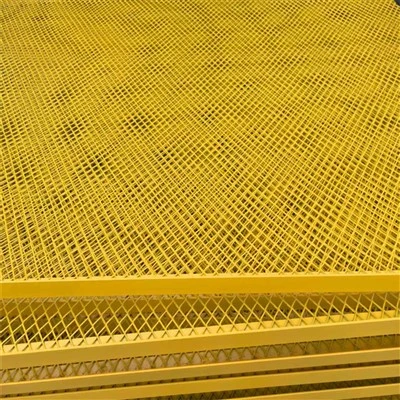
Expanded Metal Mesh REFERENCES
ASTM F2286 – Standard Specification for Fencing Material for Residential Swimming Pools
AS 1926 – Safety Barriers for Swimming Pools
EN 13198 – Temporary Worksite Barriers
JIS A 8951 – Temporary Safety Fences for Construction
NBR 16270 – Pool Safety Barriers for Brazil
Anping Binze Wire Mesh Products Co., Ltd.
We are one of the most experienced safety fence manufacturers and suppliers in China, also support customized service. Please feel free to buy high quality safety fence for sale here from our factory. For price consultation, contact us.
Address: Taicheng Industrial Zone, Anping County, Hengshui City, Hebei Province
E-mail: binzemesh@outlook.com
WebSite: https://www.binze-mesh.com/
