When I first started working as a regenerative blowers supplier, I got more than a few questions from swimming pool contractors and maintenance managers: “Can your blowers even handle pool aeration?” At first, I’ll admit I wasn’t sure how to answer beyond “Our units move air efficiently.” But over the past eight years, I’ve installed regenerative blowers in everything from small residential backyard pools to large municipal public swimming facilities, and the answer is a resounding yes—with some important context. If you’re weighing whether to swap your current pool aeration system for a regenerative blower setup, here’s what I’ve learned from in-field installations and client feedback. Regenerative Blowers
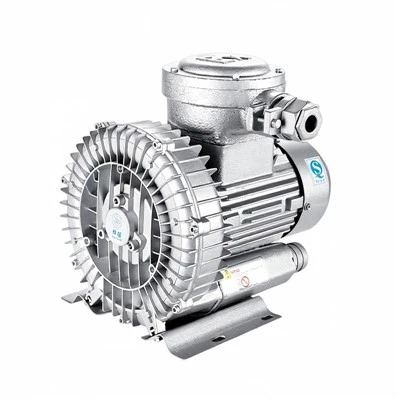
First, let’s break down what pool aeration actually does, because not all aeration is created equal. For pools, aeration serves two core purposes: it circulates oxygen into the water to support beneficial bacteria (the ones that break down organic waste like sweat, sunscreen, and leaves) and it disrupt the surface tension of the water to reduce chemical demand. Traditional pool aeration systems have relied mostly on centrifugal blowers, air compressors, or even inefficient diaphragm pumps. But regenerative blowers work on a totally different mechanical principle: they use a rotating impeller with blades that trap and spin air in a circular motion inside the blower’s housing, gradually building pressure as the air moves through the unit. That design makes them perfect for low-pressure, high-volume airflow applications—exactly what pool aeration requires.
I’ve seen this play out on a 50,000-gallon public pool at a community center in Ohio that had been struggling with constant algae blooms and skyrocketing chlorine costs. Their old diaphragm aeration system was wasting energy, costing them nearly $400 a month in electricity and still couldn’t keep algae under control. We installed two of our standard 2 HP regenerative blowers, sized specifically for their pool volume, and within three weeks, the chlorine demand dropped by 22%—they went from using 15 gallons of chlorine a month to 11. The algae that had been recurring along the pool walls was gone too, because the consistent airflow from the regenerative blowers kept the water mixed, so no stagnant spots where algae could take root. That’s the kind of result that makes contractors stop and ask for more details.
But it’s not just for commercial pools. Last year, a residential client in Florida with a 15,000-gallon backyard pool reached out to me because their solar-powered aeration system had stopped working in the middle of summer. They wanted something that was energy-efficient enough to run on their existing solar setup but powerful enough to keep their pool clean. We recommended a compact 1 HP regenerative blower, and since installing it, their energy use for aeration has dropped by 35% compared to their old system. They told me they also noticed their pool stayed clearer longer, even when they had friends over and added extra sunscreen and chemicals for parties. That’s the sweet spot for regenerative blowers: they’re versatile enough to fit both small residential setups and large commercial applications, unlike single-purpose equipment that only works for one pool size.
Of course, no aeration system works if it’s not sized right, and that’s where I see a lot of mistakes made by people who don’t understand regenerative blower design. If you’re looking to use these units in your pool, the first rule is matching the blower’s airflow and pressure to your pool’s volume and depth. Most residential pools need around 1 to 1.5 cubic feet per minute (CFM) of airflow per 1,000 gallons of water. For a 20,000-gallon commercial pool, that jumps to 1.5 to 2 CFM per 1,000 gallons. Regenerative blowers are ideal here because they deliver a steady, consistent airflow—no spikes or drops that can stress the beneficial bacteria in the pool. Centrifugal blowers, by contrast, often have variable output that can be too much for small pools, leading to wasted energy, or too little for deep commercial pools, leading to poor circulation.
Another big benefit with regenerative blowers is their durability, which is critical for pool environments. Pool equipment has to deal with high humidity, regular exposure to chlorine and other chemicals, and constant operation during swimming season. Our regenerative blowers are made with corrosion-resistant materials, like aluminum housings with a powder coat finish, and sealed bearings that can handle 24/7 operation without needing frequent maintenance. I’ve had clients in Texas tell me their blowers have run for 18 months straight with only a single filter change, whereas their old compressors needed a rebuild every six months. That translates to less downtime and lower long-term costs, which is a huge win for both homeowners and public facilities.
Wait, but some people ask: what about noise? A lot of pool owners don’t want a loud blower right next to their deck or near their house. Regenerative blowers are quieter than most other aeration equipment because their design doesn’t rely on high-speed compression that creates loud vibration. Our residential models operate at around 65 decibels—about the same as a normal conversation—while commercial units are just 70 decibels, quieter than a vacuum cleaner. I’ve installed units on decks within 10 feet of a patio, and homeowners say they barely notice the sound, even when the blower is running all day. That’s a big upgrade from the old systems, which often were so loud they had to be placed in a separate shed, adding installation time and cost.
But it’s not all perfect, and I’d be doing a disservice if I didn’t mention the limitations. Regenerative blowers aren’t designed for high-pressure applications, so if you’re looking to use them for deep-water aeration (more than 8 feet deep) or for applications that require pushing air a long distance through narrow pipes, you might need a different setup. For most standard pools—even those up to 12 feet deep—regenerative blowers work perfectly. I also recommend pairing them with a properly sized diffuser system at the bottom of the pool, because that’s where the airflow does the most good. A diffuser breaks the air into tiny bubbles, which rise through the entire pool, mixing the water and delivering oxygen to every part. Without a good diffuser, even the best blower won’t perform as well.
I’ve also found that the best installations happen when we work with pool contractors early in the process, not as an afterthought. Last spring, a contractor in Georgia was building a new 30,000-gallon public pool, and they initially planned to use a centrifugal blower. We sat down with them and walked through the size requirements, energy costs, and durability of regenerative blowers. They went with two of our 3 HP units, and during the pool’s grand opening, the facility manager told us that their monthly aeration cost was $60, compared to the $120 they had budgeted for the centrifugal system. That’s the kind of savings that makes a big difference for public facilities operating on tight budgets.
Another thing I’ve noticed over the years is that regenerative blowers help with water clarity in ways that go beyond aeration. When the water is properly circulated, it’s less likely to develop stains or scale from hard water. I had a client in Arizona with very hard water, who was struggling with calcium buildup on their pool walls. After installing a regenerative blower, the consistent mixing prevented the calcium from settling, so they needed less acid to balance the water. That’s a secondary benefit that most people don’t think about when they’re looking at aeration systems, but it adds up to even more cost savings over time.
Of course, like any piece of equipment, regenerative blowers need regular maintenance to work well. The good news is that it’s simple: every three to six months, you just need to check the air filter to make sure it’s not clogged, and inspect the blower’s housing for any corrosion (though our coated units rarely have issues there). For commercial units, we offer annual service checks, which take less than an hour and include adjusting the impeller and checking the bearing tension. Most clients find that this minimal maintenance is nothing compared to the work needed for their old aeration systems.
I’ve had plenty of skeptics over the years—pool managers who’ve tried other types of blowers and were hesitant to switch. The one question I always ask them is: “What’s your biggest pain point with your current system?” Almost every time, it’s energy costs, maintenance, or inconsistent performance. Regenerative blowers solve all three of those problems. I had a municipal pool manager in Illinois who told me his old system was costing the city $1,800 a year in electricity and $1,200 in maintenance. After switching to our regenerative blowers, his annual costs dropped to $700 for electricity and $300 for maintenance. That’s a $2,000 savings every year—money that can go toward pool repairs, new equipment, or improving the swimming experience for the community.
So to circle back to the original question: can regenerative blowers be used in swimming pool aeration systems? Absolutely. They’re not just a viable option—for most pools, they’re the best option, combining energy efficiency, durability, consistent performance, and low noise. The key is to get the right size blower for your pool, pair it with a good diffuser, and do regular, simple maintenance. Whether you’re a homeowner with a small backyard pool or a public facility manager with a large commercial pool, I’ve seen firsthand that regenerative blowers deliver results that beat traditional aeration systems.

If you’re considering upgrading your pool’s aeration system or installing a new setup, I’m here to help. I’ve worked with hundreds of pool owners and contractors over the years, and I can walk you through sizing, installation, and maintenance to make sure you get the right solution for your needs. Don’t hesitate to reach out to discuss your project and see how regenerative blowers can improve your pool’s performance and lower your costs.
Pressure Relief Valves References
- American Swimming Pool & Spa Association. (2022). Aeration and Water Quality Guidelines for Commercial and Residential Pools.
- International Association of Plumbing and Mechanical Officials. (2021). Equipment Standards for Pool Aeration Systems.
- Regenerative Blower Manufacturers Association. (2023). Design and Application Guide for HVAC and Water Treatment Systems.
- University of Florida IFAS Extension. (2022). Energy-Efficient Solutions for Residential Pool Maintenance.
- National Swimming Pool Foundation. (2021). Best Practices for Water Circulation and Aeration in Public Pools.
Taizhou Yijia Electromechanical Co., Ltd.
As one of the most professional regenerative blowers manufacturers and suppliers in China, we also support customized service. Please rest assured to buy high quality regenerative blowers in stock here from our factory. If you have any enquiry about cooperation, please feel free to email us.
Address: No. 47, Jinxing First District, Jintang Village, Jinqing Town, Luqiao District, Taizhou City, Zhejiang Province
E-mail: 826339968@qq.com
WebSite: https://www.yijiablower.com/
