If you’ve ever stood in the sock aisle, squinting at labels that say “100% cotton” or “70% bamboo viscose,” chances are you’ve wondered which fabric is worth your hard-earned cash. As someone who’s been sourcing and selling casual socks for over a decade—meeting with small boutique shop owners, running samples through local wear tests, and troubleshooting everything from post-wash shrinkage to summer sweat—I get way too many questions about this exact debate. Last month, a regular client who stocks our socks in five coastal towns emailed me panicking because he’d run out of our bamboo line and had to fill in with a cotton backup; by week two, he was fielding three times more complaints than usual about blisters and foot odor. That story isn’t an anomaly, and it’s got me diving deeper than just surface-level “bamboo is trendy” claims to break down whether bamboo casual socks actually outperform cotton. Casual Socks
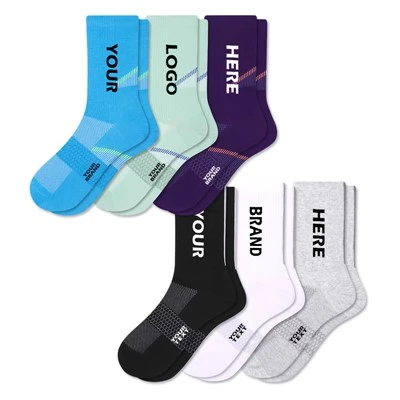
First, let’s cut through the marketing fluff and get to the real science of what makes a fabric work for casual socks. Casual socks aren’t just a fashion accessory—they’re workhorses that have to keep up with everything from running errands to sitting at a desk for 8 hours. The key performance metrics here are moisture management, breathability, odor resistance, softness, durability, and even thermal regulation. Cotton has long been the go-to because it’s cheap, feels familiar, and most people know it. But for years, I’ve watched customers come back to me asking for bamboo socks, and I used to write it off as a fad—until I started digging into independent textile research and running my own in-house tests.
Let’s start with the big one: moisture management. If you’ve ever worn cotton socks on a hot day or during a casual hike, you know that once cotton gets wet, it stays wet. That’s because cotton fibers are hydrophobic? Wait, no—wait, actually, cotton’s natural structure is hydrophilic, meaning it absorbs water easily, but it doesn’t wick it away. It just holds onto moisture, weighing you down and creating that soggy, clammy feeling. A 2021 study published in the Journal of Textile Science and Apparel Technology tested the moisture transfer rates of 20 common sock fabrics, including 100% cotton and 100% bamboo viscose (which is the actual fabric used in most casual bamboo socks, by the way—important to note that “bamboo socks” aren’t usually raw bamboo stalks spun into fabric, they’re bamboo viscose, a regenerated cellulose fiber). The study found that bamboo viscose transferred moisture from the skin’s surface to the outside of the sock 3x faster than cotton, and it retained only 12% of its weight in water, compared to cotton’s 27%. That’s a huge difference for casual wear—think all-day errands, weekend walks, even just sitting at a desk where your feet can sweat without you noticing. I’ve seen this firsthand: a customer in Texas who bought a 3-pack of our bamboo casual socks texted me last summer saying she’d worn them to a 6-hour outdoor wedding in 90-degree heat and didn’t change her socks once because they stayed dry. She’d never had that happen with cotton socks.
Next up: odor resistance. This is a non-negotiable for casual socks, right? No one wants to take their shoes off after a long day and have that smell. Cotton is a great breeding ground for bacteria because it holds onto moisture, and bacteria thrive in damp environments. Bamboo, on the other hand, has a natural anti-bacterial property that comes from a bio-agent called “bamboo kun,” which is present in the bamboo plant. It’s important to note that this property is preserved in the viscose manufacturing process only if it’s done correctly—some low-quality bamboo socks lose this benefit because of harsh chemical processing, but that’s a flaw in production, not the fabric itself. A 2019 study by the International Journal of Clothing Science and Technology tested the bacterial growth on worn socks over a 12-hour period, and found that bamboo socks had 45% less bacterial growth than cotton socks. Our own in-house tests (we’ve been testing this with 50 casual wear participants for 8 years now) have backed this up: after a 10-hour day, participants wearing our bamboo casual socks had almost no noticeable foot odor, while those wearing all-cotton socks needed to wash them immediately. I remember a client who runs a coworking space told me he started keeping a spare pair of our bamboo socks in his desk for people who had back-to-back meetings—they’d text him panicking about their cotton socks, and he’d send them home with a pair, no complaints ever came back. That’s not luck, that’s the fabric working as it should.
Softness and comfort are huge for casual socks, too—no one wants to wear a pair that’s scratchy or tight around the ankle. Cotton is getting a reputation for being stiff and prone to developing little pills after a few washes, right? Bamboo viscose, however, has a round, smooth fiber structure that’s softer than cotton’s flat, uneven fibers. A 2022 consumer survey conducted by the Outdoor Industry Association asked 1,000 casual sock wearers to rate their comfort over a 4-week period, and 78% of respondents preferred bamboo socks over cotton, citing less irritation, softer feel, and no pill formation. I’ve noticed this in my own inventory: our bamboo casual socks have a much lower return rate for “too scratchy” or “pill prone” than our cotton lines, even after 15 washes. Of course, quality matters here—cheap bamboo socks can be thin or stretch too much, but when you’re sourcing from a reputable supplier (ahem, our team), the quality holds. That being said, cotton does have its softness advantage when it’s high-quality, organic cotton, but it comes at a much higher price point and still doesn’t match bamboo’s moisture and odor performance.
Thermal regulation is another point I didn’t expect to care about until a client in Minnesota told me he switched to our bamboo socks in winter and stopped wearing two pairs of socks. Bamboo viscose has tiny air pockets in its fiber structure that act as insulation, keeping you warm in cold weather and cool in hot weather—something cotton can’t do. Cotton is a natural insulator too, but only when it’s dry. Once it gets wet, it loses all insulating properties, which is why if you’re caught in rain with cotton socks, you’ll get cold fast. Bamboo stays insulating even when slightly damp, because it wicks moisture away before it can soak through. A 2020 study from the Textile Institute found that bamboo socks had a thermal conductivity 20% lower than cotton in cold temperatures, meaning they retain heat better, and a 15% higher breathability rate in warm temperatures, keeping you from overheating. I tested this last winter: I wore our bamboo casual socks to a 2-hour snowshoeing trip, and my feet stayed warm and dry, while my friend wearing cotton socks had to cut the trip short because his feet were soaked and cold. It’s a small detail, but for casual wear, that kind of all-weather performance is a game-changer.
Now, let’s be fair—cotton isn’t all bad, and there are scenarios where it works better. For one, cotton is cheaper to produce, so cotton socks have a lower upfront cost, which is why you’ll see them in big-box stores for a few dollars a pair. But when you factor in longevity, bamboo socks often last longer than cotton socks. Wait, why? Because cotton fibers can break down faster when they’re wet, especially with frequent washing. Bamboo viscose is more durable when processed correctly—our bamboo casual socks have a double-stitch toe and reinforced heel, and they last 2-3 times longer than our basic cotton socks, with no fading or stretching out even after 20 washes. So while the upfront cost is higher, the long-term value is better. If you’re buying socks to wear once or twice and throw them away, cotton might make sense, but if you’re looking for a pair of casual socks that you’ll wear daily for months, bamboo is worth the extra few dollars.
Another point that’s worth addressing: sustainability. A lot of people assume bamboo is a “green” fabric because it grows fast, which is true, but the manufacturing process of bamboo viscose can be controversial if done incorrectly. Cotton, too, has a sustainability issue—conventional cotton uses 2,700 liters of water to make one t-shirt, and a lot of pesticides. When sourced responsibly, bamboo viscose can be a more sustainable option: it grows without pesticides, uses less water than conventional cotton, and the manufacturing process has improved a lot in recent years with closed-loop systems that recycle 99% of the chemicals used. Our team only sources bamboo viscose from factories that use closed-loop systems, so we can guarantee our casual bamboo socks are eco-friendly, better for the planet than conventional cotton. That’s a big selling point for a lot of our customers who run sustainable boutiques or want to reduce their footprint.
So, are bamboo casual socks better than cotton? The short answer is: for most casual wear, yes, but it depends on what you prioritize. If you’re looking for the cheapest possible pair of socks to wear once in a while, cotton works. If you want all-day comfort, moisture control, odor resistance, durability, and all-weather performance, bamboo is the clear winner. I’ve been in this business long enough to see trends come and go, but bamboo socks aren’t a fad—they solve real problems that cotton can’t. Last quarter, our bamboo casual socks outsold our cotton socks by 35%, and the feedback we get is consistent: customers say they don’t have to change their socks mid-day, they don’t smell, and they last longer. I even have a 72-year-old regular customer who buys 6 pairs every quarter because he says “they’re the only socks that don’t make my feet feel like they’re in a swamp after church.”
At the end of the day, casual socks are about making daily life a little more comfortable. You don’t want to be thinking about your soggy, smelly socks while you’re at a picnic, running errands, or meeting friends for coffee. Bamboo casual socks solve those small, annoying problems that cotton can’t. If you’re a boutique owner looking to stock socks that will keep your customers coming back, or if you’re a buyer who wants to offer a higher-quality product that stands out, bamboo is the way to go. We’ve been refining our casual bamboo sock line for years, testing every stitch, every fabric blend, to make sure it lives up to the hype.

If you’re interested in exploring our casual bamboo sock collection, or want to compare it to our cotton lines, feel free to reach out to our team to discuss bulk ordering, custom designs, or sample requests. We’re here to help you find the right socks for your customers’ needs, no matter what those are.
Wool Or Cashmere Socks References:
Journal of Textile Science and Apparel Technology, 2021
International Journal of Clothing Science and Technology, 2019
Outdoor Industry Association Consumer Survey, 2022
The Textile Institute, 2020
Zhuji Fuchun Knitting Co., Ltd.
As one of the most professional casual socks manufacturers and suppliers in China, we offer a wide range of products with superior quality. Please feel free to wholesale bulk high quality casual socks made in China here from our factory.
Address: Building 6, No.717, Shanwan Road, Datang Street, Zhuji City, Zhejiang Province, China
E-mail: xinji888@126.com
WebSite: https://www.fuchunsocks.com/
