If you’ve ever stood in the sprayer section of a farm supply shop, or dug through a box of accessories in your workshop wondering why your sprayer’s output is uneven, nozzles clog, or your pump wears out faster than it should, there’s one tiny, easy-to-overlook culprit at play: the sprayer filter. As someone who’s spent 12 years running a sprayer accessories supply company, I’ve heard every version of that question in my inbox and on the warehouse floor—“What size sprayer filter do I actually need? I thought it was just a one-size-fits-all part!” Sprayer Accessories
It’s such a common misconception, and honestly, I get it. When you’re busy prepping for a big spraying season, troubleshooting a broken rig, or even just replacing a part that’s clearly worn out, filters are often an afterthought. But sizing them wrong isn’t just an inconvenience—it can cost you in wasted chemicals, ruined crops, expensive equipment repairs, and even safety hazards from improperly calibrated spray. Over the years, I’ve worked with small family farms with 100-gallon spot sprayers, large commercial operations with 1,000-gallon boom sprayers, and even specialty crop growers with mist blowers for orchards, and every single one’s ideal filter size is tailored to their specific setup, spraying use case, and the mix of products they’re applying.
Let’s start with the basics that most guides skip: sprayer filter size isn’t just a number. It refers to two key measurements you’ll see on every filter packaging or listing: mesh count and inlet/outlet size. Mesh count is the number of openings per linear inch of the filter screen, and that’s where most of your sizing decision happens. The higher the mesh count, the smaller the openings, which means it catches finer particles. Inlet/outlet size is the pipe diameter that fits your sprayer’s plumbing, which is non-negotiable—if your hose is ½ inch, a filter with a ¾ inch inlet won’t screw on, no matter how perfect the mesh count is. I always tell new customers to grab a tape measure, or better yet, a sample of their existing filter or a thread gauge, to confirm inlet/outlet size before anything else. That part is easy to get right; the mesh count is where it gets nuanced.
Now, let’s break this down by common sprayer types and use cases, because that’s how we’ve helped thousands of customers over the years. First, let’s talk about spot sprayers—those smaller, handheld or tow-behind units that hobby farmers, homeowners with small acreage, and landscaping companies use for spot treating weeds, spraying small garden plots, or applying herbicides to fence lines. Most spot sprayers have a flow rate between 1 and 5 gallons per minute (GPM) and work with smaller nozzles, usually for fine to medium spray patterns. For these, we almost always recommend a 50-mesh or 100-mesh filter at the nozzle. Wait, why two options? Let’s get specific. If you’re applying something like glyphosate that’s usually pre-mixed, filtered already, and doesn’t have heavy, suspended sediment, a 100-mesh filter works great. It catches smaller bits of debris that could clog the tiny nozzle orifice on spot sprayers, which are often only 0.02 inches wide. But if you’re mixing your own spray from concentrated powder, or adding soil amendments with larger particles, or using old well water that has more sediment, a 50-mesh filter at the nozzle is better. It lets enough flow pass through to keep up with the spot sprayer’s pump, but still catches the bigger chunks that would clog your nozzle before they even reach the plant. We once had a homeowner customer with a 15-gallon tow-behind spot sprayer who complained his nozzles were clogging every time he sprayed the driveway edges. He’d been using a 200-mesh filter, thinking finer was better, but it slowed the pump flow so much that it couldn’t build enough pressure, and the nozzles would drip and clog. Switched him to a 100-mesh nozzle filter, and he hasn’t had a clog in two seasons. That’s the kind of real-world problem we solve every day.
Next up, boom sprayers—this is where sizing gets more specific, because boom sprayers vary so widely. Small-to-mid-sized boom sprayers, used by family farms with 50 to 500 acres, usually have a flow rate per nozzle between 0.1 and 0.5 GPM, and the boom itself has a larger main line, usually ¾ to 1 inch. For these, we typically recommend a three-filter system, which sounds like overkill but makes a huge difference. First, a 50-mesh suction filter at the pump inlet. This is your first line of defense, catching the largest debris (like leaves, dirt, or clumps of fertilizer) before it even gets to the pump, which is the most expensive part of your sprayer. If sediment gets past this filter, it can scratch the pump’s internals or clog the pressure regulator, leading to thousands in repairs. Then, a 100-mesh filter on the boom’s main line, after the pump, to catch any smaller bits that slipped past the suction filter before they reach the nozzles. Finally, a 100 or 150-mesh nozzle filter, depending on what you’re spraying. Wait, why not the same mesh at every stage? Let’s use a wheat farmer I worked with last year as an example. He was applying a mix of herbicide and liquid fertilizer, and his original setup only had suction and nozzle filters, no middle boom line filter. We added that 100-mesh boom line filter, and his pump life went up by 30%. That filter catches the mid-sized debris that would otherwise settle in the boom lines, especially when the sprayer’s parked for a week between uses. For larger commercial boom sprayers, with flow rates up to 2 GPM per nozzle, we bump up the nozzle filter to 150-mesh if they’re applying very fine, high-precision herbicides, like those used for specialty crops or in fields with low weed pressure. The larger pump on a commercial sprayer can handle the slightly finer mesh without losing flow, and the smaller orifices of their nozzles mean even tiny bits of sediment will cause clogging. I will say, though—don’t make the mistake of going overboard with mesh count here. We had a large corn farm customer who switched all his nozzle filters to 200-mesh, thinking it would make his spray cleaner. But his 120-foot boom sprayer has 20 nozzles, each needing consistent flow. The 200-mesh filters restricted flow so much that some nozzles were spraying half as much as others, leading to patchy weed control and a 10% overuse of herbicide because he had to go over the field twice. He went back to 150-mesh, and his coverage went right back to normal.
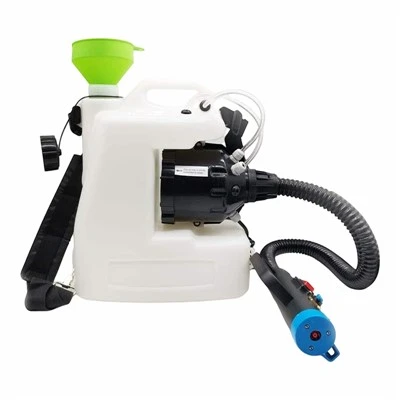
Then there are the more niche sprayers: mist blowers for orchards and vineyards, air-assisted sprayers, and even electrostatic sprayers used for pest control or disinfectant applications. Mist blowers, which use high-pressure air to carry spray through tree canopies, have much larger orifices and higher flow rates, so their filter requirements are different. For these, a 20 to 50-mesh filter at the suction and main line is standard. The goal here isn’t fine filtration—it’s keeping big debris out of the pump and fan, which would cause damage. Nozzle filters on mist blowers are often unnecessary because the nozzles are much larger, but some specialty mist blowers with adjustable nozzles will use 80-mesh filters if they’re applying insecticides with suspended particles. We worked with a vineyard in Napa last spring that was having issues with their mist blower’s lines clogging. They were using 100-mesh nozzle filters, but their nozzle orifices are 0.1 inches wide, much larger than standard boom sprayer nozzles. Switching to 50-mesh nozzle filters let the spray flow at the high rate needed to cover the canopy, and they haven’t had a clog in six months.
Now, let’s talk about the exceptions, because not all spray applications fit these neat categories. If you’re spraying something with very fine, suspended particles—like wettable powders, flowable insecticides, or even lime sulfur—you’ll need a higher mesh count, usually 150 to 200-mesh at the nozzles. These products have tiny solid particles that can slip through lower mesh filters, and even though they’re fine, they can build up on nozzle orifices over time, leading to uneven spray. On the flip side, if you’re using high-flow, low-viscosity materials—like liquid fertilizer, pre-mixed herbicides, or water for cleaning your sprayer—you can use a lower mesh count, often 50 or 80, because these materials have minimal suspended sediment and higher flow rates can handle lower mesh without restriction.
Another key factor that most people overlook: how often you spray and how well you maintain your sprayer. If you clean your sprayer after every use, flush all lines, and replace filters every season, you can get away with slightly lower mesh counts. But if you store your sprayer for months at a time without cleaning, or use it for heavy-duty applications (like large-scale farming with multiple passes), you’ll need higher mesh filters to catch debris that settles in your lines. We also recommend using stainless steel or high-grade plastic filters, not the cheap paper ones that clog easily and break down when exposed to harsh chemicals. We’ve had customers tell us they bought cheap filters from a big-box store that fell apart after one season, leaving debris all through their spray system.
Let me sum up the steps to pick the right size, because this is what I send to every customer who asks for help: First, confirm your inlet/outlet size by checking your existing filter or measuring your hose/piping. Second, identify your sprayer type (spot, boom, mist blower, etc.) and the materials you’ll be spraying. Third, use the mesh counts we outlined above as a starting point, then test with a season of use—if you’re getting frequent nozzle clogs that aren’t caused by chemical mixing issues, go up one mesh count; if your pump is struggling to build pressure or you’re seeing uneven coverage, go down one mesh count.

At the end of the day, the right sprayer filter size isn’t about guessing or picking the “finest” option. It’s about matching the filter to your specific equipment, your workload, and the products you’re applying, to keep your sprayer running smoothly, avoid costly clogs and repairs, and make sure your herbicides, pesticides, or fertilizer work as intended. If you’re still not sure what size you need, or you want to talk through your specific setup, our team has 12 years of experience working with every type of sprayer and application. We’re here to help you pick the right filters, and all our sprayer accessories are made to stand up to the harshest farming conditions and last for years. For more information or to discuss your sprayer filter needs, feel free to reach out to our team to connect and order.
Electric Sprayer References
- Agri-Trade Equipment & Supply. “Sprayer Maintenance Best Practices for 2024.” 2024.
- University of California Agriculture and Natural Resources. “Sprayer Sizing and Calibration for Specialty Crops.” 2023.
- National Agricultural Statistics Service (USDA). “Farm Equipment Maintenance Costs and Efficiency.” 2022.
- Spray Nozzle Engineering. “Filter Mesh Count Selection Guide for Agricultural Sprayers.” 2023.
- Pest Management Regulatory Agency (Canada). “Application Equipment Standards for Pesticide Sprayers.” 2021.
Zhejiang Menghua Sprayer Co., Ltd.
As one of the most experienced sprayer accessories manufacturers in China, we have world-leading production equipment and strong manufacturing capabilities. Please feel free to buy advanced sprayer accessories for sale here from our factory. For price consultation, contact us.
Address: No.5, Houshi Road, Beicheng Street, Huangyan District, Taizhou, Zhejiang
E-mail: sales@menghua-sprayer.com
WebSite: https://www.menghua-sprayer.com/
