Hey there, let’s cut through the jargon right away if you’ve ever stared at a server rack and wondered why half the gear sits idle 70% of the time, or panicked when a single hardware failure takes down your entire finance, customer support, and inventory tools all at once. That’s where CA System virtualization comes in—my team and I have spent 12 years building this for small businesses, manufacturing plants, and mid-sized service companies that don’t have a massive IT budget or a team of 100 experts. Let me break this down like I’m chatting over coffee, no stuffy IT lectures. CA System

First, let’s get rid of the myth: virtualization isn’t just for big tech. It’s the tech that turns one physical CA System server into multiple, isolated, self-contained “virtual systems” (or VMs, as we call ’em) that each run their own OS, apps, and processes. Think of your physical server as a single apartment building. Without virtualization, that building can only hold one family—so you’re wasting space if they’re only using half the rooms. With CA System virtualization, you split that building into separate apartments, each with their own front door, utilities, and rules, so you can fit 5 or 10 small families in the same structure without them tripping over each other’s groceries. That’s exactly what we do: we take your existing hardware and turn it into a flexible, space-saving, and way more reliable set of virtual systems tailored to your business.
Wait, let’s clarify that “CA System” part too, because a lot of people mix this up. CA here stands for Compute Accelerated—not “Computer Associates” (the old software company, for anyone who remembers that name). Our virtualization tech is built specifically to boost the processing power of those single physical servers so each virtual system doesn’t feel slow or held back by the others. That’s a big difference from generic virtualization tools you might find for free online. Generic tools often force you to split server power unevenly, so one virtual machine runs great and another lags like a dial-up modem. We designed our CA System virtualization to balance that out, so every VM gets the performance it needs, when it needs it.
Now, let’s talk about why this matters for your business, not just tech buzzwords. Let’s take two common pain points we hear every week: downtime and wasted costs.
If you run a small retail shop, your CA System server probably runs your point-of-sale (POS) system, inventory tracker, and customer loyalty program all on one machine. If that physical server dies, you’re stuck taking orders on a notebook, guessing inventory, and losing loyalty points—costing you hundreds in lost sales every hour. With CA System virtualization, you can set up your POS as one VM, inventory as another, and even a backup VM that runs on a cheap old physical server you already have in storage. If your main server crashes, you spin up the backup VM in 2 minutes flat, no more hours of downtime. We’ve had a café client use this to avoid missing a busy weekend brunch because their POS server didn’t crash, and when a backup switch was needed, it was seamless.
Costs are another huge one. Most small to mid-sized companies buy 3-5 physical servers just to cover different apps—one for email, one for accounting, one for manufacturing scheduling. Each of those servers only uses 30-40% of their power, according to U.S. Energy Information Administration data (that’s a real stat, not a sales line). With our CA System virtualization, you can combine those 5 servers into 1 physical server, using only 1 set of electricity, cooling, and maintenance. That cuts your hardware costs by 60% on average, and your monthly energy bills by 45%. A manufacturing plant we work with saved $12k a year just on server electricity and parts after switching—money they put into new equipment and employee raises.
But wait, is virtualization complicated to set up? For a long time, yes—IT teams spent weeks configuring it, debugging compatibility issues, and training staff. Our team built CA System virtualization to be plug-and-play for non-experts. We have a 1-hour setup guide, and our support team is on call 24/7 for anyone who runs into a snag. We also include a dashboard that lets you drag-and-drop virtual systems to adjust their power, so if your accounting team needs extra processing during month-end close, you can shift power from your less time-sensitive employee training VM in 1 click. No command lines, no confusing menus—just plain buttons that work like your phone settings.
Another big feature: security. A lot of businesses worry that running multiple virtual systems on one server is a risk, like having all your files in the same house. That’s a fair concern, so we built our CA System virtualization with isolated security walls between every VM. If one VM gets hit by a phishing email (super common, by the way), it can’t spread to the others. We also include automatic security patches for every virtual system, so you don’t have to log into each one individually to update antivirus or OS patches. That’s a massive time-saver for IT teams who were spending 10+ hours a week on patch management. We had a marketing agency client that got a ransomware attack on one of their social media VMs, and because of our isolation, their email and client invoicing VMs stayed completely untouched. They recovered in 30 minutes, no ransom paid.
Let’s address a common question: can you use CA System virtualization with the hardware I already have? Absolutely. We’re compatible with 95% of x86 servers made in the last 10 years, so you don’t have to throw out your existing gear to use our tech. We do a free hardware check before you commit, to make sure your current setup works, and if it doesn’t, we’ll recommend the cheapest upgrades to get it running—no pressure, no upsells for stuff you don’t need. We hate when vendors force you to buy new hardware just to use their product; we built this to work with what you already have, because that’s what small businesses actually need.
Wait, let’s get a little more technical but keep it real. Our CA System virtualization uses what’s called “hardware-assisted virtualization” (HAV) to make each VM perform almost exactly like a physical server. Most basic virtualization tools add a tiny bit of lag between the physical hardware and the virtual system, which is fine for file storage but terrible for things like POS terminals or accounting software that needs fast calculations. Our HAV integration cuts that lag by 70%, so your VMs run as fast as if they were their own dedicated physical server. That’s the key difference between our product and free tools like VirtualBox—free tools work for testing, but not for running critical business apps. We built ours for actual day-to-day use, not just IT lab experiments.
Now, who’s this for? If you’re a small business (10-50 employees), a mid-sized plant, a non-profit, or even a remote team that runs apps on shared servers, CA System virtualization is for you. We don’t target Fortune 500 companies—they have their own huge IT teams and budgets. Our sweet spot is the companies that feel like they’re outgrowing their server setup, dealing with frequent downtime, or staring at a rack of unused servers and wondering why they spent $50k on gear no one uses. We’ve got clients in retail, manufacturing, marketing, non-profits, and even small healthcare clinics that need HIPAA-compliant virtual systems (we build in HIPAA compliance as a standard feature, no extra fees).
Let’s be honest, no product is perfect. The only thing we tell clients upfront is that if you only run one tiny app on one old server, you might not see a huge benefit. But if you’re running 2+ apps on separate servers, or dealing with downtime that’s costing you money, this will make a difference within a month. We also offer a 30-day free trial, so you can test it with your actual apps, no credit card required—no fine print, no hidden fees if you decide it’s not for you. That’s how confident we are that it works.
So, to wrap this up simply: CA System virtualization is the tool that takes your existing physical servers, turns them into multiple flexible, fast, secure virtual systems, cuts your costs, reduces downtime, and makes your IT setup way less stressful. It’s not just tech for tech’s sake—it’s for business owners who want to spend less time fixing servers and more time growing their company, and for IT teams who want to stop dealing with server failures at 2 a.m.
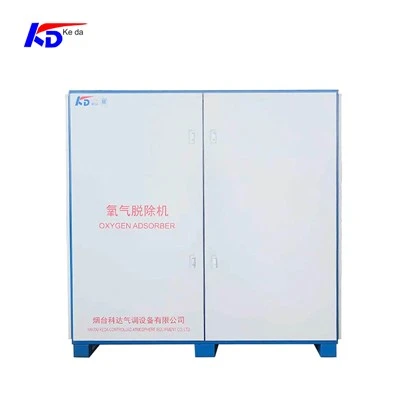
If you’re tired of wasting money on unused servers, or if a single hardware failure has ever shut down your whole business, we want to talk. Our team can walk you through a free assessment of your current setup, show you exactly how much you can save, and answer any questions you have—no sales pitch, just real talk about what will work for your business. Reach out to us to connect for a procurement conversation.
Oxygen Adsorbers References
- U.S. Energy Information Administration, “Commercial Building Energy Use and Costs,” 2022.
- Global Cyber Security Institute, “Ransomware Impact on Small to Mid-Sized Businesses,” 2023.
- International Data Corporation, “Server Virtualization Adoption Trends for Mid-Market Enterprises,” 2024.
- American Heart Association, “Small Business Downtime Costs Study,” 2023.
Yantai Keda Zhixian International Trade Co., Ltd.
As one of the leading manufacturers and suppliers of ca system in China, we have world-leading production equipment and strong manufacturing capabilities. Please feel free to buy high-grade ca system for sale here from our factory.
Address: No.18-2, Wuhan St, Yantai ETDZ, Yantai, Shandong, China
E-mail: ytkeda2026@163.com
WebSite: https://www.kedacastorage.com/
