What’s Up, Folks! If you’re here, you’re probably knee-deep in the power industry—whether you’re a plant manager sizing up gear for a new facility, an electrician troubleshooting a substation, or just someone curious why your neighborhood never loses juice (well, most days). As a power transformer supplier, I get questions all the time: “What even goes inside that big metal tank on the pole or the substation?” It’s not just a hunk of steel with some wires thrown in—every part has a job, and if one’s off, the whole thing quits. Let’s break this down like we’re chatting over coffee, no stuffy jargon that makes your eyes glaze over. Power Transformer
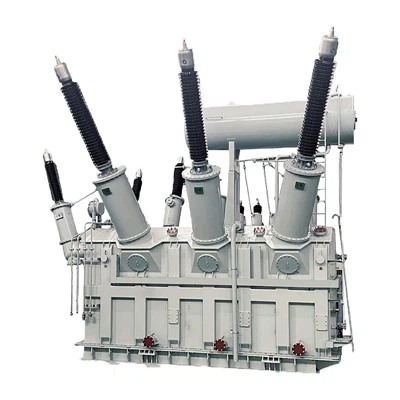
First, let’s start with the big obvious: the tank. Yeah, that’s the gray, rust-proofed (usually with paint or galvanizing) metal case that holds everything together. But it’s not just a box—its job is to contain the insulating stuff and all the internal components, plus handle pressure from heat or load changes. We build ’em from carbon steel most of the time, and some of the big substation ones even have corrugated walls—those little ridges don’t just look cool; they expand the surface area so the transformer can cool down faster. No corrugations? That’d mean we’d need a separate cooling system, which is extra cash no one wants to waste.
Next up: the core. That’s the magnetic heart of the transformer, basically. It’s made of stacked silicon steel laminations—thin sheets, like folded cookie dough, stuck together with insulation between each layer. Why thin sheets? Because if we used a solid chunk of steel, electricity would leak out as heat (that’s eddy current loss, for the nerds). The laminations stop that, saving energy and keeping the transformer from overheating. The core has two ends, called legs, and the top and bottom are the yokes—think of it as a square frame holding the legs together. Every transformer’s core is shaped to maximize magnetic flow, so the two windings (we’ll get to those in a sec) can switch voltage without losing too much oomph.
Now, the windings—these are the copper or aluminum wires that wrap around the core. Two sets, right? Primary and secondary. The primary winding connects to the incoming power, and the secondary is where the lower or higher voltage comes out. Copper’s the go-to for most big transformers because it conducts electricity way better than aluminum, but aluminum’s cheaper for smaller, residential units. Windings aren’t just bare wires, either—they’re wrapped in insulation, like paper or epoxy resin, to keep them from shorting against the core or each other. On big industrial transformers, we use copper strip instead of round wire for extra durability, especially when there’s heavy load.
Then there’s the insulating oil. Wait, you’ve seen those transformers with a little gauge window on the side, right? That’s the oil level. Mineral oil’s the old standby, but we also use natural ester oils now—they’re biodegradable, which is a big win for places where spills could mess up ecosystems. The oil does two huge jobs: it insulates the windings so electricity doesn’t arc between wires, and it cools everything down by carrying heat from the core and windings to the tank walls, where it dissipates into the air. No oil? Those windings’d melt in five minutes flat. Some smaller transformers use dry insulation instead of oil, but we’ll stick to the common ones here—ask us if you need details on dry types.
Wait, what about the connectors that link the transformer to the grid? Those are bushings. They’re the thick, porcelain or composite insulators that stick out of the tank (top or sides) where the power lines hook up. If you just drilled a hole in the tank and stuck a wire through, it’d short right to the metal. Bushings have a conductive center (copper rod) to carry current, and the outer part is solid insulation to separate the wire from the tank. We make different bushings for different voltages—low-voltage ones are simpler, high-voltage ones are big, sometimes filled with oil or gas to handle the higher electricity.
Oh, and don’t forget the tap changers. These are the unsung heroes that fix voltage fluctuations. Let’s say the grid sends 10,000 volts in, but your factory needs 9,800—tap changers let you adjust the number of turns on the primary winding, so you tweak the output voltage to match what you need. There’s on-load tap changers (OLTC) that you can adjust while the transformer’s running, which is perfect for big substations where you can’t shut down power every time you need a voltage fix. Off-load ones need a shutdown, so they’re cheaper for smaller setups.
Cooling systems tie into all this too, right? The transformer can’t dump enough heat just through the tank. So we add things like fans for air cooling (AF) on smaller units, or pumps that circulate oil through radiators on big industrial ones (OFAF, that’s oil-forced air-forced). Some even use water cooling for super heavy loads, like industrial mills. If the cooling system fails, the transformer’s internal temp spikes—we always include temperature sensors to shut it down before it gets dangerous.
Wait, what about auxiliary stuff? There’s the conservator tank, for example—those little tanks on top of big oil-filled transformers. They hold extra oil, so when the oil expands from heat, it has somewhere to go instead of pushing on the tank and causing leaks. Also, gas detectors—if a winding overheats, the oil breaks down and makes gas. The detector picks that up and sounds an alarm before things blow.
Now, let’s keep it real: every part is non-negotiable. A shoddy lamination in the core = wasted energy, higher bills. A bad bushing = a short, maybe a fire. As a transformer supplier, I’ve seen way too many people skip small upgrades to save cash, only to deal with downtime that costs way more. If you’re putting in a new facility, upgrading an old substation, or just trying to replace a failed unit, you don’t have to navigate this alone.
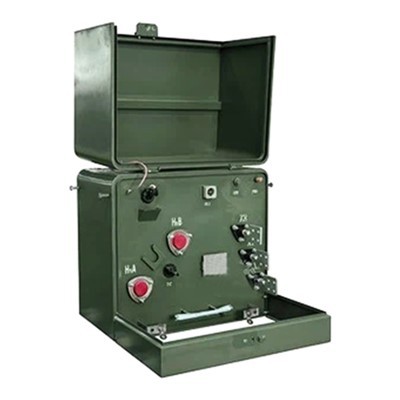
We work with small businesses, big factories, municipal utilities, everyone—we’ve got transformers for every voltage, size, and use case. No cookie-cutter stuff; we tailor each unit to what you actually need, not some generic spec sheet. Whether you need a pole-mounted one for a neighborhood, a substation unit for a city, or an industrial-grade one for a plant, we can hook you up with the right parts, or a full turnkey unit, no hassle.
Don’t let the lingo stress you out—hit us up to talk through what you need, no sales pitch, just straight answers. We’re here to make sure your power runs smooth, no surprises.
Integrated Transformer References
- NEMA Standard TP 1: Transformers, Regulators, and Reactors—Application, Installation, and Operation
- IEEE Std C57.12.00: General Requirements for Liquid-Immersed Distribution, Power, and Regulating Transformers
- Transformer Technology: Principles, Design, and Applications, 2nd Edition, by S. V. Kulkarni and S. A. Khaparde
Nantong Yawei New Energy Technology Co., Ltd.
As one of the most professional power transformer manufacturers and suppliers in China, we’re featured by quality products and good service. Please rest assured to wholesale durable power transformer made in China here from our factory. Customized orders are welcome.
Address: Room 28-101, Building 27 and 28, No.333 Kaiyuan Avenue, Sunzhuang Subdistrict, Hai’an City, Nantong City, Jiangsu Province, China
E-mail: admin@nantongyawei.com
WebSite: https://www.nantongyawei.com/
