If you’re a process engineer, plant manager, or purchasing officer specifying titanium flanges, you already know: sealing performance isn’t just a quality checkbox—it’s the difference between a safe, on-time industrial operation and a catastrophic, costly failure. As a titanium flange supplier with over a decade of partnering with refineries, chemical processors, and marine engineering teams on critical systems, I’ve seen far too many projects derail because a seemingly “perfect” flange failed a pressure test, leaked during commissioning, or corroded at the gasket interface. Today, I’m pulling back the curtain on the sealing testing protocols I’ve refined alongside our in-house metallurgists and third-party testing labs to ensure every titanium flange we ship delivers the reliability your operations depend on. Titanium Flange
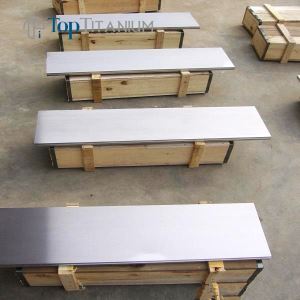
Titanium’s unique properties—its ultra-high strength-to-weight ratio, outstanding corrosion resistance to acids, chloride, and alkaline environments—are why it’s non-negotiable for high-stakes applications like offshore oil and gas manifolds, pharmaceutical reaction vessels, and desalination plant piping. But that same corrosion resistance means it’s less forgiving than carbon steel or stainless steel when it comes to sealing flaws. A tiny surface imperfection, a misaligned gasket groove, or even a scratch from improper handling can create a leak path that won’t show up in a visual inspection. That’s why sealing testing for titanium flanges isn’t a one-size-fits-all process: it needs to account for both titanium’s material behavior and the specific conditions your flange will face. For example, a flange for a 10,000 psi hydrogen gas line needs a far more rigorous seal test than one for a low-pressure freshwater piping system.
Let’s start with the foundation: why standard pressure tests for metal flanges often fall short for titanium. Most off-the-shelf test protocols use generic seal requirements that don’t account for titanium’s low thermal expansion coefficient or its tendency to gall when mated with incompatible gasket materials. We regularly see manufacturers run a basic hydrostatic test with ambient water, but that misses two critical variables: actual operating temperature and the type of fluid the flange will carry. For a flange rated for 300°F sulfuric acid service, a room-temperature pressure test with nitrogen (an inert gas, not process fluid) is the only way to replicate real-world seal behavior. Relying on standard hydrostatic testing alone is a rookie mistake that leads to premature flange failure.
Now, let’s break down the structured testing process we use at our facility, tailored specifically for titanium flanges. We split testing into three tiers: incoming raw material validation, post-machining dimensional and surface testing, and in-line final seal testing before shipment.
First, raw material verification is non-negotiable for titanium, because even a minor alloy inconsistency can ruin seal performance. Our titanium billets (usually Grade 2, Grade 5, or Grade 7, depending on the application) come with mill test reports (MTRs) from the refiner, but we run our own preliminary tests to confirm chemical composition, grain size, and hardness. Titanium’s hardness is critical for sealing: if a flange face is too soft, it will deform under gasket compression, creating gaps; if it’s too hard, it won’t conform to the gasket’s surface, leaving micro-leaks. We aim for a Rockwell B hardness of 75–85 for most industrial flanges, a sweet spot we’ve refined over years of working with gasket manufacturers. If a billet comes back too soft, we reject it immediately—no exceptions, because fixing hardness post-machining is nearly impossible without compromising the flange’s structural integrity.
Next is dimensional and surface testing, the unsung hero of titanium flange sealing. Titanium is machined differently than other metals: it generates a thin, hard oxide layer during cutting that can be 10x thicker than the oxide layer on stainless steel. This layer is great for corrosion resistance, but if it’s not removed from the flange face and gasket groove, it acts as a barrier between the metal and the gasket, preventing a proper seal. We use a combination of 3D coordinate measuring machines (CMMs) and surface roughness testers here. The face of a properly sealed titanium flange needs a surface roughness (Ra) between 0.8 and 1.6 micrometers—any higher, and you’ll have micro-voids where fluid can seep through; any lower, and the gasket won’t have enough friction to stay in place during pressurization. We also measure the flatness of the flange within 0.025 mm per 100 mm of diameter. Even a tiny warp, from improper storage or machining, can create a gap that only shows up under pressure. We once had a client send back a batch of carbon steel flanges that passed dimensional checks but failed when pressurized—their flatness was off by 0.05 mm, a flaw we never see in our titanium flanges because we add a final milling step that’s exclusive to our facility.
Then comes the final in-line seal test, the step that separates our flanges from the competition. This is where we test the flange under conditions that mirror the client’s actual operating environment, not just generic standards. We use two main types of seal testing for titanium flanges: hydrostatic testing for liquid service applications and pneumatic (gas) testing for high-pressure or volatile service. For both, we follow strict protocols aligned with ASME B16.5 and API 6A standards, but we add critical titanium-specific adjustments.
For hydrostatic testing, we use deaerated water at the client’s rated pressure, held for 15 minutes at ambient temperature before any temperature cycling. Wait—temperature cycling is a key step most suppliers skip. Titanium’s thermal expansion coefficient is about half that of carbon steel, so when the flange heats up, the gasket (usually a metal spiral-wound gasket or PTFE jacketed gasket) expands at a different rate, creating stress at the seal interface. We cycle the test temperature from 70°F to 300°F (or the client’s maximum operating temperature) three times, holding pressure at each temperature point for 10 minutes. During each hold, we inspect every gasket interface using a bubble test: we apply a 50% soap solution to the seal and look for bubbles, which indicate a leak. We also use a pressure decay tester, which measures the drop in pressure over time; a pressure drop of less than 0.1% per 10 minutes is our pass threshold, far stric than the industry standard of 0.5%.
For pneumatic testing, which we reserve for flanges rated for high-pressure gas service (like hydrogen or natural gas), we use dry nitrogen at 80% of the rated pressure (to avoid overpressure in case of a seal failure, a critical safety consideration for titanium components) with a helium tracer gas. Helium is ideal here because its small molecular size can seep through even the tiniest micro-leaks that bubble tests miss. We place the flange in a sealed test chamber, introduce helium around the seal interface, and use a helium mass spectrometer to detect any leak rates above 1 x 10^-8 std cc/sec—another threshold we set lower than most labs, because we know that even a tiny helium leak can become a major problem for process fluids. We also add a final vacuum decay step for 10 minutes to confirm there are no hidden leaks deep in the gasket groove.
But testing doesn’t end before shipment. We work closely with every client to provide post-installation guidance, because even the best-tested flange will fail if it’s misaligned during installation. Last year, we had a client in the petrochemical industry who installed 12 of our Grade 7 titanium flanges for a sour gas line. They ran their own field test and found a small leak on two flanges, which traced back to improper torqueing of the bolts during installation. We walked their maintenance team through our bolt torqueing protocol for titanium flanges: using lubricated bolts (anti-seize compound specifically formulated for titanium, to prevent galling), torquing in a crisscross pattern in three stages (50% of rated torque, 75%, then 100%), and rechecking torque after 24 hours of system pressure. After that, their system has run leak-free for 18 months. It’s a reminder that sealing performance is a partnership between supplier, installer, and client—not just a test we run before the flange leaves our warehouse.
I often get asked: why do we go to this extra step? Titanium flanges aren’t cheap—they’re a premium investment, and our clients don’t want to waste money on components that will fail. Over the past decade, we’ve only had two seal-related failures from our products, both from clients installing flanges incorrectly, and we’ve been able to help them resolve the issue quickly because we provided detailed installation guides alongside our test reports. For reference, our competitors often cut corners on temperature cycling or use generic gasket materials, leading to higher failure rates down the line. That’s why we’ve built our reputation on testing that’s transparent, specific, and tailored to titanium’s unique needs.
If you’re in the market for titanium flanges for a high-stakes application—whether it’s a new refinery, a pharmaceutical process line, or a marine desalination project—don’t settle for a supplier that runs a basic pressure test and calls it done. Sealing performance starts with material validation, precise machining, and testing that replicates your actual operating conditions. We offer full test reports for every flange shipment, including raw material certifications, dimensional data, and seal test results, so you have full visibility into the quality of every component you receive.
We’re ready to work with you to test, supply, and support titanium flanges that meet your exact requirements. Reach out to our team to discuss your project needs, get a custom quote, or ask any questions about sealing testing for titanium flanges. We’re here to help you avoid costly failures and keep your operations running safely and efficiently.
Titanium Washer References
ASME B16.5, Pipe Flanges and Flanged Fittings, 2023 Edition.
API 6A, Specification for Wellhead Equipment, 21st Edition.
ASM International, Titanium: Properties and Applications, 2020.
Gasket Resource Association, Metal Gasket Sealing Technology for Industrial Applications, 2022.
National Association of Corrosion Engineers (NACE), Corrosion Control in Titanium Alloy Systems, 2021.
Baoji Top Titanium Industry Co., Ltd.
As one of the most professional titanium flange manufacturers and suppliers in China, we’re featured by quality products and good price. Please rest assured to buy bulk titanium flange in stock here and get quotation from our factory. Customized orders are welcome.
Address: No. 2, South Section Of Phoenix 2nd Road,High-Tech Zone, Baoji,Shaanxi, China (Mainland)
E-mail: sales@bjtopti.com
WebSite: https://www.china-topti.com/
