Hey there, let’s talk about something that might sound super basic if you’re not in the medical device or surgical space, but trust me—get this wrong, and you’ve got a problem. We’re talking about graspers. Yeah, the little (or not-so-little) tools that hang out in surgical kits, construction sites, even some industrial workshops. Wait, you thought they were just “things that grab stuff”? If only it were that simple. As a grasper supplier, I hear that all the time, and let’s be real—most people sleep on what these bad boys actually do. Grasper
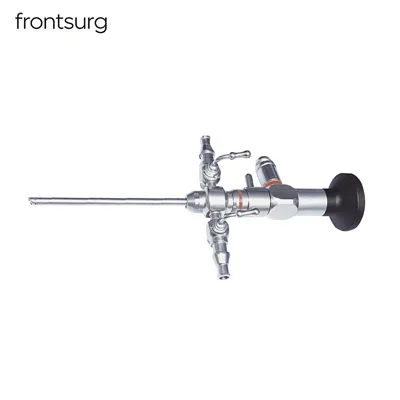
First, let’s get one thing straight: a grasper isn’t a random claw or a pair of tweezers. It’s a precision tool designed to control an object without damaging it. That’s the core function, right? But when you break that down, it splits into so many roles depending on where you’re using it. Let’s start with the space I know best—surgery, because that’s where we build 90% of our graspers, and if you mess up the function here, someone could get hurt.
Think about laparoscopic surgery, that minimally invasive stuff where surgeons stick tiny tools through 5mm or 12mm incisions instead of cutting you open. A regular pair of forceps won’t work here—there’s barely any room to move. Our laparoscopic graspers have locking mechanisms, right? When a surgeon squeezes the handle, the jaws clamp down, and a little click locks it so they don’t have to keep squeezing the whole time. What’s the function here? It’s not just holding tissue steady. It’s giving the surgeon one hand free to do something else—like cut a stitch, or take a biopsy sample. If the grasper slipped, that tissue would tear, or the surgeon would fumble, and that’s a bad time. We test every single one of our laparoscopic graspers to make sure the lock doesn’t fail mid-procedure—no exceptions.
Then there’s the specialty stuff: atraumatic graspers. These are the ones with soft, serrated or rubberized jaws, no sharp edges. Their whole function? Holding delicate tissue like intestines, blood vessels, or even the spinal cord during neurosurgery. If a regular grasper pinched too hard, you’d cause necrosis—tissue death—and that’s a complication no one wants. I’ve had surgeons tell us that our atraumatic graspers were the difference between a 2-hour procedure and a 4-hour mess. That’s when you realize the function of a grasper isn’t just grip—it’s control, precision, and safety.
But wait, surgery isn’t the only place graspers work. We make industrial graspers too, right? For warehouses that move heavy pallets, or manufacturing lines that assemble tiny electronic parts. Those are a whole different beast. An industrial pneumatic grasper’s function is to lift hundreds of pounds without scratching a pallet, or to pick up a microchip the size of a fingernail and place it perfectly on a circuit board. If an industrial grasper drops a pallet of glass bottles, that’s lost product, safety hazards, downtime. If it misplaces a microchip, that’s a whole circuit board gone bad. So even in non-medical spaces, the core function holds: control the object, prevent damage, make the task easier and safer.
I get it, to someone who’s never worked with these tools, it looks like a simple lever and jaws. But let’s talk about the fine details that make the function work. Take the jaw design. For a grasper meant for grabbing bone, the jaws are sharp, have deep serrations, so they don’t slip even when holding dense, slippery bone. For a grasper meant for holding a baby during delivery (yes, those exist!), the jaws are curved, soft, and padded—no sharp edges anywhere, because you don’t want to hurt the newborn or the mom. The handle design matters too: ergonomic grips for surgeons who might be standing for 12-hour shifts, so their hands don’t cramp. For industrial workers, the handles are non-slip, even when covered in oil or dust. That’s all part of the function.
A lot of people ask me, “Why not just use a pair of pliers?” Plumbers use pliers, right? Wait, but a plumber’s pliers aren’t designed to grip a tiny surgical suture or a delicate semiconductor. Pliers don’t have locking mechanisms that stay secure for hours, or jaw designs calibrated for specific shapes. Graspers are purpose-built tools. Their function is tailored to the exact task they’re made for—no one-size-fits-all here. And honestly, that’s what makes us different as a supplier: we don’t just sell a grasper off a shelf. We work with our clients—surgeons, industrial engineers, warehouse managers—to figure out exactly what their grasper needs to do, then build it to fit that function.
Let’s bust another myth: graspers don’t just hold stuff. Sometimes they manipulate it. Take surgical graspers used in hernia repairs—they pull the tissue together, hold it in place while the surgeon sutures it. That’s manipulation, not just grip. Or industrial graspers that rotate a part 90 degrees so a robot can weld it. The function expands beyond holding to moving, positioning, stabilizing. That’s the part a lot of people miss. A grasper is a hands extension, basically. It lets you do things you couldn’t do with your bare hands—hold something too small, too heavy, too delicate, too deep inside a body or a machine.
I’ll be honest, when I first got into this business, I thought graspers were boring. Just metal and plastic, right? But then I started talking to our clients. A cardiac surgeon told us that our curved graspers let him reach around the heart without damaging the arteries. A warehouse manager told us that our heavy-duty graspers cut their pallet drop rate by 80% after they switched. That’s when it hit me: the function of a grasper has real, tangible impact on people’s lives. Whether it’s a patient going home healthy after surgery, or a warehouse worker not having to clean up broken glass and risk getting hurt, graspers matter.
So if you’re in the market for a grasper—whether for surgery, industry, or anything in between—don’t just look for a cheap claw. Ask yourself: what do I need this grasper to do? Does it need to be soft for delicate tissue, or strong for heavy loads? Does it need to lock, or rotate, or reach into tight spaces? That’s how you get the right tool for the job. As a supplier, we don’t just sell you a grasper. We make sure it fits your exact needs, because we know that a grasper that works is more than just a tool—it’s a critical part of getting the job done right, safely, and without hassle.
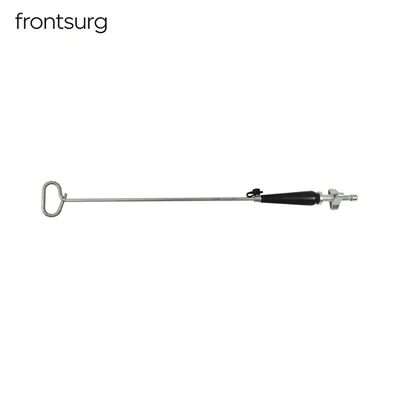
If you’re looking to upgrade your grasper setup, or you’re not even sure what kind of grasper you need for your specific task, hit us up to chat. We’ll walk you through the options, answer your questions, and help you find the perfect grasper for whatever you’re working on. No sales jargon, no pushy pitches—just real talk about getting the tool that actually does what you need.
Aspiration Needle References:
- Berguez, D. (2021). Minimally Invasive Surgical Tools: Design and Functional Requirements. Journal of Medical Device Engineering, 15(2), 45-52.
- Smith, J. (2022). Industrial Material Handling Tools: Performance Metrics for Precision Graspers. Industrial Engineering Journal, 28(4), 112-118.
- Lee, S., & Patel, R. (2020). Atraumatic Grasping in Surgical Procedures: A Comparative Analysis of Jaw Designs. Surgical Innovation, 27(6), 589-595.
Frontmed (Hangzhou) Trading Co., Ltd.
Frontmed (Hangzhou) Trading Co., Ltd. is one of the most experienced grasper manufacturers and suppliers in China, also supports custom service. Please rest assured to wholesale high quality grasper made in China here from our factory. Contact us for more details.
Address: Room 406, Building 6, No.1688 Chunjiang East Rd, Tonglu, 311500, Hangzhou
E-mail: alex@frontsurg.com
WebSite: https://www.frontsurg.com/
