If you’re an automotive equipment supplier (like us), you know one of the trickiest shifts lately isn’t just churning out the usual 100k-unit SUV runs—it’s juggling small-batch orders, too. Think: a boutique EV maker building 500 custom roadsters, a legacy brand testing a tiny run of electric pickup prototypes, or a company rolling out a limited-edition trim for a fan favorite. Most production setups are built for big volume, so how do equipment teams like ours actually make small batches work without breaking the bank or slowing everything to a crawl? Automotive Industry Production Equipment
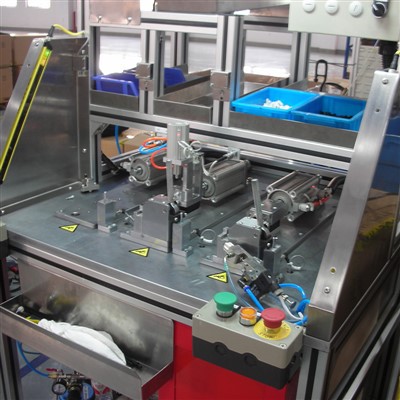
Let’s break this down like we chat with customers over coffee—no stuffy jargon, just real talk. First, stop and think: small-batch production (we’re talking runs of 10 to 5,000 units, not 10k+) has totally different needs than mass production. Mass production relies on “dedicated” tooling—custom fixtures that bolt to the line, laser cutters programmed for a single part, robots trained to weld one exact car door every 10 seconds. Swap that tool out, and you’re looking at days of downtime. For small batches, you can’t afford that. So the first big shift we push to our clients is ditching rigid, one-and-done tooling for modular, reconfigurable stuff.
Our team builds modular end-of-arm tooling for industrial robots, for example—think snap-on grippers, sensors, and weld heads that take 15 minutes to swap, not 15 hours. One of our customers, a small EV startup making 800 prototype cars a year, used to have their line sit idle for three days every time they switched from testing a single-motor frame to a dual-motor one. We swapped their old dedicated grippers for our modular system, and now they switch over in 45 minutes. That’s not a flex—that’s how you actually make small batches profitable, because downtime kills margins.
Next, software. This is where a lot of people drop the ball: old production lines run on static, hard-coded programs. If you want to adjust a weld pattern for a limited-edition model, you need an engineer to re-write code over a weekend. For small batches, you need flexible programming that’s accessible to line techs, not just senior developers. We integrate our equipment with no-code or low-code programming interfaces—think drag-and-drop screens where a line worker can tweak a part’s dimensions or change a robot’s path in 10 minutes, no coding degree required. We also pair this with digital twins that let test a small batch run in a virtual space first. A legacy client, for example, used to mess up 20% of their first 100 units of a limited-edition hybrid engine because they’d adjust the line on the fly. Now, they simulate the entire small batch run in our digital twin, catch a gripper misalignment before any metal is cut, and their first run defect rate dropped to under 1%. That’s a game-changer for small batches, where even 20 units wasted is a huge hit.
But wait—what about the actual line layout? A lot of folks will say “just use a smaller line,” but that’s not always right. For small batches, you want “flexible lines” instead of dedicated ones. Flexible lines have workstations that can move around, or mobile robots that don’t bolt to the floor. Let’s say your small batch is a custom truck bed one month, and a compact SUV roof the next. Mobile robots don’t need to be installed in a fixed spot—you just roll them to the right station, plug in their program, and they’re good to go. One of our aerospace-adjacent automotive clients (they do specialty parts for classic car restorations, which are super small batches) uses mobile AMRs (autonomous mobile robots) to move parts between workstations instead of a fixed conveyor. They used to have a conveyor that only fit one part type, so switching took all day. Now, their AMRs re-route themselves in 5 minutes, and they can do 12 different small batches a month, up from 3 before. That’s the kind of flexibility small-batch teams actually need.
Now, let’s talk about a common pain point for small-batch producers: labor. Most factory workers are trained for mass production, where they do the same task every day. Small batches mean every run is a little different, so you can’t have a worker who only knows how to do one thing. We help our clients set up multi-skilling workflows, paired with our equipment’s user-friendly controls, so line techs can move between stations as needed. For example, a worker who usually installs door panels can also do small batch fitting for custom side mirrors if the line needs it, because the tooling and software are simple enough for them to pick up in an hour, not a week of training. We also avoid over-automating small batches—wait, that’s a weird thing to say, right? But think: if you have a run of 50 units, programming a robot to do a task is more work than just having a skilled worker do it manually. We build our equipment to let you toggle between manual and automated modes, so you don’t waste time or money on automation that’s only useful for big runs.
Let’s get real with an example of how this all works together. Last quarter, a customer of ours was a mid-sized automaker that got a small-batch order: 1,200 units of a limited-edition electric SUV trim, plus 300 prototype custom utility vehicles. Their old line had dedicated tooling, so switching between the two would have meant 4 days of downtime and $120k in lost output. Here’s what we did: swapped their weld robots for our modular tooling, set up our low-code programming interface for their line techs, and added two mobile AMRs instead of their fixed conveyor. They switched between the SUV trim and utility prototype in 2 hours, their first run defects were 0.8%, and they finished both batches 3 days early, avoiding $80k in rush shipping costs for the prototypes. That’s not a theoretical fix—that’s something we pulled off with a real client in the last 90 days.
But here’s the thing: this isn’t one-size-fits-all. A 500-unit EV prototype needs a different setup than a 4,000-unit limited-edition classic car run. That’s why our team doesn’t just sell equipment—we work with clients to audit their current line, figure out where their small-batch pain points are, and build a custom solution, not a pre-packaged system. A lot of big equipment suppliers try to push “one line fits all,” but that doesn’t work for small batches. We focus on the gaps: the parts of the production process that kill small-batch margins, and build equipment to fix those exactly.
Now, let’s address a question we get all the time: is this more expensive than just running mass production? At first, maybe the upfront cost is a little higher, but when you factor in downtime saved, lower defect rates, and being able to take on small-batch orders that big suppliers turn down, it pays for itself in 12 to 18 months. Most of our small-batch clients see a 25-30% jump in their overall production capacity within a year of switching to flexible equipment, because they’re not sitting idle waiting for tooling swaps.
Another common misconception: small batches mean lower quality. That’s not true—if your equipment is flexible, you can actually do more quality checks per part, because you’re not rushed through a 10k-unit run. Our equipment integrates with real-time quality sensors that flag a defect the second it happens, so you don’t have a pile of 50 bad units at the end of a small batch. One classic car restoration client uses our quality sensors to check every custom panel, and their defect rate went from 7% to 1.2% after switching, because they catch issues right away instead of waiting until the whole run is done.
At the end of the day, small-batch automotive production isn’t going away. More brands are launching limited-edition models, startups are making specialty EVs, and legacy companies are testing new tech with small runs before scaling. The equipment that works for big mass runs is built for speed and consistency, but small batches need speed and adaptability. That’s what we specialize in—no complicated jargon, no overpriced pre-packaged systems, just equipment that lets you switch between runs fast, waste less time and money, and actually make small batches work for your bottom line.
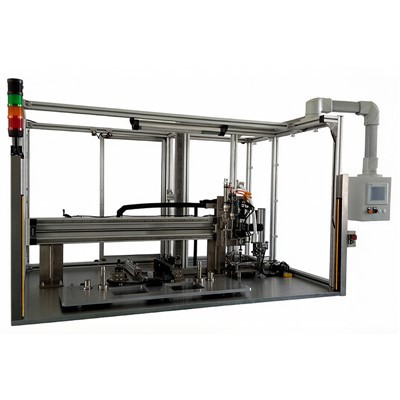
If you’re a production manager, plant lead, or business owner dealing with small-batch automotive runs and tired of downtime, high defect rates, or rigid equipment that can’t keep up, we can help. We’ll walk through your current setup, point out the gaps, and build a solution that fits your specific needs, not a generic brochure. Hit us up to schedule a chat about your small-batch challenges, and let’s figure out how to make your production run smoother.
Automotive Industry Production Equipment References
- Society of Manufacturing Engineers (SME). Flexible Manufacturing Systems for Low-Volume Production. 2022.
- International Organization for Standardization (ISO). Automotive Production Equipment Standards for Small Batch Runs. 2023.
- Automotive News. 2023 Trends in Small-Batch Automotive Manufacturing. 2023.
- Robotics Industries Association (RIA). Modular End Effector Adoption for Variable Production Runs. 2022.
Shanghai Zenyan Automation Engineering Co., Ltd.
As one of the leading automotive industry production equipment manufacturers in China, we warmly welcome you to buy advanced automotive industry production equipment made in China here from our factory. All customized machines are with high quality and low price. Contact us for quotation.
Address: 3rd Floor, Building A, No.5629 Beisong Road, Chedun Town, Songjiang District, Shanghai, China
E-mail: zenyan_sh@163.com
WebSite: https://www.zenyanauto.com/
