Hey there, if you’ve ever ordered black steel pipes for a project—whether it’s plumbing, structural framing, or industrial fabrication—you’ve probably stared at that dark, matte, slightly textured surface and thought, “Wait, what even is that? Is it painted? Coated? Just raw metal?” As a black steel pipe supplier who’s answered this exact question a hundred times (okay, maybe a few hundred), let’s break this down without all the jargon that makes industrial stuff sound like rocket science. No boring textbooks, just real talk from someone who’s actually worked with these pipes, packed trucks, and talked to guys who’ve used them for decades. Black Steel Pipe

First off, let’s get one thing straight: black steel pipe’s surface isn’t black because it’s painted, dipped in some fancy coating, or some random industrial aesthetic choice. It’s not even stainless steel, for that matter. The “black” part comes from mill scale—wait, mill what? Mill scale is that thin, flaky, dark oxide layer that forms on the surface of steel when it’s heated super hot during the manufacturing process. You know how when you leave a cast iron pan on the stove too long and it gets that dark, crusty stuff? Same idea, but on a much larger scale for steel pipes.
Let’s walk through how these pipes are made, because the surface finish is directly tied to that process. Most black steel pipe starts as either a solid steel billet that’s pierced into a tube (seamless pipe) or a flat steel coil that’s rolled and welded into a tube (welded pipe, which is way more common for general use, like plumbing for water or gas lines). Either way, after forming the pipe, it goes through a heat treatment step—called hot rolling, if we’re being precise—where it’s heated to over 1,000°C (around 1,800°F) to make it easier to shape and strengthen. Once it’s done being formed, it cools down in open air (no fancy protective gas or vacuum here) so the oxygen in the atmosphere reacts with the hot iron on the pipe’s outer surface. That reaction creates iron oxides—specifically a mix of FeO, Fe₂O₃, and Fe₃O₄—which together give that deep, matte black color. That’s your surface finish, right there: mill scale oxide, no extra coating.
Now, I know what you’re next thinking: “If it’s just oxide, why does anyone buy it instead of something smoother, like galvanized steel or stainless?” Fair question. The mill scale is actually part of what makes black steel pipe popular for certain jobs. But let’s be real, it’s not the smoothest or most consistent finish. If you run your hand along a brand new black steel pipe, it’ll feel a little rough, maybe slightly uneven, and if you scratch it lightly, the mill scale might flake off in tiny pieces. That’s normal, not a defect. Now, how does it compare to other common pipe finishes? Galvanized steel is dipped in molten zinc, so it has a smoother, silver, slightly spangled finish (and it’s thicker, for corrosion resistance). Stainless is polished or smooth, often with a shiny silver look, and way more expensive. Black steel’s finish is a middle ground in a lot of ways—functional, tough, and way cheaper than those other options.
But wait, not all black steel pipe has the exact same surface finish. There are variables depending on how it’s made and what it’s intended for. Let’s break that down, because that’s something a lot of suppliers won’t tell you (we will). First, seamless vs. welded: seamless pipe has a slightly more uniform surface, since it’s made from a solid billet, while welded pipe has a tiny, almost invisible weld line that might be a little raised, and sometimes that area has a slightly different, less dark color from the welding process. Then there’s what’s called “commercial grade” vs. “structural grade” vs. “pressure grade” pipe. Commercial grade black steel (used for general plumbing, like residential water lines) has a more consistent black finish, maybe a little less rough, while structural grade pipe (used for fence posts, scaffolding, industrial frames) might have a thicker mill scale layer, a little more texture, because it’s made to be stronger than perfect. Pressure grade pipe (for gas lines, high-pressure systems) is actually a bit smoother too, because it’s tested more thoroughly and the manufacturing process is tighter to avoid weak spots.
Another thing people ask me all the time: “Does black steel pipe rust?” Yeah, eventually, but the mill scale actually helps slow that down—sort of. The oxide layer is hard and acts as a barrier to moisture, unlike raw bare steel, which would rust the second it’s exposed to water. But if you scratch through the mill scale, that spot will rust faster, because the bare steel underneath is exposed. That’s why a lot of people don’t use black steel pipe for outdoor projects where it’s going to get rained on nonstop, unless they paint it or wrap it in a protective coating. The surface finish’s texture actually makes paint adhere pretty well, by the way—those tiny rough spots give the paint something to grab onto, so it doesn’t peel off as easy as it would on a smooth galvanized pipe.
Let’s talk about some common misconceptions too, because I’ve had so many customers mix this up. A lot of folks think black steel is just “raw steel with a coat of black paint” but that’s totally wrong. If it were paint, you’d be able to rub it off with a rag or a little thinner, right? Try that with a brand new black steel pipe—you’ll get a little dust, but the black finish won’t come off. That’s mill scale, bonded to the steel surface at a molecular level, not a surface coating. Another myth: “The black finish is just leftover dirt from the mill.” Nope, mill dirt is gray and gritty, not that deep, matte black. I’ve seen guys try to power wash new black steel pipe to “clean it up” and end up with a gray, dull pipe because they stripped away some of the mill scale. You don’t want to do that, by the way—you’ll lose that corrosion-resistant layer.
Now, let’s get real about what this surface finish means for your project, because that’s what actually matters when you’re ordering pipe. If you’re a plumber doing a residential water line, the rough texture might not be a big deal, but you’ll want to make sure there’s no thick flaky mill scale that could clog up your fittings—so you’d go with a pressure grade pipe, which has a smoother, more uniform finish. If you’re a contractor building a fence, structural grade is fine; the rough texture is good for bolting, because it doesn’t slip around like a smooth surface would, and you can paint it later to protect it from rust. If you’re a fabricator making custom metal parts, you might need to blast the mill scale off to weld or powder coat it, so that’s something to factor into your project timeline and cost—you don’t want to be surprised when your powder coat supplier says they need to strip that mill scale first.
I’ve had a lot of new customers tell me they were scared to order black steel pipe because they thought the surface would be too uneven or would flake all over their jobsite. That’s why we always walk them through the different grades and what surface finish to expect. For example, if you’re ordering 2-inch pipe for a residential gas line, you’ll get a nice, uniform matte black finish, very little flaking, and it’ll thread up cleanly into your fittings. If you order the same size for scaffolding, it might have a tiny bit more texture, which is actually better for safety—no slick surfaces when you’re climbing up.
Wait, another thing: there’s something called “black pipe” vs. “black iron pipe.” A lot of people mix these terms up, and their surface finishes are slightly different. Black iron is usually thinner-walled, used for lower-pressure applications like gas lines in older homes, and its surface is a bit more brownish-black than pure black steel pipe, which is thicker and used for higher pressure. The finish difference comes from the manufacturing process—black iron is often made from recycled steel, so there might be tiny inclusions in the surface that make it a little rougher.
Now, let’s get to the part you actually care about if you’re reading this as someone who needs to order pipe for a project. The surface finish of black steel pipe isn’t just a random detail—it affects how it works for your job, how it’s installed, and how long it lasts. If you’re planning to use it for a project that will be exposed to the elements (like a garden fence, outdoor shed frame), you’ll need to either paint it right away or pick a different pipe, because even with mill scale, it will rust over time. If you’re using it for an indoor project (like a basement plumbing line, a custom table frame), you can wipe it down with a dry rag to get rid of any mill scale dust from shipping, and it’ll look great for years, no flaking or peeling.
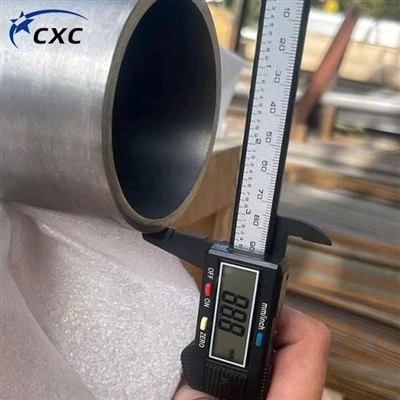
If you’ve been searching for reliable black steel pipe, we’ve got you covered. We stock all grades, sizes, and surface finishes for every project—no run-of-the-mill pipes that have inconsistent mill scale or extra flaking. Our team has years of experience, so if you’re not sure which finish is right for your project, just reach out. We can walk you through your options, give you samples, and make sure you get exactly what you need without wasting time or money on the wrong pipe.
Zinc Aluminum Magnesium Steel Pipe Don’t guess when it comes to pipe—get the facts, and get a surface finish that works for your project. Hit us up to chat through your requirements, ask any questions, or place your order. We’re here to help.
References
- "Black Steel Pipe: Manufacturing Process and Properties," American Petroleum Institute (API) Publication 5L, 2021.
- "Surface Characteristics of Hot-Rolled Carbon Steel Pipes," Association for Materials Protection and Performance (AMPP) Publication 105, 2019.
- "Plumbing Pipe Materials: A Guide to Black Steel, Galvanized, and Copper," International Association of Plumbing and Mechanical Officials (IAPMO), 2022.
Wuxi Chengxingchuang Metal Products Co., Ltd.
As one of the most professional black steel pipe manufacturers and suppliers in China, we’re featured by quality products and good price. Please rest assured to buy cheap black steel pipe for sale here from our factory. Welcome to contact us for customized service.
Address: No.8-2, Zhoujia Lane, Liangxi District, Wuxi City, Jiangsu Province, China
E-mail: 13961862735@163.com
WebSite: https://www.cxcsteeltubes.com/
