Let me start with a quick show of hands—how many of you reading this have ever been stuck with a lithium battery that won’t charge properly because your charger’s voltage is just a little off? I’ve lost count of the times a customer has messaged our support team with that exact complaint, and most days, I’m the one fielding it. Here at our lithium battery charger supply business, this question comes up more than any other, so today I want to break down not just whether adjustable voltage chargers exist, but why they matter, how they work, and what to look for when you’re shopping for one. Lithium Battery Charger

If you’re new to lithium batteries, let’s get one basic fact straight first: unlike old lead-acid batteries that are pretty forgiving of voltage, lithium is a finicky chemistry. Push too much voltage and you can overheat cells, shorten their life, or even cause safety hazards. Give too little, and you won’t get a full charge—leaving your tools, e-bike, or solar system running short on power. That’s where adjustable voltage chargers step in, and yes, they absolutely exist. But let’s not jump ahead; I want to explain why “one size fits all” chargers rarely work for everyone.
I remember a customer from a small electric boat business reaching out to us last year. He had a fleet of ten e-boats, each with a different lithium battery configuration—some were 24V, others 36V, and a couple of 48V, all from different manufacturers. He’d bought a cheap off-the-shelf charger for each, but he noticed that the 24V charger was overcharging one brand’s batteries by about 0.5V, while the 48V one was undercharging another, so the batteries were dying after just a year instead of the four years they were rated for. He tried switching chargers, but none would adjust to fit every battery in his fleet. That’s the exact pain point adjustable voltage chargers solve.
Now, let’s talk about how these chargers actually work, because it’s not just a random dial on a box you twist until it feels right. At their core, adjustable lithium battery chargers use a switching power supply design paired with a microcontroller to regulate output voltage and current precisely. Most have a digital display or simple dial that lets you set the exact nominal voltage of your battery pack, plus adjust the charge current too—something extra useful for large battery banks. For example, a 12V lithium iron phosphate (LiFePO4) battery has a full charge voltage of 14.6V, while a 12V lithium polymer (LiPo) battery peaks at 12.6V. A good adjustable charger will let you set those exact numbers, so you never over or undercharge.
Not all adjustable chargers are created equal, though. There are two main types: manual adjustable and smart adjustable. Manual ones are simpler, cheaper, and have a dial to tweak voltage between a range, say 12V to 48V. They work fine if you’re only charging a few battery packs that stick to the same nominal voltage all the time. The smart ones are the real workhorses, though. These connect directly to the battery’s built-in Battery Management System (BMS) via a communication port—like CAN bus or SMBus—and adjust voltage and current automatically based on the battery’s real-time data. So if your battery’s BMS says it’s at 80% charge and needs a lower current to top off, the smart charger will do that without you lifting a finger.
Another common question I get: why would someone need an adjustable charger, anyway? Let’s run through the most common use cases, because that’s where it makes sense. First, custom battery packs. A lot of hobbyists or small businesses build their own lithium packs for projects like off-grid solar setups, electric go-karts, or portable power stations. These packs often aren’t standard 12V, 24V, 36V units—they might be 30V or 52V, made by wiring individual cells together. An adjustable charger lets you match the exact pack voltage without buying a custom charger for every new project.
Second, mixed fleets or multiple battery types. Like that electric boat customer I mentioned earlier. Or maybe you have a home workshop with power tools that use 18V lithium, a cordless lawn mower with 20V, and a small e-scooter with 36V. Instead of owning three separate chargers, one adjustable unit will work for all of them. You just dial in the voltage for whatever you’re charging that day. And for those who work with different lithium chemistries: LiFePO4, LiPo, NMC (Nickel Manganese Cobalt) all have different optimal charge voltages. An adjustable charger can be set to the specific voltage for each chemistry, so you don’t damage LiPo batteries with the higher 14.6V that’s perfect for LiFePO4.
Third, large-scale energy storage. For solar or wind systems with big lithium battery banks (like 48V or higher), adjustable smart chargers (often called solar charge controllers combined with AC chargers, but same adjustable core) let you fine-tune the charge to compensate for temperature. Lithium battery voltage changes slightly with temperature—colder cells need a slightly higher charge voltage, while warmer ones need a lower one to avoid overheating. A smart adjustable charger will automatically adjust the voltage based on a temperature sensor reading from the battery, extending the overall life of the bank by years.
Now, I should be honest—there are some trade-offs here that not everyone talks about. Basic manual adjustable chargers are great for low-power uses, but they don’t have built-in safety features like over-current protection, short-circuit protection, or temperature monitoring that come standard with fixed-voltage chargers. That’s why, at our business, we only sell adjustable chargers that include those safety features as standard. The last thing we want is for a customer to damage a battery or cause a safety issue because they bought a cheap, no-frills adjustable charger. Smart adjustable chargers are more expensive upfront, but they save money in the long run by protecting your batteries from premature failure.
I also get asked a lot: can I just adjust an old fixed charger to work with my lithium battery? My answer is almost always no. Fixed chargers are designed for a specific voltage and current output, and modifying them to change voltage can be dangerous if you don’t have electrical engineering experience. There’s a reason manufacturers build adjustable chargers with built-in regulation—they’re tested to ensure consistent, safe output, no matter what voltage you set. Trying to modify a charger on your own can lead to voltage spikes that destroy your battery, or even start a fire. It’s just not worth the risk.
Let’s talk about something specific that our team has seen a lot: the difference between nominal voltage and full charge voltage, because that’s where most new adjustable charger users make a mistake. A 12V LiFePO4 battery’s nominal voltage is 12V, but it’s fully charged at 14.6V. A 12V NMC battery is fully charged at 12.6V. If someone dials their adjustable charger to 12V, they’ll never get a full charge, and if they dial it to 14.6V for an NMC battery, they’ll overcharge it. That’s why we include a cheat sheet with every adjustable charger we sell, listing the correct charge voltage for all common lithium chemistries, plus support for customers who need help setting up their unit.
Another common misconception: adjustable voltage chargers can charge any lithium battery. That’s not true either. They have a voltage range they work within—most of our chargers cover 12V to 60V, which fits 90% of consumer and small commercial lithium batteries. If you have a very high-voltage battery, like a 80V golf cart battery, you’ll need a charger with a higher range, and there are adjustable models for that too. But it’s always important to check the charger’s specifications before buying to make sure it covers the voltage of your specific battery pack.
I want to share a recent success story that shows why adjustable chargers matter. A customer who runs a small line of custom e-bikes reached out to us a few months ago. Previously, he was buying fixed-voltage chargers for each e-bike model he built, which was costing him extra in inventory and storage. After switching to our smart adjustable chargers, he can now set the voltage for each model when it comes to the end of the assembly line, cutting his charger inventory by 70%. He also told us his battery failure rate dropped by 25% because the adjustable chargers match the exact voltage each model needs, so no more over or undercharging. That’s the kind of result we love to see.
Now, if you’re in the market for an adjustable lithium battery charger, here’s what to look for to make sure you get a good one. First, check the voltage range: make sure it covers all the battery voltages you plan to charge. Second, look for safety features: over-voltage, over-current, short-circuit, and temperature protection are non-negotiable. Third, if you have battery packs with BMS, go for a smart adjustable charger that can communicate with the BMS—this will give you better charge efficiency and longer battery life. Fourth, pay attention to current output: larger batteries need higher current chargers to charge quickly, while small batteries (like phone or power tool) work fine with lower current.
I’ll wrap this up by going back to that electric boat customer I mentioned earlier. After switching to our smart adjustable chargers, he told me that his battery life has gone from one year to almost three years, and he’s cut his charger costs by not needing a separate unit for every boat. He even mentioned adding a new 48V e-boat to his fleet last month, and he just adjusted one of his existing chargers instead of buying a new one. That’s the real value of adjustable voltage lithium battery chargers: they’re flexible, save you money, and protect your most important assets.
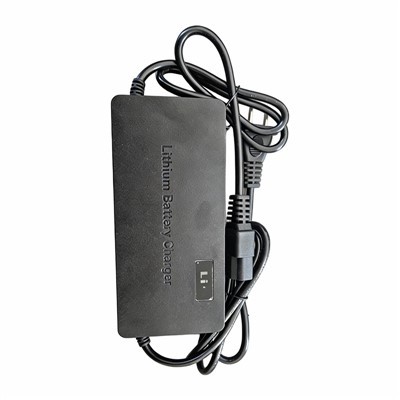
At the end of the day, the question isn’t just “are there adjustable voltage lithium battery chargers”—it’s why you would want one for your specific needs. For small hobbyists, commercial businesses with multiple battery types, or anyone building custom battery packs, these chargers solve a real problem that one-size-fits-all units can’t. If you’re looking for a reliable adjustable lithium battery charger, or you have questions about what model works best for your battery packs, our team is here to help. We’ve worked with hundreds of customers from hobbyists to large commercial fleets, and we can help you find the right charger that fits your needs without overpaying for features you don’t need. Get in touch with our team today to discuss your charging requirements and find the perfect solution for your batteries.
Lithium Battery Charger References:
- Linden, D., & Reddy, T. B. (2002). Handbook of Batteries (3rd ed.). McGraw-Hill.
- lithium-ion Battery University. (2021). Charging LiFePO4 Batteries. Cadex Electronics Inc.
- Wang, Y., et al. (2019). "Temperature-Dependent Charging Voltage Regulation for Lithium-Ion Battery Cycle Life Extension." Journal of Power Sources, vol. 412, pp. 345-353.
- SAE International. (2020). "Recommended Practice for Communication Between Battery Management Systems and Battery Chargers." SAE J1939-71.
Tianchang Hengze Technology Co., Ltd.
With abundant experience, we are one of the most professional lithium battery charger manufacturers and suppliers in China. Please rest assured to buy bulk lithium battery charger made in China here from our factory. If you have any enquiry about quotation, please feel free to email us.
Address: No. 8 Sanxing Road, Qinlan Town Industrial Park, Tianchang City, Chuzhou City, Anhui Province, P.R. China
E-mail: 604894957@qq.com
WebSite: https://www.hengzebc.com/
