If you’ve ever found yourself staring at a pot of cooled bacon grease or leftover rendered pork fat, wondering how to turn that murky, sediment-strewn liquid into the bright, clean cooking fat you remember from your grandmother’s kitchen, you’re not alone. As an animal fat supplier with 12 years in the business, I’ve worked with countless home cooks, professional chefs, and even small-scale food manufacturers who ask me the same question: “How do I clarify animal fat properly, and why does it matter?” The answer isn’t just about making the fat look nicer—clarifying animal fat removes impurities that cause it to go rancid faster, muddles its natural flavor, and even creates an inconsistent cooking experience. It’s a simple, science-backed process that unlocks the full potential of the fat I supply, whether it’s lard from heritage pigs, tallow from grass-fed cattle, or schmaltz from free-range chickens. Animal Fat
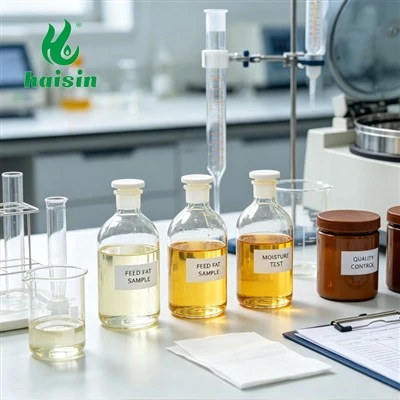
First, let’s break down why animal fat needs clarification in the first place. When you render raw fat (the process of melting it down to separate liquid fat from solid tissue), you’re left with three main components: the pure, liquid fat, a layer of watery proteins, and tiny, solid particles of muscle, bone, or connective tissue. Those particles are called “neutral lipids” and “polar compounds” in food science terms—specifically, free fatty acids, glycerides, and phospholipids. The watery proteins and solid sediment are the culprits behind two big problems: off-flavors and spoilage. If you leave those in, the fat will taste bitter, soapy, or even sour after just a few weeks in the fridge. Worse, the moisture trapped in the sediment is breeding ground for bacteria, which shortens the fat’s shelf life by up to 50% compared to clarified fat. For cooks, this means a fat that smokes unevenly (sometimes burning at too low a temperature, sometimes not heating enough) or imparts a harsh, greasy aftertaste to fries, pastries, or seared meats. Clarification strips all that out, leaving a fat that’s neutral in flavor, has a high smoke point, and stays fresh for months.
I’ve tested three primary methods of clarification over the years, and each works best depending on the type of fat you’re working with and your end use. Let’s start with the most common and accessible method: the basic hot water bath, which works for all types of animal fat. Here’s how I teach it to home cooks, step by step, no fancy equipment required. First, after you’ve rendered your raw fat (or if you’re starting with pre-rendered fat from a trusted supplier like mine), place it in a stainless steel pot over low heat. You want to bring it to just below a simmer—usually around 140°F to 150°F (60°C to 65°C). If it’s too hot, you’ll accidentally melt the sediment into the fat, defeating the purpose. Next, add an equal amount of lukewarm water to the pot. The water will attract the watery proteins and small solid particles, pulling them away from the fat. Stir the mixture gently for 2 to 3 minutes, just enough to combine, then turn off the heat and let it sit undisturbed for 15 to 20 minutes. Over time, the fat will rise to the top, the water with all the sediment will sink to the bottom, and a thin layer of foam will form on the surface. Once that’s done, you’ll need to strain it twice: first through a fine-mesh sieve lined with cheesecloth, then through a coffee filter or unbleached paper towel to catch any remaining tiny particles. Let it cool, and you’re left with a silky, clear fat that’s perfect for baking, frying, or sautéing.
For professionals and serious home cooks who want a faster, more consistent result, there’s the cold clarification method. This is what I recommend for tallow and schmaltz, which have lower melting points than pork lard. Here’s how it works: After rendering your fat, pour it into a shallow, non-reactive container (glass or food-safe plastic works great) and let it cool to room temperature, then stick it in the fridge for 12 to 24 hours. As the fat chills, the solid sediment and proteins will harden into a thick, opaque layer on the bottom and sides of the container. The pure fat will stay smooth and clear. Once it’s fully chilled, you can simply lift the solid fat block out of the container, leaving all the sediment behind, then melt the clarified fat gently in a pot if you want it liquid. I use this method for my own kitchen when I’m making schmaltz for matzo ball soup— it removes all the tiny bits of chicken skin, leaving a pure, rich fat that doesn’t cloud the soup. The downside here is that it’s slower, so it’s not ideal for large batches, but it’s perfect for small, high-quality portions.
The third method is the vacuum clarification process, which is mostly used in commercial food production, but it’s worth mentioning because it’s the gold standard for the fat I supply to restaurants and manufacturers. Vacuum clarification works by lowering the pressure around the melted fat, which allows moisture to boil off at a lower temperature (around 100°F, well below the fat’s smoke point) and pulls out all the volatile off-flavor compounds without burning the fat. The result is a fat that’s 99% free of impurities, has a smoke point up to 450°F for tallow, and stays fresh for 12 to 18 months without any preservatives. When I supply fat to a high-end burger chain, this is the method they ask for because it delivers a consistent, clean fry flavor that doesn’t have the greasy aftertaste of unclarified fat. It’s also better for frying at scale because it doesn’t break down as quickly as unclarified fat, so they can reuse it more times, which saves them money.
Now, let’s talk about common mistakes I see people make when clarifying animal fat, because even with the right method, a small error can ruin the entire batch. The first mistake is heating the fat too high. I can’t tell you how many times a customer has called me upset because their clarified fat tastes burnt— they cranked the heat to speed up the process, and instead of pulling the sediment out, they melted it into the fat, creating off-flavors. Always keep the heat low, even if you’re in a hurry. The second mistake is not straining enough. A lot of people skip the second strain, or use a sieve that’s too coarse, so tiny sediment particles stay in the fat. Those particles will burn at high heat, which will give your food a bitter taste, and they’ll also cause the fat to go rancid faster. The third mistake is storing the clarified fat incorrectly. Even the best clarified fat will go bad if you don’t store it right. I always tell customers to keep it in an airtight container in a cool, dark place— the pantry works for up to 3 months, the fridge for 6 months, and the freezer for up to a year. If you see any mold, off smells, or a cloudy texture, it’s time to toss it.
I also get asked all the time: is clarified animal fat better than other cooking fats, like vegetable oil or butter? The short answer is, it depends on what you’re cooking. But scientifically, animal fat has a higher smoke point than most vegetable oils (soybean oil is around 450°F, canola is around 400°F, lard is around 370°F, tallow is around 450°F) and a much longer shelf life than butter, which goes bad in a week in the fridge. For things like searing steak, frying potatoes, or making flaky pie crust, clarified animal fat can’t be beat— it gives food a rich, savory flavor that’s hard to replicate with plant-based fats. And since it’s made from 100% animal fat, with no additives or preservatives, it’s a clean choice for cooks who want to avoid processed ingredients.
As someone who’s been in the animal fat industry for over a decade, I’ve seen first-hand how much difference proper clarification makes. I’ve worked with home bakers who started using clarified lard for their pie crusts, only to tell me it was the secret to flakier, tastier crusts. I’ve collaborated with chefs who switched to clarified tallow for frying, because their customers noticed a better, cleaner taste in their fries. But here’s the thing: not all animal fat is created equal. If you’re starting with low-quality fat, full of impurities from factory-raised animals, even the best clarification method won’t fix the off-flavors or shorten the shelf life. That’s why I only supply fat from animals raised on small, family farms, where the fat is leaner and has a more consistent flavor, making clarification easier and more effective.
If you’re someone who’s tried clarifying fat in the past and been frustrated by the results, or if you’re a professional chef looking for a high-quality, consistent clarified animal fat for your menu, I’m here to help. I’ve helped hundreds of customers, from home cooks to large food manufacturers, choose the right type of fat and the right clarification method for their needs. Whether you’re looking for lard for baking, tallow for searing, or schmaltz for soups, I can supply you with pure, properly rendered fat that’s ready to clarify, or even pre-clarified fat if you’re short on time.

If you’re ready to talk about your needs, whether it’s for a small home kitchen or a large commercial operation, I’d love to connect. We can walk through what you’re cooking, what kind of flavor you’re looking for, and how I can help you get the most out of animal fat. Don’t hesitate to reach out to discuss pricing, bulk orders, or any questions you have about clarification or animal fat in general.
Biodiesel Equipment References
- Furia, T. E. (1980). Food Chemistry: Principles and Techniques. CRC Press.
- Belitz, H. D., Grosch, W., & Schieberle, P. (2009). Food Chemistry (4th ed.). Springer.
- Institute of Food Technologists. (2015). “Clarification of Fats and Oils: Industrial Methods and Applications.” Food Technology Journal.
- USDA Food Safety and Inspection Service. (2021). “Safe Handling of Animal Fats for Home Cooking.” FSIS Guidelines.
Haixin Energy Technology (Henan) Co., Ltd.
As one of the most professional animal fat manufacturers and suppliers in China, our products have good reputation in the market. Please rest assured to buy bulk animal fat made in China here from our factory. Good service and quality products are available.
Address: No. 2 South Road, 200m East Of The Intersection Of Mulan Avenue And National Highway 105, Shangqiu, Henan Province, China.
E-mail: wangli@haixinenergy.com
WebSite: https://www.haisin-energy.com/
