If you’ve ever poured a pot of hot pasta through a metal strainer to catch noodles while letting starchy water run off, you’ve used a screen mesh, but if you’re looking for a filter that balances precision, durability, and consistent performance across harsh industrial, culinary, and environmental applications, Dutch Weave Mesh is the workhorse you need. As a supplier who’s shipped rolls of this material to pasta manufacturers, chemical processors, and water treatment plants over the past decade, I’ve seen firsthand how many people mix it up with other mesh types—so today I’m breaking down exactly how it works, what makes it different, and why it might be the solution you’ve been searching for. Dutch Weave Mesh
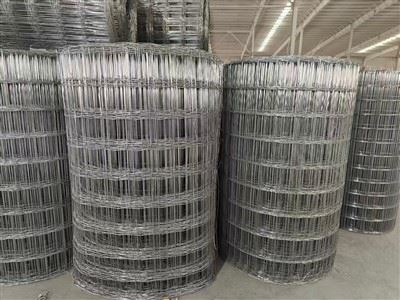
Let’s start with the basics of what Dutch Weave Mesh is, because its name hints at its most defining feature: how the wires are woven together. Unlike plain weave mesh, where every horizontal (weft) wire goes over every vertical (warp) wire and vice versa, Dutch Weave uses two distinct sets of warp wires and a single set of weft wires. The warp wires—running parallel to the length of the mesh roll—are thinner, more tightly spaced, and usually made of a higher-grade alloy. The weft wires, running perpendicular, are thicker and slightly more spaced apart, creating a structure that’s not just stronger, but much more consistent in the size of the holes (called apertures) between wires. That consistency is the foundation of how it works as a filter.
I like to think of plain weave as a woven blanket where every thread is the same thickness and spaced evenly, while Dutch Weave is a tight, layered stitch that holds its shape even when pulled or pressed. Let’s get specific: if you have a plain weave mesh with a 50-micron aperture, there’s a good chance some holes are a little smaller, some a little larger, just from the nature of alternating thick and thin wires. With Dutch Weave, because the thin warp wires are packed so tightly, the aperture size is almost exactly uniform across the entire mesh. That’s non-negotiable for filtering applications where you can’t afford even a handful of particles slipping through.
Now, how does that weave translate to filtration performance? Let’s walk through the mechanics. When fluid or gas flows through Dutch Weave Mesh, the path isn’t a straight line through a single hole—it’s a winding, tortuous path between the intersecting warp and weft wires. That’s called the “tortuosity factor,” and it’s one of the biggest reasons Dutch Weave is more effective at catching fine particles than many other mesh types. For example, if you’re filtering out 20-micron sediment from beer during brewing, a straight-hole plain weave might let a few 18-micron particles slip through, but the tortuous path of Dutch Weave forces those particles to collide with wires, get trapped, and stay there. That’s why craft breweries, which rely on crystal-clear product, often switch from cheaper mesh filters to Dutch Weave after dealing with cloudy batches for months.
Another key part of its function is strength. The warp wires are tightly woven and aligned in a way that distributes pressure evenly across the entire mesh. That makes Dutch Weave Mesh perfect for high-flow, high-pressure applications, like filtering crude oil before it’s refined, or separating solid waste from wastewater in municipal treatment plants. I once had a customer in the oil and gas industry tell me that their previous filter mesh would tear after just a week of daily high-pressure runs, but since switching to Dutch Weave, their rolls have lasted six months with no damage. That durability cuts down on downtime and replacement costs, which is a huge win for any operation.
Let’s talk about common misconceptions, too. Some people assume because the weft wires are slightly more spaced, Dutch Weave has a lower flow rate—but that’s not true. The uniform aperture size and open structure mean flow is actually more consistent than plain weave, and the strength lets you use thicker, heavier rolls without worrying about them collapsing under pressure. Plus, because it’s made from materials like stainless steel, brass, or even specialty alloys for extreme environments, it can handle everything from hot acids in chemical processing to abrasive food products like citrus juice. I’ve also supplied Dutch Weave to a kombucha brewery, where it’s used to filter out SCOBY strands after fermentation, and it works perfectly even with the acidic, high-sugar liquid passing through it.
Now, let’s get into the science of particle capture to make this concrete. Filtration with Dutch Weave Mesh relies on a few core mechanisms, depending on the particle size and the flow conditions. For particles larger than the aperture size, that’s straightforward: they get physically trapped on the surface of the mesh, a process called surface filtration. For particles slightly smaller than the aperture, that’s where tortuosity comes in. These particles don’t make it all the way through the winding path of wires—they collide with the mesh through a process called inertial impaction, where the particle’s momentum makes it run into a wire instead of following the fluid flow. For even tinier particles, down to a fraction of the aperture size, there’s also diffusion: tiny particles move randomly (Brownian motion) and stick to the mesh wires, getting caught. That means Dutch Weave doesn’t just catch big particles—it’s effective at capturing a wide range of sizes, which is rare for a mesh filter.
I’ve seen this firsthand in a water treatment application. A municipal plant I work with needed to filter out both 30-micron sediment and 5-micron bacteria from drinking water. They tried several filter types: a fine sand filter that got clogged too quickly, a plain weave mesh that let small bacteria slip through, and then Dutch Weave Mesh. The uniform apertures caught all the 30-micron sediment, the tortuous path trapped the smaller bacteria, and the high flow rate meant they didn’t have to backwash the system every few hours like they did with sand filters. They’ve been using our Dutch Weave rolls for three years now, and they say the maintenance costs are cut by 70% compared to their old setup.
Another thing that makes Dutch Weave Mesh unique is its customizability. As a supplier, we don’t just sell standard sizes—we work with customers to match the exact aperture size, wire material, and roll dimensions to their specific application. For example, a pasta manufacturer might need a 100-micron mesh to catch undissolved flour, while a pharmaceutical company might need a 20-micron mesh made from medical-grade stainless steel to filter active ingredients. We also offer Dutch Weave Mesh with different surface finishes: a plain finish for general use, a polished finish for food applications where sticking is a concern, and a passivated finish for corrosive environments like chemical processing.
Wait, but what about when the mesh gets clogged? That’s a question I get all the time. One of the downsides of many fine mesh filters is that they get dirty quickly and need to be replaced, but Dutch Weave Mesh is easier to clean because of its weave structure. The intersecting wires create smooth, accessible surfaces, so you can backwash it with water, or even steam clean it for food applications, without the particles getting stuck in the gaps between wires. I had a customer in the winemaking industry who was using a competing fine mesh that required replacing every two weeks, but with Dutch Weave, they only need to clean it once a month, cutting their filter costs by half.
Let’s compare it to other filter types to really drive home its value. Synthetic filters, like nylon or polyester mesh, are cheap but break down under high temperatures or harsh chemicals. Woven wire mesh is stronger than synthetic, but plain weave mesh has inconsistent aperture sizes. Sintered metal filters, which are made by fusing metal particles together, are very strong but have high pressure drops (meaning fluid has to push hard to get through) and are more expensive than Dutch Weave Mesh. So Dutch Weave hits that sweet spot: consistent performance, durability, manageable cost, and versatility across almost any industry.
I’ve been in this business long enough to know that the right filter can make or break a production line. Too coarse, and your product is contaminated. Too fine, and you’re wasting money on frequent replacements and downtime. Dutch Weave Mesh solves both of those problems because its design is purpose-built for reliable, consistent filtration. Whether you’re filtering food and beverage products, processing chemicals, treating water, or manufacturing electronics, Dutch Weave Mesh gives you the precision you need without the hidden costs of lesser filters.

If you’re currently dealing with filter issues—whether that’s contamination, frequent replacements, high pressure drops, or inconsistent results—I’d love to talk through your specific needs. As a supplier, we work with businesses of all sizes, from small craft breweries to large industrial operations, to find the right Dutch Weave Mesh for your application. We can provide sample rolls, work with you to adjust specifications, and give you the technical details you need to make the right choice. Whether you need a small roll for a lab test or thousands of feet for a full-scale production line, we’re here to help.
Offshore Pipeline Reinforcement Mesh References
- International Organization for Standardization. (2016). Woven Wire Cloth and Metal Screens for Filtration and Sieving. ISO 9044:2016.
- Tkaczyk, T. S., et al. (2002). Tortuosity in Woven Wire Mesh Filters: Effect on Particle Capture and Flow Performance. Journal of Membrane Science, vol. 205, no. 1-2, pp. 169-181.
- Food and Drug Administration. (2021). Grade 304 and 316 Stainless Steel Mesh for Food Processing Applications. FDA Food Safety Modernization Act (FSMA) Guidelines.
- American Water Works Association. (2019). Mesh Filtration for Municipal Drinking Water Treatment. AWWA M28 Manual.
Hengshui Anbang Road and Bridge Material Co., Ltd.
As one of the most professional dutch weave meshmanufacturers and suppliers in China, we’re featured by quality products and good service. Please rest assured to wholesale bulk customized dutch weave mesh from our factory. For pricelist, contact us now.
Address: Zhaobazhuang Wire Mesh Industrial Park, Shenzhou City, Hengshui City, Hebei Province
E-mail: 13482929933@163.com
WebSite: https://www.cnanbang.com/
