If you’ve ever shopped for home energy storage, chances are you’ve stared at a spec sheet that lists a battery’s capacity in kilowatt-hours (kWh) and wondered: “Is that enough for my fridge, my AC, or even my whole house during an outage?” As a home storage battery supplier who’s answered this question hundreds of times over the past five years, I know it’s not a one-size-fits-all number. Let’s break it down, cut through the marketing jargon, and give you the clear picture you need—whether you’re looking to cover a few essentials, go off-grid, or back up your home’s entire electrical system. Home Storage Battery
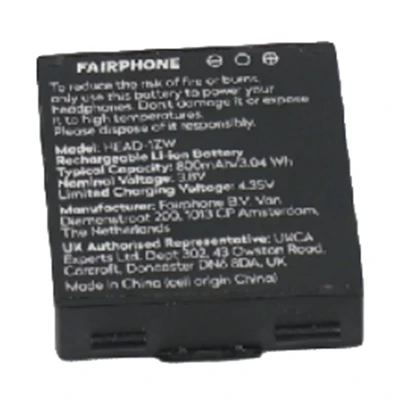
First, let’s start with the basics: a kWh is a measure of energy, not power. Power is measured in kilowatts (kW), and it’s how fast you use energy. A 100W light bulb uses 0.1 kW, so if you leave it on for 10 hours, that’s 1 kWh of energy. For home batteries, the “capacity” number is the total energy the battery can store and deliver when you need it. The confusion comes because some brands list “usable” kWh, not “nominal” kWh—nominal is the total energy the battery can hold, but usable is how much you can actually draw without damaging the battery. Most quality home storage batteries only let you use 80% of their nominal capacity to extend their lifespan, so that number matters a lot for real use.
Now, what’s a “typical” home storage battery? If you walk into a typical retailer today, the most common models fall between 5 kWh and 15 kWh of usable capacity. Let’s ground that in real household use to make it tangible. A small, 5 kWh battery is built for essentials only: a top-freezer fridge (about 1 kWh a day), a few LED lights, a phone charger, and a few small electronics. That’s perfect for a weekend outage in a mild climate, or if you’re adding it to a solar panel system to offset your evening utility bills (when solar production drops and grid rates are highest). For example, in California, where evening demand charges can add $0.30 per kWh to a monthly bill, a 5 kWh battery might save you $50–$100 a month once you factor in your solar production.
Jump up to the 10 kWh range, and you’re into what’s the sweet spot for most average North American homes. That’s enough to cover most of your daily needs during an outage: a mid-sized fridge, a ceiling fan, a few bedroom lights, a laptop, and even a small microwave. In our experience, a 10 kWh battery pairs well with a 5–7 kW solar array, which is the size most homeowners install to cover 50–70% of their annual energy use. That combo can let you go “net-zero” for most of the year, and during outages, it can keep your home running for 8–12 hours, depending on how many appliances you have running. For a family of two or three in a 1,500 sq ft home, that’s the go-to size we recommend 60% of the time.
Then there’s the 15 kWh model, which is for larger homes, families of four or more, or people who want to go off-grid entirely. A 15 kWh battery can cover a central AC unit (which runs at about 1.5 kW, so 15 kWh would power it for 10 hours), a washer and dryer, a electric water heater (if it’s a heat pump model, which uses about 2–3 kW), and all the regular essentials. We’ve sold 15 kWh batteries to homeowners in areas with frequent long outages, or who live off-grid because utility lines are unreliable or expensive to run. That size gives you enough buffer to handle spikes in energy use without running the battery empty too often.
But here’s the thing: there’s no universal “typical” for every home. A home in a cold climate with electric heating will use way more energy than a same-sized home in a mild climate with gas heating. If you have an electric car charger, that’s a 7–10 kW load all on its own—so a 10 kWh battery might not even be enough to charge your car once, let alone power your home. That’s why we always start with a free, no-obligation home energy audit when a customer reaches out: we look at their past 12 months of utility bills to calculate their average daily energy use, then size the battery accordingly.
Wait, let’s talk about what’s not a typical battery. A lot of people see old “backup generators” compared to home storage, but those are totally different. A generator runs on fuel, and a portable one might only give 2–5 kW of power, so it can power a few essentials but not your whole house. A home storage battery is rechargeable (from solar or the grid), delivers clean power (no fumes, no loud noise), and is measured in kWh, which is the number we’ve been talking about. We’ve also seen smaller “balcony” batteries for apartment dwellers, which are 2–3 kWh—great for renters who want to offset a small amount of energy use, but not enough for whole-home backup.
Let’s also clear up a common misconception: the size of your battery isn’t the only number that matters. The power rating (how fast it can deliver energy) is just as important. A 10 kWh battery might have a 5 kW power rating, meaning it can deliver 5 kilowatts at once—enough to run a fridge, lights, and a TV. A 10 kWh battery with a 2 kW power rating can only run smaller loads, so if you want to run a central AC, you’ll need a higher power rating, even if the total kWh is the same. That’s why our sales team always explains both numbers when we walk a customer through options.
Now, let’s get into real-world numbers. According to the U.S. Energy Information Administration, the average U.S. home uses about 900 kWh per month, which is 30 kWh per day. Wait, that’s way more than the typical 5–15 kWh batteries we talked about—so why the gap? Because utility bills count all the energy you use, including during peak daytime hours when you might be at work, running the dishwasher, oven, and other appliances. A home battery stores energy you produce (from solar) during the day, to use at night when you’re home, so you don’t draw from the grid. It doesn’t need to store your entire daily use—it just needs to store the part you can’t generate on your own, and the part you need during outages. That’s why a 10 kWh battery works for a 30 kWh daily use home: it’s covering the evening and nighttime use, not the full day.
We’ve seen customers make two common mistakes here: buying a battery that’s too small, which leaves them stranded during outages or not saving as much on utility bills as they should, or buying one that’s too big, which wastes money and space. For example, a customer last year came to us with a 5 kWh battery he’d installed from a big-box retailer, and he was frustrated because during a 24-hour outage, it died by noon. Turns out, he lives in Minnesota, has an electric furnace, and his home uses 40 kWh a day—he needed at least a 12 kWh battery to cover his essentials for a full day. We helped him trade up to a 12 kWh model, and his outage reliability went up dramatically. Another customer, a retiree in Arizona who only uses 15 kWh a month (mostly for a few lights and a small fridge), bought a 15 kWh battery and found he was paying $2,000 more than he needed to, because he was paying for capacity he’d never use.
So, how do you pick the right kWh for you? Let’s outline a simple guide, based on what we’ve learned working with thousands of homeowners:
- If you rent, live in a small apartment, or only want to offset a small portion of your utility bill: 2–5 kWh. These are the compact, modular batteries that are easy to install and move, and they’re perfect for renters who can’t hardwire a big system.
- If you’re a small family (2–3 people) in a 1,000–1,800 sq ft home, want net-zero with solar, or need backup for essentials: 8–12 kWh. This is our most popular size, and it’s versatile enough for most people.
- If you have a large family, live in a home over 2,000 sq ft, have electric heating or an EV, or live in an area with long, frequent outages: 12–18 kWh. This gives you enough buffer for higher energy use and longer outages.
- If you want to go fully off-grid and power every appliance (including EV charging, heat, and appliances): 20+ kWh. These are the larger, custom systems we build for remote homes.
Now, let’s talk about cost, because that’s a big factor in size. The average cost per kWh for a home storage battery is between $300 and $800, installed. So a 10 kWh battery would cost between $3,000 and $8,000, before federal or local incentives. Wait, that’s a big range—why? Because cheaper models often have lower cycle life (how many times you can charge and discharge them before they lose capacity), while more expensive models have longer lifespans, better warranties, and higher power ratings. For example, a 10 kWh battery from a budget brand might last 5,000 cycles, while a premium model lasts 10,000 cycles—so over its 10-year lifespan, the premium one will give you twice as much usable energy, making it a better value in the long run. That’s why at our company, we don’t carry the cheapest batteries on the market—we focus on models that balance kWh, power, and lifespan for our customers’ needs.
Another thing to consider: expansion. A lot of homeowners start with a smaller battery, then add more later as their budget allows. Most home storage systems are modular, so you can add 5 kWh increments to your system over time. For example, if you start with a 5 kWh battery for your apartment, then buy a home and install solar, you can add two more 5 kWh modules to make a 15 kWh system. That flexibility is why modular batteries are so popular with our customers.
Let’s circle back to the original question: how many kWh is a typical home storage battery? After five years in this business, I can say that “typical” is 10 kWh of usable capacity. That’s the size most homeowners ask for, the size we install most often, and the size that balances cost, functionality, and reliability for the majority of North American homes. But that doesn’t mean it’s the right size for you. The best way to find out is to look at your utility bills, think about your energy habits, and talk to someone who knows the business.
That’s where we come in. We’re a team of home storage experts, and we don’t push one-size-fits-all solutions. We offer free energy audits, help you compare battery sizes, explain the difference between nominal and usable kWh, and even work with you to finance your system. If you’re tired of overpaying for grid electricity, or you want peace of mind during outages, we’re here to help you pick the right kWh (and the right battery) for your home. Reach out to our team to start your consultation, and we’ll walk you through every step—no sales pitches, just straight answers.
Robot Battery reference:
U.S. Energy Information Administration. (2023). Residential Energy Consumption Survey.
International Energy Agency. (2022). Global Home Energy Storage Market Report.
National Renewable Energy Laboratory. (2023). Home Battery Storage Performance and Reliability Study.
Zhuhai Greaton Electronic Technology Co., Ltd.
As one of the most professional home storage battery manufacturers and suppliers in China, we have world-leading production equipment and strong manufacturing capabilities. Please rest assured to wholesale advanced home storage battery in stock here from our factory. Customized orders are welcome.
Address: 2nd Floor, Building A3, No. 6, Liulu, Xinqing Science and Technology Industrial Park, Jing’an Town, Doumen District, Zhuhai City
E-mail: ivy@psbattery.cn
WebSite: https://www.cngreaton.com/
