Hey there, if you’ve ever scratched your head over why two seemingly identical metal parts from different machine shops feel so different, you’re not alone. As a machined parts supplier, I field this question at least three times a week: “What’s the real difference between turned parts and milled parts?” Yeah, I know—on the surface, they both come out of CNC machines, look like metal (or plastic, or whatever), and get bolted into whatever project you’re building. But dig a little, and each process is like a different tool in a mechanic’s kit—super good at some jobs, total overkill (or just not right) for others. Let’s break this down like I’d explain it to a dude who’s got a prototype to build and a tight deadline. Machined Part
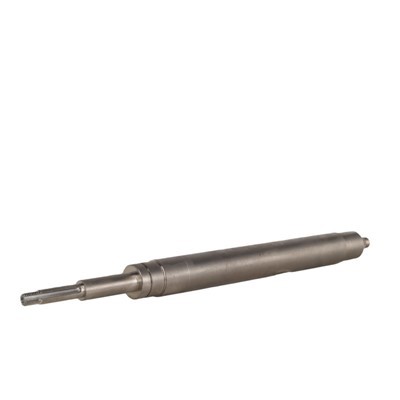
First off, let’s keep it simple: turning vs. milling. The biggest thing is how the workpiece moves. When I say workpiece, that’s just the raw material—bar stock, a block of metal, whatever. For turning? The workpiece spins like crazy. Think of a lathe, that old-school machine you see in movies with the guy turning a metal rod with his hands on a tool rest, though now it’s all CNC-controlled with way less sawdust and way more precision. The cutting tool? It sits still, moving only along a straight line (or a little curve) to shave off bits of the spinning material. That’s why turned parts are usually round, right? If you need a shaft, a bolt, a bearing race—something that’s basically a circle with a consistent diameter—turning is your go-to.
Milling? Total opposite. The workpiece doesn’t spin. Instead, the cutting tool spins at super high speeds, whirring around like a tiny, sharp lawnmower blade, and moves around the stationary part. That’s why milled parts have all those flat surfaces, not just round ones. Need a part with slots, holes that aren’t dead-center, weird angles, or flat faces to bolt to another part? Milling is the way to go. I’ve had customers come in asking for a bracket that needs a flat bottom, two side slots, and a counterbore for a bolt—there’s zero way that’s going to come out of a lathe. You’d be forcing a square peg into a round hole… literally.
Let’s talk precision and speed, because that’s the stuff that makes or breaks a production run. Turning is fast for simple, round parts. If you need 1000 aluminum pins that are 0.25 inches in diameter and 2 inches long? We can knock that out in a couple of hours. The tool path is straightforward—spin the bar, feed the cutter along the length, done. Milling takes a little longer, especially for complex shapes, because the tool has to weave in and out, cut from different angles, and make sure every edge is sharp and exact. But that trade-off is worth it when you don’t have a round part. And for really tight tolerances? Both processes are precise these days, but turning tends to nail consistent diameters more easily because the spin is all about that round, even cut. Milling can match that, but you gotta make sure the tool path is set right—one tiny mistake in the software, and you’ve got a part with a wonky slot that’s useless.
Next up: material and part size limits. Wait, let’s be real—you can turn or mill almost anything, but some work better with one. For example, super long, thin parts—like a driveshaft that’s 3 feet long and 1 inch in diameter—turning is perfect because it can hold that length without warping. Milling a part that long? You’d need a machine that’s 4 feet long just to hold the workpiece, and even then, it might flex mid-cut, leading to a bent part. On the flip side, a part that’s got a bunch of 90-degree angles, like a mounting bracket for a solar panel? Milling is way better. If you tried to turn that, you’d have to do multiple setups, and you’d end up with weird step joints that don’t line up right.
Materials play a part too, though not a huge one these days. For most common stuff—aluminum, steel, brass, even some plastics—both processes work. But super hard materials, like titanium or tool steel? Turning might have an edge if the part is round, because the constant spin helps distribute the cutting force evenly. Milling hard stuff is doable, but you’ve got to use diamond-tipped tools and go slower, which adds time to your run. I learned that the hard way last year—we had a customer who needed 50 titanium parts, simple round shafts, and if we’d milled them, it would’ve taken three times as long as turning. We knocked them out in a day, and they were perfect.
Wait, what about custom vs. mass production? That’s a big one for a machined parts supplier. For low-volume prototypes—like 1-10 parts—you might not notice a huge difference in price, but for high volume, turning is almost always cheaper. The setup time for a lathe is shorter, and you can run multiple parts at once on a CNC lathe (some can hold 10+ bar stock pieces at a time). Milling, especially for complex parts, has longer setup times because you have to program all those different tool paths, change tools more often, and check for alignment. So if you need 10,000 identical round parts, turning is the budget move. If you need 50 unique brackets for a custom machine build? Milling is the only way.
But here’s the thing—these days, a lot of parts aren’t purely turned or milled. Most modern CNC machines can do both. We have a 5-axis mill-turn machine in our shop that can spin the workpiece like a lathe and move the cutting tool like a mill, so you can make a part that’s round, has slots, and flat faces all in one setup. That eliminates the need to move the part between machines, which cuts down on error and saves time. I had a customer last month who thought they needed two separate parts—one turned shaft and one milled bracket—but we combined them into one part with that mill-turn machine, and it’s stronger, cheaper, and fits together way better. That’s the magic of combining both processes, but you gotta know when to use each first.
Let’s talk about common mistakes I see customers make, because that’s why I’m writing this. Last year, a guy came in with a prototype for a coffee machine part that had a round body and two flat sides. He asked us to mill it because he thought turning was only for simple parts. But if we milled it, he’d have to hold the round part in a vice, and the flat sides wouldn’t be perfectly parallel, leading to leaks when he bolted it together. We ended up turning the round body first, then using a secondary operation to mill the flat sides, and it worked way better. Another time, a small engineering firm tried to make a gear with a lathe—gears need those little teeth around the edge, right? You can’t cut gear teeth on a lathe easily, so they wasted three weeks trying and had to start over with a mill. That’s the kind of mistake that costs time and money, and it’s totally avoidable if you know the difference.
What about surface finish? That’s the final look and feel of the part. Turned parts usually have a smoother, more consistent surface on the outside because the spin creates a uniform cut. If you run your finger over a turned steel shaft, it feels like a polished rod. Milled parts might have a little more texture, depending on the tool path—you can see the lines where the cutting tool moved. But if you polish a milled part, you can get a smooth finish too, it just takes extra steps. So if your part needs to look clean, like a handle for a door, a turned part with a polished finish is easier than a milled one that needs extra sanding and polishing.
Let’s also touch on lead times, because that’s what keeps people coming back (or leaving for another supplier). Simple turned parts: lead time is usually 1-3 days, because we can set up the lathe, load the bar stock, and run them nonstop. Complex milled parts: lead time is 3-7 days, sometimes longer if we have to order a special tool or adjust the program. And if you need a part that combines both? 5-10 days, but it’s worth it because you get one part instead of two, and less assembly work.
Wait, should you ever use both? Absolutely. Like I said, most of the time, a finished part is a mix of both processes. We’ll turn the main body, mill the slots and holes, and maybe even drill some extra holes with a third operation, but that’s fine. The key is knowing which process does what best so you don’t overcomplicate it. I always tell new customers: send me your part drawing, tell me what it’s for, how many you need, and I’ll tell you the best way to make it. You don’t have to be an expert—That’s why you hire a machined parts supplier.
Let me wrap this up before it gets too long, because I know you’re here for practical stuff, not a textbook. The quick and dirty difference between turned and milled parts, for anyone who’s just got a project to build:
- Turning = workpiece spins, tool is still, makes round, simple parts (shafts, pins, bolts, bearings). Fast, cheap for high volume, good for long parts.
- Milling = workpiece still, tool spins, makes flat, complex parts (brackets, gears, slots, angles). Good for low volume or custom parts, works for weird shapes.
- Most parts need a mix, and modern machines can do both, so don’t force one process if it doesn’t fit.
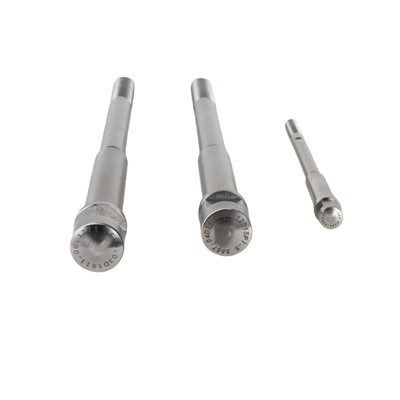
If you’re sitting on a prototype, have a production run coming up, or just need a part made and you’re not sure which way to go, hit us up. We don’t do hard sell—we’ll tell you if turning is better, or if you need a mill, or if you need a mix, and we’ll give you a fair price, no hidden fees. No jargon, no runaround, just good machined parts that work when you need them. No more wasting time trying to figure out processes that aren’t right for your part.
Generator Shaft References:
- Tosi, F. (2022). CNC Machining Fundamentals: Turning vs Milling. Industrial Press Inc.
- Debarr, J. (2021). Modern Machining Practices for Custom Parts. Society of Manufacturing Engineers.
- Smith, G. (2023). A Guide to CNC Machining Processes for Production Runs. Machining Today Magazine.
Ningbo Uni-drive Technology Co., Ltd.
Ningbo Uni-drive Technology Co., Ltd. is one of the most professional machined part manufacturers and suppliers in China. Please feel free to buy cheap machined part made in China here and get pricelist from our factory. All customized products are with high quality and competitive price.
Address: Industrial Site No.6, Jingtou Village, Sanqi Town, Yuyao City, Zhejiang Province
E-mail: admin@uni-drive.com.cn
WebSite: https://www.motordriveshaft.com/
